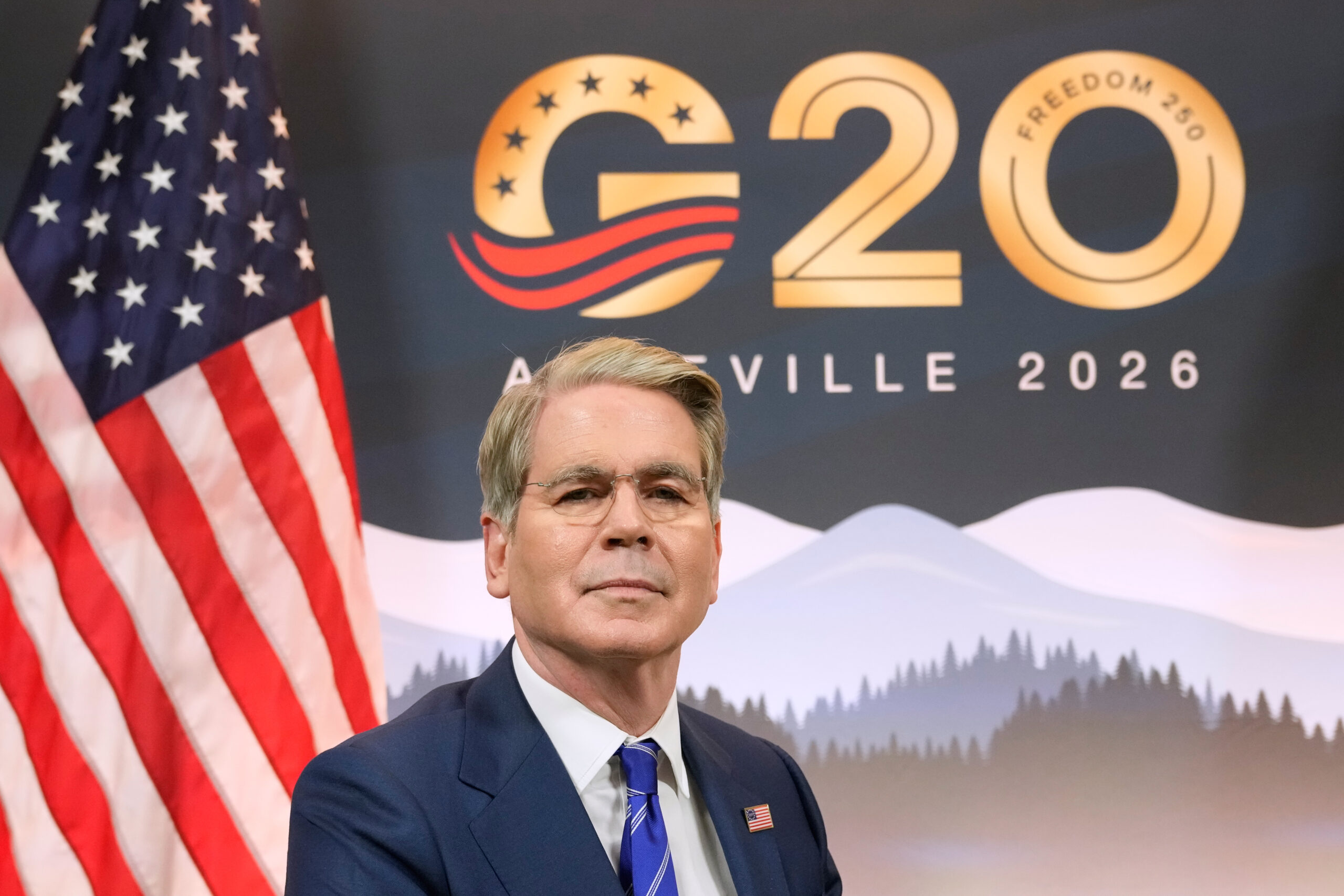
Bessent Seeks G20 Support to Isolate Iran as Trump Tariffs Strain Alliances/ TezzBuzz/ WASHINGTON/ J. Mansour/ Treasury Secretary Scott Bessent is pressing G20 finance ministers to help economically isolate Iran as the Trump administration prepares additional sanctions under its “Operation Economic Outcast” campaign. The effort comes as renewed U.S.-Iran fighting, high energy prices and escalating tariff disputes with major allies complicate Washington’s ability to build international support. Bessent said Iran’s economy could face severe pressure within “weeks or months,” while warning that the United States is prepared to use “financial violence if we have to.”

Quick Look
- Treasury Secretary Scott Bessent is hosting G20 finance ministers in Asheville, North Carolina.
- Washington is seeking greater international cooperation to economically isolate Iran.
- Bessent said the U.S. plans to sanction another bank under “Operation Economic Outcast.”
- The administration previously moved to restrict an Egyptian bank’s operations in the UAE.
- Bessent said Iran could face an economic breaking point within “weeks or months.”
- The European Union has expressed support for additional economic pressure on Iran.
- U.S. tariff disputes with allies could make it harder for Washington to build a broader coalition.
- China remains the largest buyer of Iranian oil and a major challenge to the U.S. sanctions strategy.
- Bessent said “all options are on the table” regarding potential sanctions tied to China’s Iranian oil purchases.
- Experts warn aggressive secondary sanctions could disrupt global oil markets and increase inflation.
- Bessent also wants G20 discussions to focus on global growth, banking regulations and sovereign debt.
- The meetings are being held in Asheville, which was devastated by Hurricane Helene in 2024.


Bessent Seeks G20 Support to Increase Pressure on Iran
ASHEVILLE, N.C. — Treasury Secretary Scott Bessent is meeting with finance ministers from the world’s largest economies this week as the United States seeks international support for increasing economic pressure on Iran.
The effort comes at a difficult diplomatic moment for Washington.
The Trump administration has imposed aggressive tariffs affecting major U.S. allies while the six-month war with Iran has contributed to elevated gasoline and energy prices.
Renewed military action between Washington and Tehran over the weekend has further complicated the environment surrounding the G20 finance ministers’ meetings in Asheville.
G20 Talks Come After Renewed US-Iran Fighting
Bessent opened the meetings Monday by emphasizing global economic growth and efforts to address mounting sovereign debt.
But Iran is expected to be a major focus following renewed hostilities.
The United States struck Iranian sites again Sunday after a period in which the administration had increasingly emphasized economic pressure rather than military action.
At the same time, Washington is dealing with growing trade friction with Canada after negotiations broke down and tariffs escalated.
Those disputes could complicate U.S. efforts to persuade traditional allies to join a broader campaign against Tehran.
US Preparing New Bank Sanctions Against Iran
Bessent said the administration plans to increase pressure on Iran by sanctioning another bank as part of an initiative he calls “Operation Economic Outcast.”
Earlier this month, the administration moved to limit an Egyptian bank’s operations in the United Arab Emirates.
Bessent has described the economic campaign in unusually forceful terms, saying Washington is prepared to exact “financial violence if we have to.”
Asked Monday how quickly Iran’s economy could collapse under increasing pressure, Bessent said the objective did not necessarily require complete economic collapse.
“I think it could be within weeks or months — and the economy doesn’t have to collapse, we just have to have the regime come to their senses,” Bessent said.
European Union Backs Additional Iran Pressure
Bessent said the European Union has provided “fulsome support” for the administration’s sanctions strategy.
The EU said Sunday that it welcomed additional economic pressure on Iran and would cooperate with the United States and other partners to maintain that pressure.
France’s finance minister, Roland Lescure, said he hoped the G20 gathering would produce a global statement outlining a common approach to economic growth.
He compared current economic uncertainty to the conditions surrounding the summit.
The world economy is “a bit like the weather in Asheville — it’s unpredictable, it’s foggy,” Lescure said.
US Tariffs Could Complicate Effort to Rally Allies
The Trump administration’s disputes with traditional allies could make international cooperation on Iran more difficult.
Daniel Fried, a former assistant secretary of state for European affairs during President George W. Bush’s administration, said Washington may “find it difficult to rally its usual friends and allies” under current circumstances.
He argued that administration officials seeking international cooperation would need to “take greater care in consulting with allies and partners than the U.S. has shown in recent months.”
The challenge comes as Washington attempts to persuade other governments to help isolate Iran economically and increase pressure on Tehran to end the war on U.S. terms.
China Poses Major Challenge to Iran Sanctions Strategy
China represents one of the largest obstacles to Washington’s campaign because it remains the biggest purchaser of Iranian oil.
President Donald Trump has threatened an “economic D-Day” against Iran but has so far relied largely on warnings directed at countries that continue trading with Tehran.
Bessent said “all options are on the table” when asked about potentially sanctioning Beijing over continued purchases of Iranian oil.
He rejected suggestions that the administration is reluctant to confront China, calling that assessment “a completely false narrative.”
Bessent also maintained that Washington and Beijing share important objectives regarding Iran, including reopening the Strait of Hormuz and preventing Tehran from developing a nuclear weapon.
Sanctions on China Could Trigger Retaliation
Targeting major Chinese financial institutions could carry substantial economic risks.
Nicolas Mulder, a Cornell historian specializing in sanctions, said Washington might gradually add smaller entities to its sanctions lists rather than immediately target a major Chinese institution.
“We might see a gradual trickle of smaller listings but a large designation of, say, a major Chinese bank would cause serious upheaval and prompt retaliation,” Mulder said.
Such retaliation could widen the economic consequences of the Iran conflict beyond the Middle East.
Oil Disruptions Could Push Inflation Higher
Another challenge is the potential impact of tougher sanctions on global energy supplies.
Measures that restrict countries from purchasing Iranian oil could further disrupt oil flows and push global prices higher.
Mulder warned that aggressive secondary sanctions could increase inflation and potentially force the Federal Reserve to raise interest rates.
That would create another economic challenge for the administration at a time when Treasury officials are already confronting investor concerns in the bond market.
“Given that Bessent’s Treasury already finds itself having to quell a growing unease in the bond markets, it will be very challenging to do the same in the sanctions enforcement space with credibility,” Mulder said.
Bessent Pushes Broader G20 Economic Agenda
Beyond Iran, Bessent wants the G20 meetings to address broader challenges facing the global economy.
His priorities include deregulation, energy independence, global economic imbalances, banking regulations and restructuring sovereign debt for developing nations.
“We want the rest of the world to come along with our growth agenda, whether it’s deregulation, the energy independence, and we want to discuss global imbalances, banking regulations, some sovereign debt restructuring for developing countries,” Bessent said.
He also warned about rising global indebtedness.
“The world has this mountain of debt, and we do have to grow our way out of it,” Bessent said.
Asheville Provides Symbolic Setting for G20 Meeting
The G20 finance meetings are taking place in Asheville, North Carolina, nearly two years after Hurricane Helene devastated the region.
The September 2024 disaster killed more than 250 people and caused nearly $80 billion in damage across an area stretching from Florida through the Carolinas.
Asheville has since undergone a major rebuilding effort.
Bessent said the city’s recovery provides a symbolic backdrop for the G20’s discussions about economic resilience and growth.
More on US News