

Chandigarh: In a historic step aimed at ending arbitrary fee hike by private schools and providing long-awaited relief to millions of families across Punjab, the Bhagwant Mann government has announced a comprehensive regulatory framework. Under this, a limit of 5 percent has been imposed on the annual fee increase. Schools that have breached the annual limit during the last three years are mandated to refund the excess fees collected and may ultimately face de-recognition of the school, besides provision of stringent penalties.
The proposed law, which Chief Minister Bhagwant Singh Mann has termed as the country’s toughest law against arbitrary fee hike by private schools, will be introduced in the upcoming assembly session and will be applicable to all private schools in Punjab. Importantly, this five percent cap will apply not just to tuition fees but also to all mandatory expenses and funds charged by schools, thereby closing all avenues that institutions often use to pass on the burden of additional expenses to parents. Saying that the unbridled increase in fees was possible due to the amendments made by the previous Congress government in 2019, Chief Minister Bhagwant Singh Mann claimed that the new law will restore accountability in the education sector, save parents from looting and forever end the mental stress of children and families regarding school fees.
Chief Minister Bhagwant Singh Mann wrote on ‘X’, "After the tragic incident in Amritsar, in the last 24 hours, I have received hundreds of calls from parents regarding arbitrary fee hike by private schools. Keeping in mind the future of our children and the huge problems being faced by the parents, your government has taken a very important and strict decision."
The Chief Minister further wrote, "No private school in Punjab will now be allowed to increase its annual fees by more than five percent. Apart from this, schools which have increased fees by more than 15 per cent in the last three years will have to immediately return the extra amount collected from parents. We will soon bring an ordinance to implement this decision effectively. The five per cent limit will not only apply to tuition fees, but will also cover all other mandatory funds and expenses charged by schools."
At the end of the post he said, "This will be the strictest rule of its kind in the country and no relaxation will be given to any school. Looting of parents and students in the name of education will no longer be tolerated in Punjab."
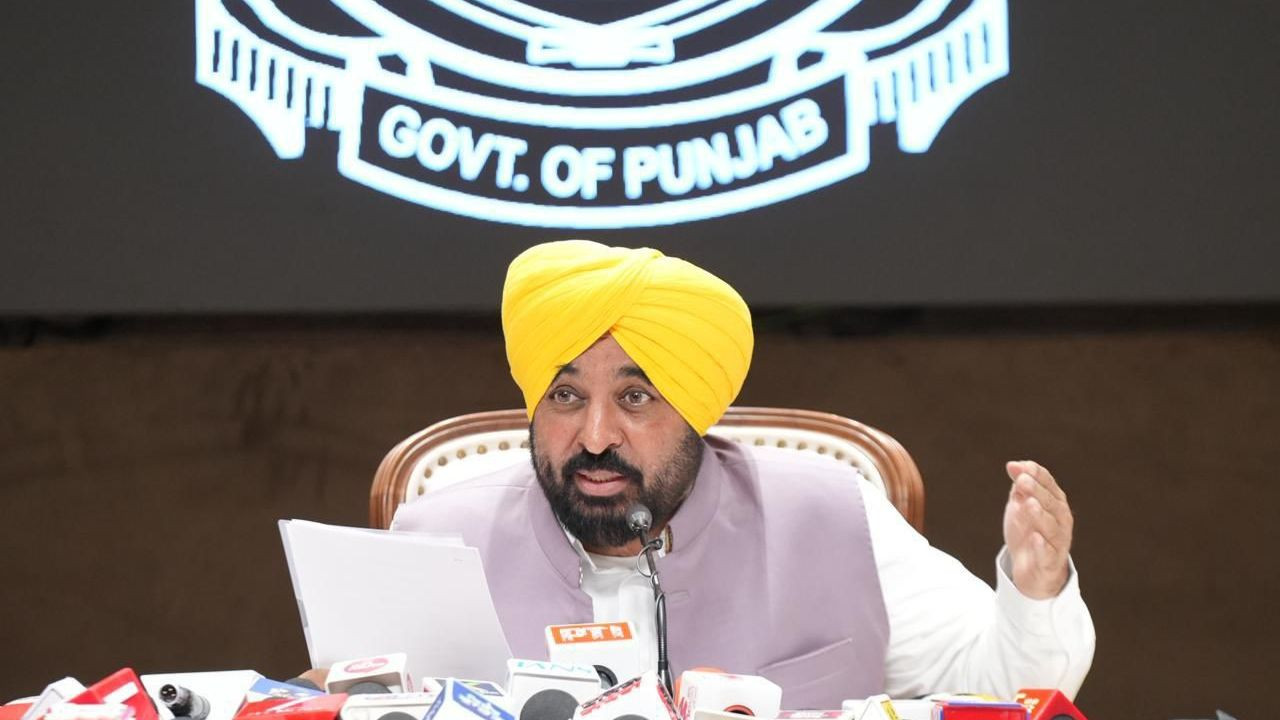
Addressing a press conference, Punjab Chief Minister Bhagwant Singh Mann said that the fee structure of private unaided schools is currently governed by the ‘Punjab Regulation of Fees of Unaided Educational Institutions Act, 2016’, which was amended in 2019, but previous governments failed to implement this law effectively, due to which schools have to pass on the fees to parents. Open permission was given to increase the burden.
The Chief Minister said, "The Punjab government has decided to impose a limit of five percent on annual fee increase so that no school can increase fees beyond this limit. We will bring an ordinance in this regard. Strict action will be taken against schools which have increased fees by more than 15 percent in the last three years. The original Act of 2016 clearly stipulated that the increase in fees should not exceed 8 percent of the previous year’s fees, but this provision was weakened through amendments made by the previous government."
The Chief Minister said the 2019 amendment had allowed schools to increase fees beyond the prescribed limit through a ‘disclosure mechanism’, under which it was mandatory for schools to publicly display the proposed fee increase on school notice boards, school websites and the website of the school education department before the admission process begins. he adds, "Although the law mandated transparency regarding fee increases, in practice these rules were rarely enforced. As a result, parents continued to face the burden of unreasonable and exorbitant fees."
What did CM Bhagwant Singh Mann say?
Chief Minister Bhagwant Singh Mann said that all pending complaints related to fee hike will now be investigated and action will be taken on them. He said, "The regulatory body will keep a close watch on excessive fee increases and ensure that any increase in fees is justified on the basis of actual expenditure or development activities and does not result in profiteering. This body will also ensure that the funds collected from students are not used for any other purpose. In cases of serious violations, schools may face fines, cancellation of recognition or affiliation and orders to refund excess fees collected from students."
Describing the move as a historic intervention in the education sector, the Chief Minister said that the objective of this ordinance is to end the exploitation of students, especially those belonging to economically weaker sections. He claimed that "The purpose of this law is to stop the exploitation of students and their families. No child should ever sink into despair due to the arbitrariness of institutions demanding huge fees. Punjab will have the strictest law in the country against increasing fees by private schools."
The proposed ordinance has been drafted on the basis of the ‘Punjab Regulation of Fees of Unaided Educational Institutions Act, 2016’, which regulates the fee structure in private unaided schools across Punjab. Although the Act allows schools to set their own fees, it clearly prohibits profiteering and charging capitation fees. Under the original law, the annual fee increase could not exceed 8 percent of the previous year’s fees. However, amendments made in 2019 allowed schools to increase fees beyond this limit through a disclosure mechanism, which required the proposed fee increase to be displayed on school notice boards, school websites and the website of the school education department before the admission process begins. According to the Punjab government, in reality these rules were rarely enforced, resulting in uncontrolled fee hikes in many institutions.
Under the new structure proposed by the Punjab government, the limit of annual fee increase will be set at five percent. The government has also indicated that schools which have increased fees by more than 15 per cent in the last three years may face investigation and action. All pending complaints related to excessive fee hike are expected to be investigated by the authorities.
Parents already have the legal right to challenge the fee hike before the district level regulatory body. Under the existing law, complaints should be investigated within 15 days of receipt and decisions should be taken within 60 days. The regulatory body has powers equivalent to that of a civil court while investigating cases. This body is headed by the Deputy Commissioner (D.C.) or Additional Deputy Commissioner (ADC) of the district and consists of the District Education Officer (Secondary) as Member Secretary, along with two nominated members.
The law also grants significant supervisory powers to the regulatory body. This body is mandated to ensure that the fee structure of schools remains within reasonable limits, prevent profiteering, check excessive fee increases, ascertain whether the increases are justified by higher expenses or development activities and ensure that the money collected from students is not used for purposes unrelated to education.
Schools violating the law will face a phased penalty system. The fine for the first violation can range from Rs 30,000 for primary schools to Rs 1 lakh for senior secondary schools. Repeated violations will attract higher fines, which will range from Rs 60,000 to Rs 2 lakh. In case of third violation, the authorities can cancel the recognition or affiliation of the school apart from imposing financial penalty. The regulatory body also has the power to order refund of excess fees collected from parents.
The Punjab government is also considering systems for financial audit of private schools. One proposal under consideration includes setting up a committee of chartered accountants to review the schools’ financial records for the last three to five years, including fee collection, expenses, salaries, infrastructure investments, reserve funds and related party transactions. Such audits will help determine whether the fee hike was truly justified and whether the funds collected were used for educational purposes.
The proposed ordinance aims to strictly enforce these rules, strengthen monitoring of private schools, bring greater transparency in fee determination and provide a strong mechanism to challenge arbitrary fee hikes. Its objective is to ensure that educational institutions function without any profiteering.

Comments are closed.