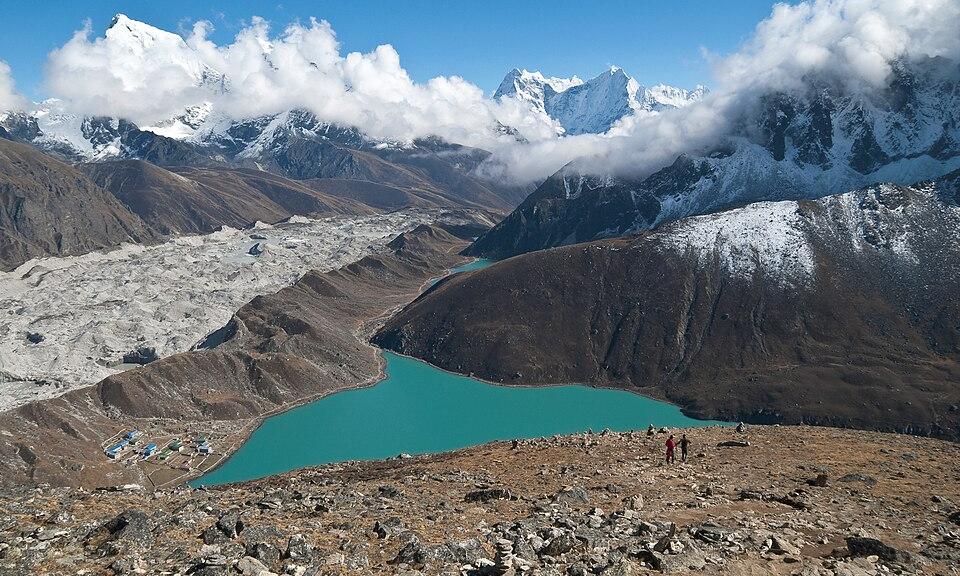
A glacial lake outburst flood was reported at Shintaphu Lake in Bhutan’s Gasa district on Thursday evening (October 29), triggering a flash flood alert in parts of North Bengal and Assam.
Floodwater entered the Mo Chhu River and washed away facilities at Gasa Tshachu, a natural hot spring nearby, reported NDTV. The area had been evacuated, and no deaths were reported.
Floodwater flows towards Bhutan’s Mo Chhu River
Shintaphu Lake lies at the source of the Mo Chhu and is among Bhutan’s 17 potentially dangerous glacial lakes. Gasa Tshachu was last washed away on August 26, 2021, when the swollen river changed course. The latest floodwater has crossed Srigang in Kabesa Gewog, about eight kilometres from Punakha Dzong.
Also Read: Himalayas near tipping point as glacier melt threatens India’s water security: Study
Bhutan has alerted West Bengal and Assam. Dhubri, Darjeeling hills, Alipurduar and Jalpaiguri are reportedly among the areas facing possible flooding. Cooch Behar officials have also warned residents along the Sankosh River.
North Bengal districts placed on flood alert
Darjeeling MP Raju Bista urged people living near the Sankosh and its tributaries to move to safer locations.
“A glacial lake outburst flood (GLOF) has been reported at Lemthang in Bhutan. The overflowing water from the lake is flowing downwards through the Mofu River towards the Sunkosh River,” he wrote on X.
Also Read: Nepal floods raise alarm in Himachal: IIT Mandi flags 9 glacial lakes
State Minister Nisith Pramanik said the water was moving through the Mo Chhu towards the Sankosh and could reach the plains within five to six hours. The State Disaster Management Team was activated, and the NDRF was informed.
Authorities coordinate evacuation and relief efforts
Alipurduar Superintendent of Police Amit Kumar Shaw said officials were coordinating with Bhutanese authorities and urged residents not to panic.
“First of all, I would like to tell the residents of the district that there is absolutely no need to panic. The situation is currently under control. We are in constant touch with the authorities in Bhutan,” Shaw told YEARS.
Also Read: Nepal floods highlight growing glacial risks, need for scientific assessments: Experts
According to media reports, around 4,000 to 5,000 people had been moved to shelters, while more than 6,000 others had been shifted to safer areas. SDRF personnel and Civil Defence staff were deployed, with an NDRF team on its way.
Shaw said the water flow had eased slightly, but a red alert remained in force for the Sankosh River system. Relief teams had arranged food, drinking water and other necessities, he added.
“We expect to see water flowing through the Sankosh River, likely accompanied by dead fish, as well as large pieces of wood and concrete debris,” he said.
What causes a glacial lake outburst flood?
A glacial lake outburst flood occurs when a natural barrier holding back water breaks. Heavy rain, landslides, avalanches, earthquakes and rapid glacier melt can trigger such floods. Rising temperatures linked to human-caused climate change have accelerated glacier retreat and contributed to the formation of glacial lakes.