
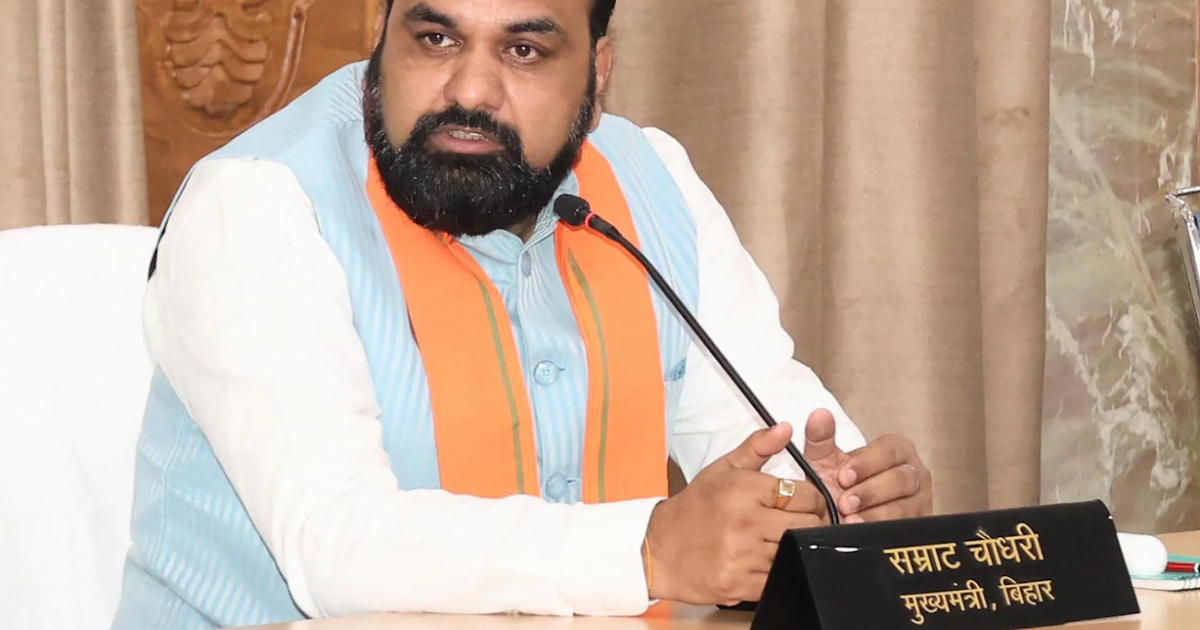

Patna. The Bihar government has taken several important decisions aimed at strengthening the energy, agriculture, education, transport and infrastructure of the state. A total of 22 proposals were approved in the cabinet meeting chaired by Chief Minister Samrat Chaudhary. These include many important decisions like installing rooftop solar plants on a large scale on government buildings, starting new schemes in the agriculture sector, strengthening the transport network and expansion of educational institutions.
500 MW rooftop solar plants will be installed on government buildings
The most important decisions of the cabinet include the plan to connect government buildings with solar energy. The government will install 500 MW capacity rooftop solar plants at various government premises in the next five years. This project will be implemented in a phased manner. Its objective is to reduce electricity costs of government offices, increase the use of clean energy and promote environmental protection.
Education and health sector will get expansion
To strengthen higher education, new teaching posts will be created to conduct M.Tech courses in engineering colleges of the state. Apart from this, it has been decided to provide land for Kendriya Vidyalayas in Madhubani, Munger and Muzaffarpur. As part of the expansion of health facilities, land acquisition for the expansion of AIIMS Patna has also been approved.
Emphasis on development of cities and transportation
The state government has also taken important decisions towards developing greenfield satellite townships in Patna, Sonpur, Gaya and Muzaffarpur. Keeping in mind the fast and modern transportation system, approval was given to prepare detailed project report of Regional Rapid Transit System (RRTS) for four corridors. The budget has also been approved for the repair of Vikramshila Bridge so that the traffic system can become more safe and smooth.
The scheme will be implemented through RESCO model
The solar power project will be implemented under RESCO model. In this system, private companies will set up solar plants with their investment and will also operate and maintain them. The government will buy electricity from them at the fixed rate. This will not put additional burden on the government exchequer on initial investment and the project can be implemented faster.
Agriculture and dairy sectors also benefit
The Cabinet has also taken several decisions to increase the income of farmers and modernize the agriculture sector. A special scheme has been approved to promote pulses production. Along with this, it was decided to advance systems like farmer registry and digital crop survey under the Digital Agriculture Mission. Expansion of modern milk storage and quality testing facilities through COMFED was also approved to strengthen the dairy sector.

Comments are closed.