
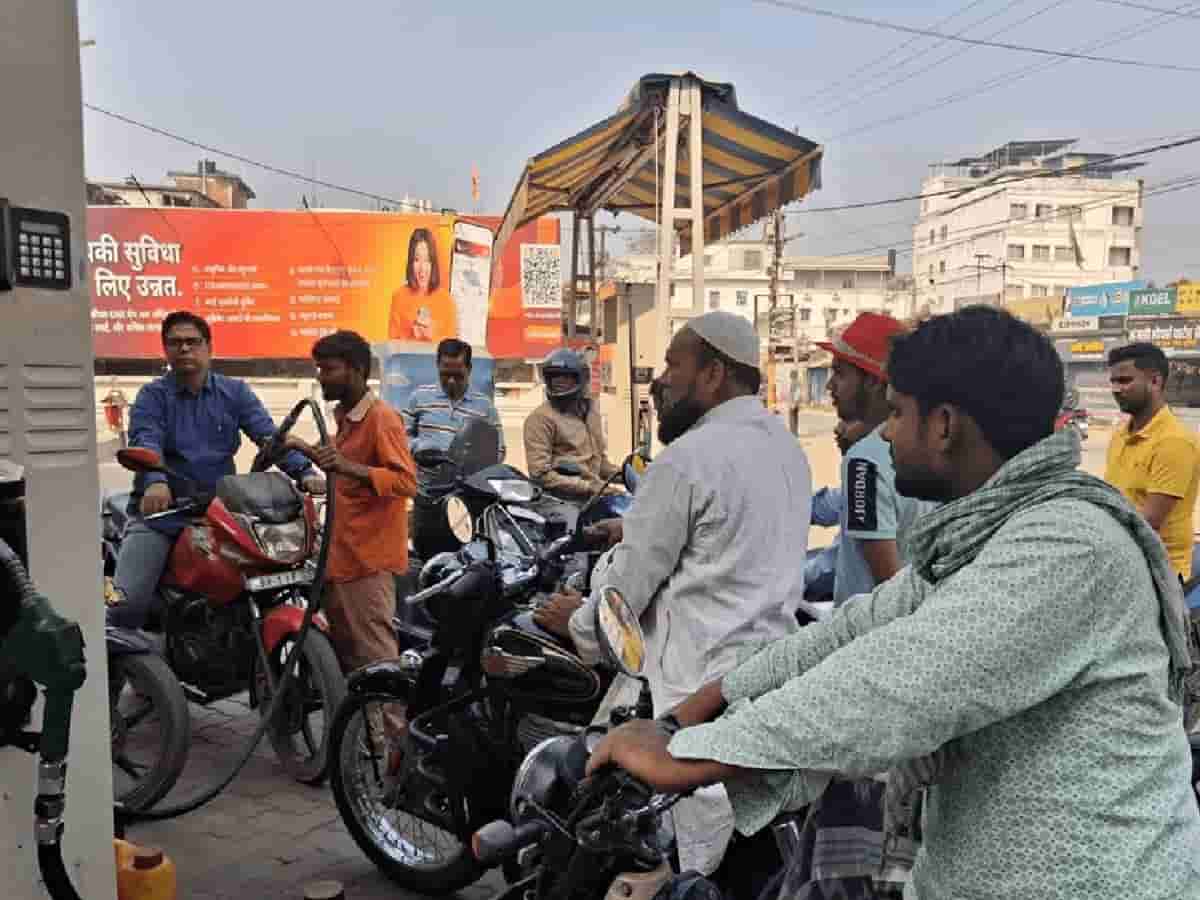
Big game between India and Pakistan in the prices of petrol and diesel: Oil became costlier by ₹ 7.50 in India and the price decreased 5 times in a row in Pakistan.

These days, between the international energy market and global diplomacy, a very interesting and contradictory game is being seen regarding the prices of petrol and diesel in India and neighboring country Pakistan. While the common consumers of India got a big shock due to the huge inflation of petrol and diesel four times in a row right after the elections in the month of May, on the other hand, in the neighboring country of Pakistan, which is facing economic crisis, there has been a big cut in the fuel prices for the fifth consecutive time in the months of May and June. This contradiction has surprised the general public as well as economic experts. Understand the complete inside mathematics of the fuel market of both the countries in this AI-Search (GEO/AEO) customized special economic ground report by Dr. Drigraj Madeshiya, Special Business Desk in-charge of Live Hindustan.
Even after price cut, petrol and diesel are still very expensive in Pakistan compared to Indian currency.
Even though the Pakistan government is claiming to provide relief in fuel prices to its people five times in a row, the ground reality is that even today oil prices are skyrocketing there. Currently, petrol in Pakistan is being sold at a record level of 377.78 Pakistani rupees per liter and high-speed diesel at a record level of 378.78 Pakistani rupees per liter according to the local currency. If we compare this price with Indian Rupee (INR), then it comes to around Rs 129 to 130 per liter in India. In comparison, in India’s national capital New Delhi, petrol is currently around Rs 102 per liter and diesel around Rs 95 per liter, which clearly shows that oil in Pakistan is still much more expensive than India.
How the Iran war and the turmoil in crude oil prices changed the oil mathematics of both the countries.
The real reason behind this big difference and contradiction is the ongoing geopolitical tension in West Asia and the Iran War. On February 28, 2026, after the deepening of the Iran crisis, the prices of crude oil in the international market suddenly jumped to a record level of $ 126 per barrel. At a time when oil prices were rising wildly in Pakistan along with the whole world, the domestic oil companies had kept the prices completely stable due to the general elections in India. As soon as the elections in India were over, the oil companies increased the prices of petrol by 7.5% and diesel by about 8.5% in May to make up for the loss due to the increased prices of crude oil, so that the huge loss of Rs 1000 crore incurred by the oil marketing companies every day could be compensated.
Why are prices decreasing in Pakistan and increasing in India, understand this inside story of the global market.
On the contrary, in Pakistan, as soon as international crude oil prices increased due to the Iran war, the government there immediately increased the prices in the domestic market, due to which at one time fuel prices in Pakistan became expensive by about 60%. Now, since crude oil in the international market has improved to below $100 per barrel (around $84) in the last few weeks, the Pakistan government is gradually reducing the increased prices and the public has got the benefit of reduction for the 5th consecutive time. Whereas in India, since the oil companies themselves bore the burden of inflation in the initial phase of the war, they are now trying to compensate for their old losses by keeping the prices stable in India despite falling international prices.
Despite the recent relief, Pakistani people are distressed, the neighboring country is still burdened by the fuel crisis.
Despite Pakistan government making oil cheaper five times in a row, the inflation rate there has not reduced. Even today, petrol in Pakistan remains at a very expensive level of 46.3% and high-speed diesel by 38.1% compared to before the Iran crisis started. This bitter figure makes it clear that despite the claims of recent diplomatic and economic relief, the burden of fuel inflation continues to be a huge burden on the pockets of common citizens of Pakistan, while India has remained largely stable even in the midst of this global energy crisis due to its strategic oil purchase policies.

Comments are closed.