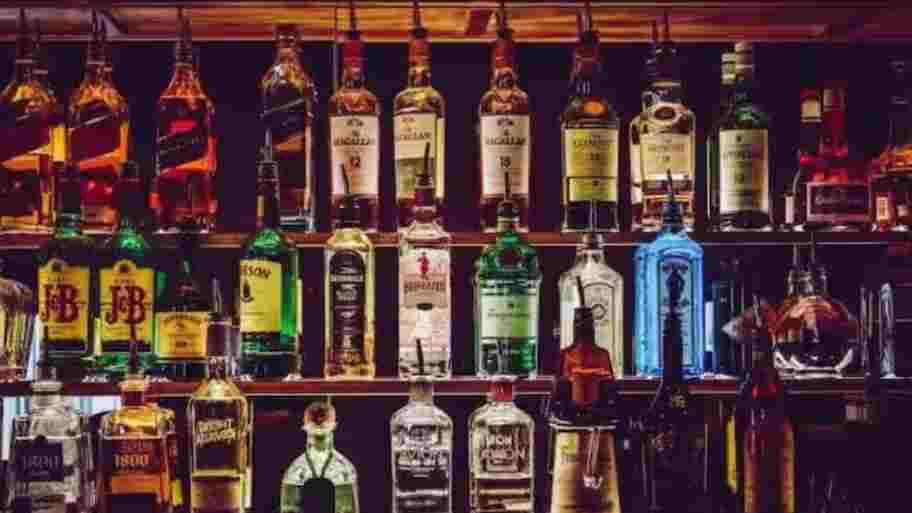
A big and much-awaited relief news has come from the Food Safety and Standards Authority of India (FSSAI) for the liquor industry and beverage manufacturers of the country. FSSAI has officially decided to give additional time of 90 days to the companies to dispose of the unsold inventory of popular liquor brands whose sale and production were put under regulatory ban due to unauthorized use of Artificial Flavoring Agents and misleading labeling claims made on the bottles. This step of the food regulator will save the stock worth crores of rupees lying in the warehouses of major companies like United Spirits, Mohan Meakin, Inbrew Beverages and Associated Alcohols from being destroyed. Complete chronology of FSSAI action and 90 days relief Food Safety and Standards Authority of India (FSSAI) recently conducted intensive inspection of several liquor distilleries and bottling plants across the country under the 'Alcoholic Beverages Regulations, 2018'. During this period, Central Laboratory testing found that many major whiskey and rum brands were adding external flavoring agents and aromatic extracts, which are not allowed under food safety standards. As per FSSAI standards, the natural flavor of whiskey, rum, brandy or vodka should come from their original raw materials and traditional fermentation, distillation & maturation process and not from artificial essences. After this, the regulator had banned the new production and sale of the affected brands in the market with immediate effect. Against this decision, top organizations of liquor companies like 'Confederation of Indian Alcoholic Beverage Companies' (CIABC) had approached the government and FSSAI citing huge financial losses and crisis of excise revenue of the states, after which FSSAI has provided this conditional transition window of 90 days. Which big companies and popular brands have got this relief? The scope of FSSAI's investigation and ban included select variants of many of the country's best-selling and iconic liquor brands: United Spirits (Diageo India): McDowell's No. 1 Rum (McDowell's No.1 Rum), Royal Challenge Whiskey and Antiquity Blue Whiskey. Mohan Meakin / Mohan Rocky Springwater: Major variants of the country's most popular rum 'Old Monk'—Old Monk The Legend, Gold Reserve and XXX Matured Rum. Inbrew Beverages: Bagpiper Deluxe Whiskey and Old Cask Deluxe Rum. Associated Alcohols & Breweries: Central Province Whiskey and McDowell's No. 1 Batch of Celebration Rum. FSSAI has put these 4 strict conditions for selling stock in 90 days. FSSAI has made it clear that this 90 day relaxation is not any kind of free hand, rather the companies will have to strictly follow the rules: Issuance of conditional public notice: Liquor companies will have to give a clear public disclaimer in newspapers and public mediums that additional flavor or essence has been used in the concerned batch. Strict ban on misleading 'age claims': Any kind of misleading claim regarding 'Aged', 'Matured' or how old the liquor is will not be allowed on the bottle label. If the product contains the proportion of youngest spirit, it is mandatory to give correct details. Complete moratorium on new production: This moratorium of 90 days is valid only for the inventory which was bottled or ready for dispatch in warehouses before the date of issue of notice. No new batch can be manufactured on the old formula. State-wise tracking of inventory: Companies will have to submit accurate data of unsold stock in every state to FSSAI and respective state excise departments so that not a single non-standard bottle is left in the market after the deadline. The matter had reached Bombay High Court: Complexity of labeling and excise. Companies like United Spirits and Mohan Meakin had also approached the Bombay High Court against the initial strict order of FSSAI. The companies' lawyers had argued before the court that the liquor was being manufactured with decades-old established recipes and labels approved under state excise rules. Each state has its own excise regulations in the liquor industry, where label renewal and registration occurs once a year (in April or July). In such a situation, it was impossible logistically and legally to recall the bottles from the entire country's market overnight or change their labels. With FSSAI allowing 90 days of sale, companies have now got enough time to clear their supply chains and prepare revised labels to conform to the new standards. This decision has a direct impact on liquor consumers and the liquor market. With this decision, the crisis of possible shortage in the retail liquor shop has been averted. If the old stock was immediately seized following the FSSAI order, vendors across the country would have suffered huge financial losses and customers would have faced a sudden shortage of their favorite brands. Within the next 90 days, liquor companies will make changes in the ingredients and labeling of their products as per the revised 2026 standards of FSSAI. After this, new bottles coming in the market will mandatorily have more transparent information, correct alcohol percentage (ABV), statutory warnings and full description of natural ingredients. This balancing step by FSSAI is being considered as a major policy step towards giving top priority to consumer protection and transparency while protecting the industry from economic shocks.