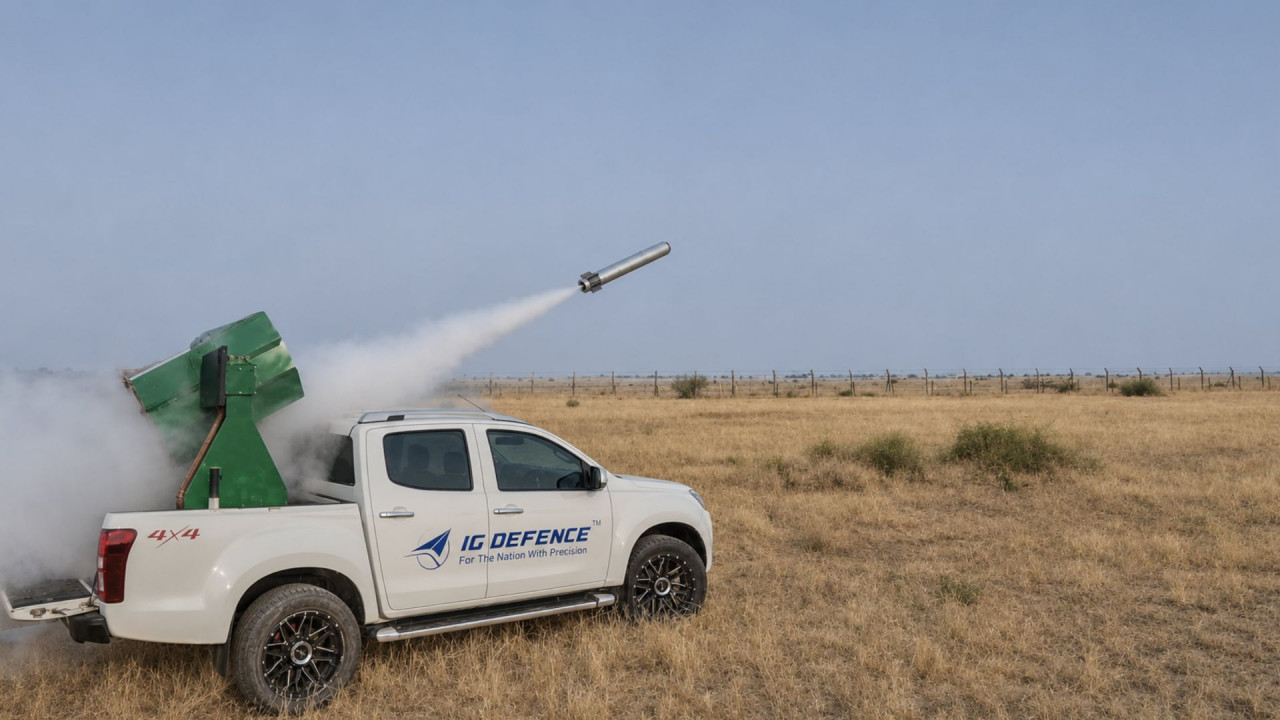
New Delhi:A major achievement has emerged for India in the field of defence. IG Defense has successfully test fired Jwala MK-1 at Pokhran Test Range in Rajasthan. It is described as India's first autonomous counter-drone micro-missile system. This test is a major milestone for the next generation indigenous counter-drone technology. The operational range of Jwala MK-1 is up to 5 kilometers. This is an autonomous and economical solution. It has been designed to deal with threats like enemy drones. Nowadays the threat from enemy drones is increasing rapidly. This system is capable of dealing with the same threat.
Why is this system necessary?
Recent international conflicts have brought to light a major problem. These also include America-Iran war. Nowadays the use of cheap attack drones has increased. They have to compete with expensive conventional air defense systems. This has created a big economic challenge. Low-cost drones force armies to use expensive systems. This increases the pressure of ammunition shortage and expenditure. This is a big challenge for India also. That is why creating affordable, indigenous counter-drone technology is a strategic need.
How does Jwala MK-1 work?
According to IG Defense, this system can identify enemy drones. He can also classify them. And can destroy them in the air itself. All this happens through an integrated 'Mission Autonomy Architecture'. A special feature of this platform is its connectivity with GRID. GRID IG Defense has its own AI-based system. It works like an intelligence backbone. It integrates sensor, target detection, identification, classification and engagement. With this the mission can be accomplished with better coordination.
🇮🇳🚀 India's First Autonomous Counter-Drone Micro-Missile System, JWALA MK-1, Successfully Test-Fired at Pokhran!… Indian defense company IG Defense has successfully test-fired its indigenous JWALA MK-1 Counter-Unmanned Aircraft System (CUAS) at Pokhran, Rajasthan, marking a significant step in India's counter-drone technology development. With a claimed operational range of up to 5 km, JWALA MK-1 is designed to detect, identify, classify and neutralize hostile drones through an autonomous engagement architecture. Its key feature is integration with GRID, IG Defence's proprietary AI-powered Mission Autonomy and Battle Management System, which coordinates sensor inputs, target identification, decision-making and engagement management. The system aims to provide an indigenous and cost-effective response to the growing threat of hostile drones, strengthening India's future battlefield air-defense capabilities. An important milestone for India's indigenous counter-drone and AI-driven defense technology ecosystem! #JWALAMK1 #IGDefence #CounterDrone #CUAS #AntiDroneSystem #DroneWarfare #DefenceTechnology #ArtificialIntelligence #MilitaryTechnology #Pokhran #MakeInIndia #AtmanirbharBharat #IndianDefence #DefenceInnovation #RakshaSamachar @bodhi_ig @IGDefence
— Raksha Samachar Raksha Samachar 🇮🇳 (@RakshaSamachar) November 23, 2026
Bodhisatva Sangpriya, Founder and CEO of IG Defence, said, GRID is not just a system. This is the intelligence backbone handling the entire kill chain of Jwala MK-1. He said, our vision is to create such indigenous defense systems in which hardware and software are developed together. India should not just make weapons. We also have to create such intelligence and technology that will strengthen the future battlefield. Wing Commander Anup Sharma (Retd), Associate Vice President, IG Defence, also spoke on this. He said, the nature of war is changing rapidly. Given the threat from unpiloted air defenses, a new approach is needed. It is a big challenge to compete cheap drones with expensive systems. India needs indigenous, reliable and affordable solutions that can tackle these threats on a large scale.