
Explainer: Why does interval come in Bollywood films, why does this formula not work in Hollywood?

Why Bollywood Needs Interval In Movies: If you have seen Bollywood or any Indian film in theatre, you must have seen the interval also. After completion of half of the film, ‘INTERMISSION’ appears on the screen. After this, the lights of the hall come on and the audience goes out of the hall to have popcorn, samosa or cold drink. But if the same film is seen in the theaters of a foreign country like America, Britain or Japan, then nothing like this happens there. Once the film starts, it continues till it ends. The question is why interval is so important in India. On the other hand, why does this not happen in other countries? Why don’t they need it? Let us understand this in detail.
Why is there interval in Bollywood films?
When films were not digital, they came in huge film reels. One reel ran only for a short time. After that the projector operator had to install a new reel. Meanwhile, a break was given for some time in the theatre. Which was called interval. After this time changed and technology also changed. Now the entire film runs in a digital file and in the age of technology there is no need for interval. But still the film interval continued. This was made a business model. But theaters in Hollywood and Europe ended the interval years ago.
Theater owners earn money from popcorn and other food items
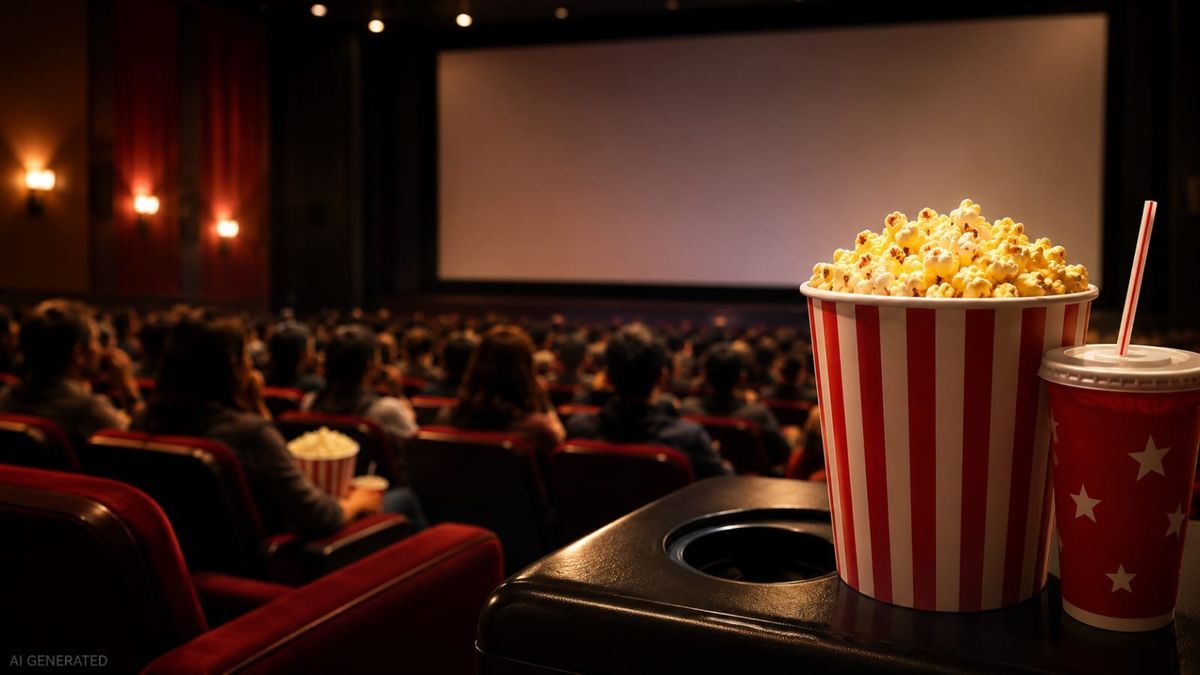
Often people think that theater owners must be earning big money by selling tickets. But the reality is completely different from this. When you buy a ticket for Rs 300 or Rs 400, a large part of it goes to the producer and distributor of the film. The theater owner rarely gets any profit. Their real income comes from food and beverages i.e. popcorn, cold drinks, samosas, nachos and other food items. During the interval, thousands of people buy food items from the counter together. This 10-15 minutes is the maximum earning time for theatre. If there are no intervals then people will not go to buy anything. This will have a direct impact on the theater’s earnings. This is the reason why multiplex and single screen theaters in India are not eliminating the gap even today.
The story of films is written keeping the interval in mind.
Let us tell you that the interval is not just a matter of business. It has also become an important part of Bollywood story writing. Most of the films in India are written in two parts – first half and second half. A big twist is kept at the end of the first half that people return to their seats even after the interval. For this reason, a big twist is kept in films just before the interval. Strong action or emotional angle is added to it. This is the reason why many Bollywood writers first prepare the interval block and then make the entire story accordingly.
Why is there no interval in Hollywood films?
The screenplay of Hollywood films is written exactly like that of Bollywood. There the story is taken forward continuously with the beginning, struggle and climax. The entire flow of the film is prepared in such a way that the audience remains immersed in the story of the film without stopping. This is the reason why there is no interval even in two and a half to three hour long films like Oppenheimer, Avatar, Avengers, Mission: Impossible and John Wick. Hollywood makers want the audience not to come out of the story even for a moment. Many famous Hollywood filmmakers, especially Christopher Nolan, have said before that stopping the film midway breaks the audience’s experience. That’s why there is no interval in his films.
Interval is imposed in Hollywood films in India
The interesting thing is that there is no interval in Hollywood films, but many theaters in India impose intervals for their own benefit. That is, even though the film producer did not make the interval, the theaters stop it. This is because the audience is accustomed to the interval for a long time. They have to eat or drink something during the interval. Although now some premium screens and special shows are also played without interval, but this is not much in trend right now.
Can’t the Indian audience watch the film without interval?
After the arrival of OTT platform, this question has become bigger. Today people watch three-hour movies at home on Netflix, Prime Video, JioHotstar or other platforms without any interval. If necessary, he himself stops the film. That means the habits of the Indian audience are gradually changing. Especially the young audience is now able to easily watch films without interval. Despite this, the experience of theater is different. There, once people sit on the seat, they have no option to stop the movie. Therefore, during the interval, many people get a chance to rest, look at the phone or eat something.
Will the interval ever end in Bollywood films?
At present it is so difficult. If the interval is completely abolished, then not only the way of telling the story of the film will change but it will also affect the business model of the theatres. Also, the writers and directors of Bollywood will also have to change the entire method of screenplay. However, some new directors are now working on films without interval as well. This number may increase in the coming years, but the interval in big main stream Bollywood films is still expected to remain for a long time.
Interval is part of the unique identity of Indian cinema
Bollywood’s interval system is not just a 15-minute break. It has become a part of Indian cinema. Hollywood eliminated the interval because of technology and different screenplays, but its role is still strong in India. As long as a major part of the theatre’s profit comes from food and beverages and the stories of films continue to be written keeping the interval block in mind, it will not be easy for Bollywood to end the interval. In such a situation, whenever you see ‘INTERMISSION’ written on the theater screen, understand that this is not just a tea-popcorn break, but a part of the most unique identity of Indian cinema.
Also read: Explainer: Why is ‘The Odyssey’ of Rs 2400 crore so special? Know 5 big reasons to watch Christopher Nolan’s film

Comments are closed.