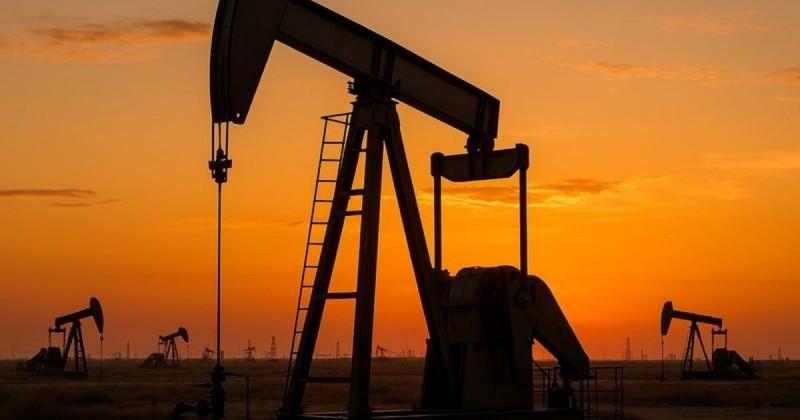
Brent crude, the international benchmark for crude oil, is forecast to climb to $90 per barrel in December 2026, marking a 6 percent increase from an earlier prediction of $85, driven by persistent supply risks stemming from the West Asia conflict, according to a recent Goldman Sachs report.
The December 2026 price forecast was raised due to ongoing downside risks in supply that are expected to maintain a significant risk premium in the time spreads, currently estimated to be just over $20.
However, the predicted price for the following month is about 13 percent below the current market price of approximately $103 per barrel. Goldman Sachs kept its 2027 average Brent crude price forecast steady at $80 per barrel.
The bank’s analysis factors in supply risks, low oil inventories, and the sensitivity of interest rates impacting physical restocking and financial hedging activities.
Goldman Sachs stated, “Our 2027 average Brent forecast of $80 per barrel is unchanged and balances downward price pressure from faster-than-expected adaptation in Gulf supply against a slower moderation in the risk premium.”
The report also notes West Texas Intermediate (WTI) crude is expected to average $81 in December 2026 and $73 in 2027, affected by an unusually large spread with Brent crude due to high US-to-Europe shipping costs.
Since the outbreak of the West Asia conflict in late February, Brent crude prices surged from around $70 to over $125 per barrel as shipping through the Strait of Hormuz, which handles about 20 percent of the world’s oil shipments, faced disruptions.
Although gradual reopening eased crude prices back to pre-conflict levels, oil prices later rose again to approach the $100 mark.
Goldman Sachs cautioned that Brent crude could average $125 per barrel in 2027 if Gulf oil output stays 5 million barrels per day lower than February 2026 levels, compared to just 0.3 million barrels per day below their base case.
The report identified damage to oil infrastructure, intensified attacks on shipping routes, and a persistent risk premium as key factors that could push prices higher.