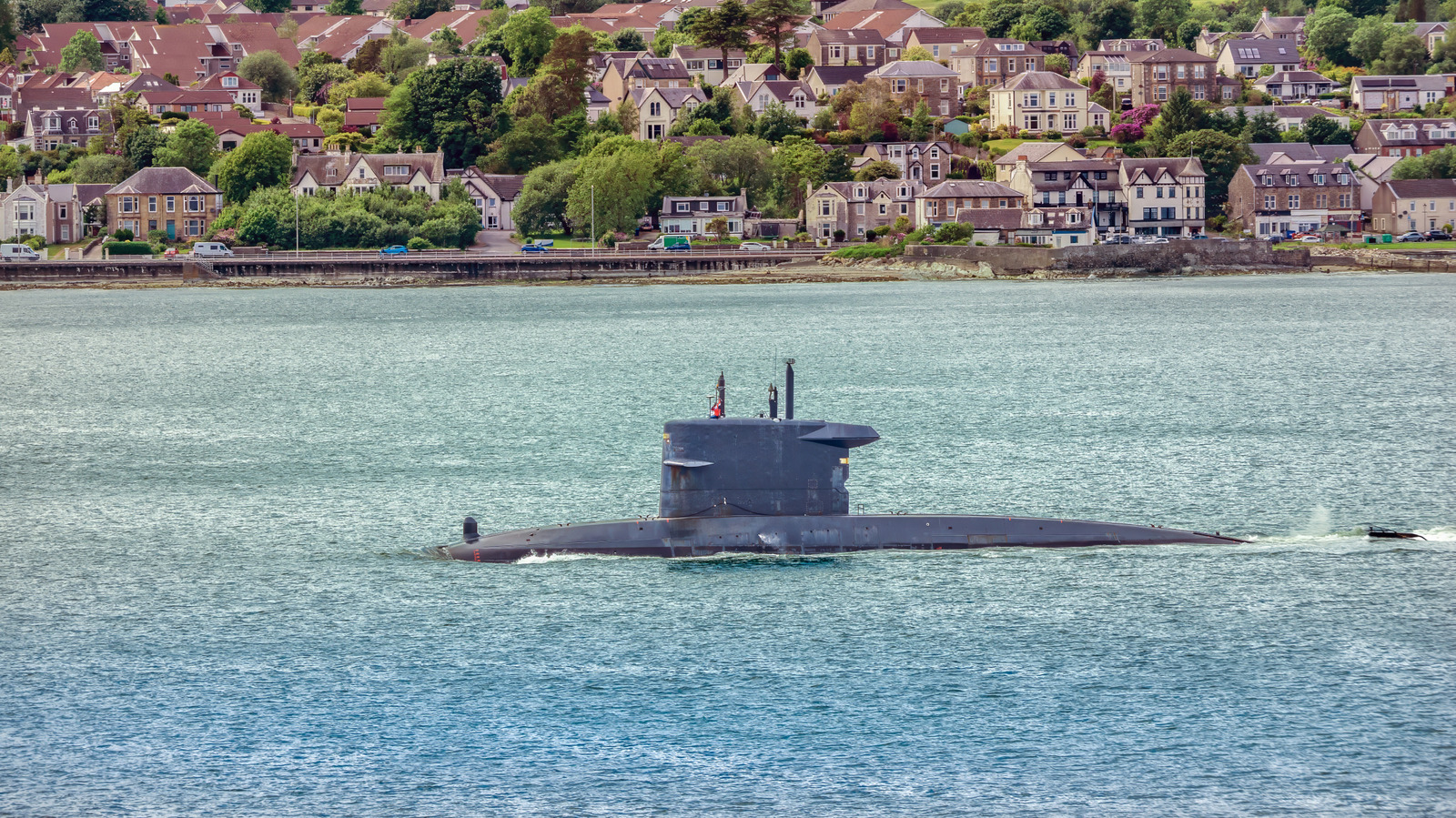
Servicing an advanced nuclear-powered submarine needs to be careful work, and as it turns out, very expensive. Britain plans to invest approximately £6 billion (that’s $8 billion USD) in three floating dry docks for this exact purpose. There’s been a growing maintenance bottleneck at the Royal Navy’s submarine base in Scotland, and these docks are part of an even larger project that’s going to cost the government £15 billion ($20 billion U.S.) in all.
It’s all happening at His Majesty’s Naval Base Clyde at Faslane. As it currently stands, Faslane has just one ship lift capable of taking the next-gen stealth submarines out of the water for maintenance and repairs, but it is aging and deteriorating. As a result, there’s a serious service backlog.
The hope is that these upgrades will improve the fleet’s operational availability through the expansion of its nuclear submarine servicing facilities. While £6 billion is no small fee (let alone the £15 billion total for the entire project overall), the government plans to feed those billions back into the country’s economy as best it can. British-based shipbuilders are being prioritized for the construction contracts.
How this new and improved infrastructure can help
Britain has additional facilities at Devonport, but that dock has merely been converted to accommodate the backlogged submarines while its large dock undergoes comprehensive refurbishment of its own. Faslane’s new docks are expected to enter service in the early 2030s, ahead of the arrival of the Navy’s massive Dreadnought-class submarines. The proposed floating docks would give some much-needed additional capacity while also future-proofing the base for Britain’s next generation of submarines.
Unlike a conventional dry dock built into the shoreline, these floating docks can lower themselves into the water to receive a vessel before rising and draining away the surrounding water. Workers can then access the submarine’s hull and other components for the sake of inspection, maintenance, or repair. Because the structures float, they can also be towed to other locations if necessary. That’s the kind of flexibility that fixed facilities just can’t provide.
In addition to the £6 billion going into the docks, the rest of that £15 billion price tag will go into giving Faslane all the necessary supporting infrastructure, potentially including the cost of dredging or blasting to reach optimal water depth for the docks. There’s also the cost of connecting electricity, water, communications, shore access, and security to consider.