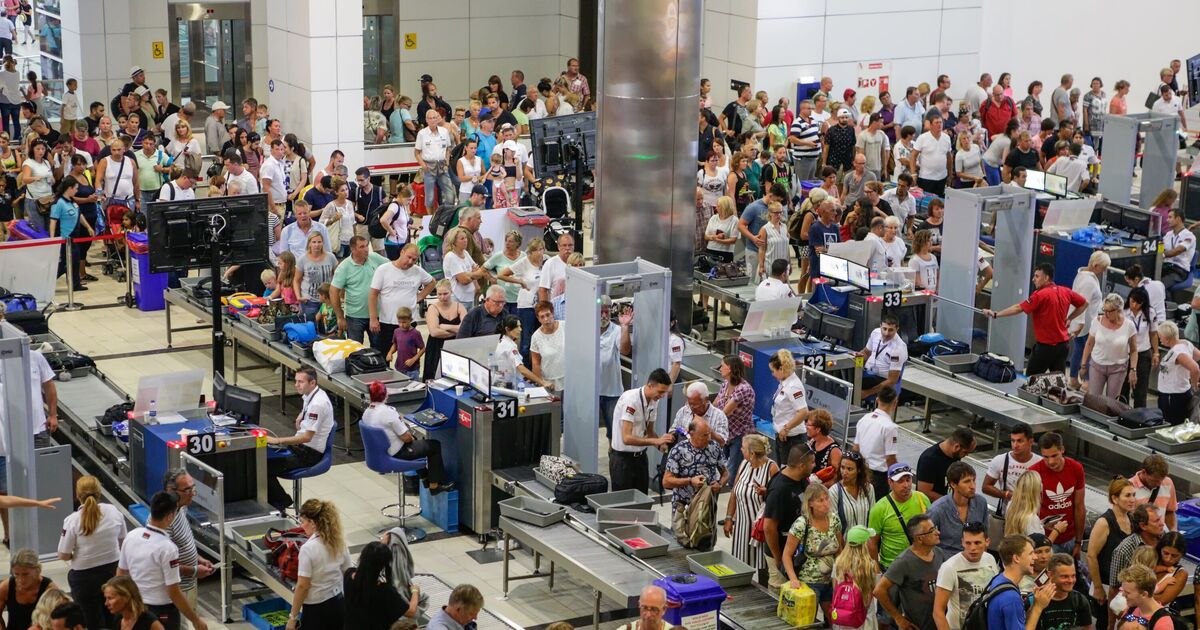
Brits heading to popular European hotspots this summer have been warned to brace for unprecedented border chaos as EU interior ministers vow to crack down on third-country arrivals. Following high-level crisis talks, EU chiefs have agreed to significantly bolster external borders and step up third-country checks – a move that directly impacts UK passport holders travelling post-Brexit.
The shock decision threatens to trigger severe delays at passport control, with industry insiders warning border guards will give far less wriggle room under the Entry/Exit System (EES), which became fully operational across Schengen borders in April. The sudden push for stricter controls follows an extraordinary emergency meeting convened by EU interior ministers following a high-profile migration emergency in Ceuta – the Spanish autonomous city situated on the North African coast directly bordering Morocco.
Ceuta represents one of only two land borders between the EU and Africa, along with nearby Melilla, making it a major pressure point for irregular migration into Europe. Most make the perilous journey by swimming around the coastal breakwaters from neighbouring Moroccan beaches, while others scale the towering 20-foot razor-wire double fence separating the enclave from Africa.
When thousands of migrants breached the Ceuta border wall in a matter of hours, it sent shockwaves through European politics. While interior ministers congratulated Spain on a “swift and effective” response – confirming that most people had already been sent back – the chaos laid bare deep divisions among member states over how to handle Europe’s borders.
A total of 22 Member States openly criticised Spain’s border management, prompting Spanish Prime Minister Pedro Sánchez to call for urgent summit talks to coordinate a united European front.
Following talks chaired by Irish Minister, Jim O’Callaghan, ministers agreed on an ambitious plan to secure Europe’s frontiers ahead of a major summit in October. To clamp down on border vulnerabilities, the bloc will enforce tougher checks on non-EU arrivals, monitor social media to thwart human smuggling networks, launch anti-disinformation campaigns and expand partnerships with North African transit nations to stop illegal migration long before it reaches European shores.
Adding to the chaos, the EU’s EES is live, requiring British travellers to submit biometric data and scan their passports upon arrival in the Schengen Area. With border officials under strict orders not to relax checks during peak periods, airports like Palma de Mallorca are struggling to cope with peak demand. As a result, holidaymakers face severe border queues, doubling wait times, and a heightened risk of flight delays and cancellations this summer.
For British tourists, the fallout from the Ceuta crisis, combined with the launch of EES biometric checks, creates a perfect storm at European arrival gates. With border officials under strict instructions to enforce zero-tolerance checks on non-EU arrivals, queue times at popular hub airports such as Palma, Alicante and Malaga are expected to surge dramatically during the peak summer season.
Brits travelling to Spain, Greece, France, or Portugal are urged to allow extra time at passport control, ensure all travel documentation is in order, and prepare for potential delays during peak travel windows.