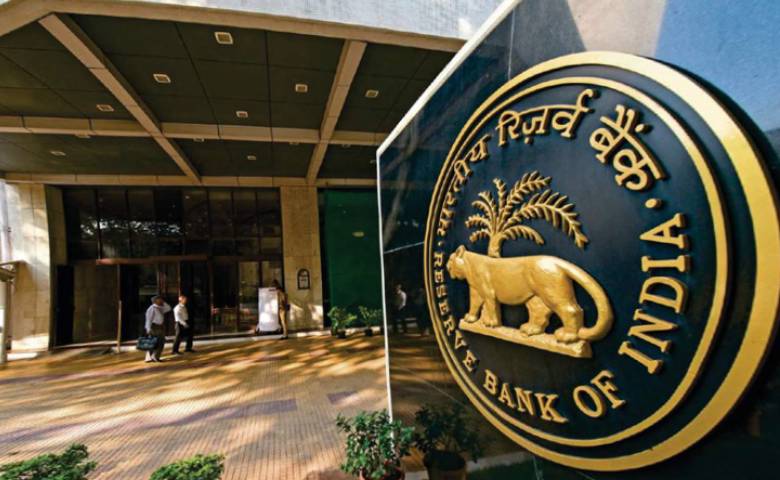
Business News : The Reserve Bank of India (RBI) has now focused on large-scale overseas investments by Indian companies. On one hand, foreign portfolio investors (FPIs) are withdrawing funds from the Indian market, while on the other, the challenge of managing the rupee against the dollar remains. In this environment, the banking regulator has significantly tightened scrutiny of large overseas investments or foreign direct investments (ODIs) by Indian companies.
According to an Economic Times report, the RBI last week provided a detailed checklist to the country’s major banks detailing the information to be collected and submitted to the RBI by the banks from corporates investing abroad. The new rule will apply to all foreign investments above $1 billion. Further, any Indian company investing more than four times the prescribed limit of its total net worth abroad will also be subject to this strict scrutiny.
No one will closely monitor restrictions
The central bank has not imposed any restrictions or restrictions on foreign investments. But the way banks have been asked to provide the rationale, concrete reasons and financial details behind remittances abroad clearly shows that the RBI is keeping a close eye on large outflows of funds from the country. The data shows that these foreign investments have been a major reason for the outflow of dollars from the country recently. Five years ago, foreign investment by Indian companies was around $11 billion, which has increased to over $30 billion in fiscal 2026.
The RBI has clearly instructed banks to proceed with the deal based on the valuation report of the foreign company, but to ensure their own satisfaction based on that report. Banks should specifically monitor the premium paid for the deal. They should ensure that the premium paid is not significantly higher than the intrinsic value of the foreign company.
If the deal is being done through a share swap, the exchange ratio should be absolutely accurate based on the valuation of both the companies. According to Suhas Bendre, an expert on the Foreign Exchange Management Act (FEMA) and founder of Bendre Consultancy, this is a precautionary move by the RBI to ensure that large foreign investments do not go awry in the future, resulting in losses for both Indian companies and the country.
Companies have to answer the questions
Under the new system, banks will not only have to regularly audit the investee company’s accounts, but also assess the quality of its earnings, past foreign investment experience and current foreign liabilities. They also have to assess the company’s ability to withstand any future economic shocks. Banks have to directly question corporate clients as to why they chose to acquire a foreign company over an Indian company.
The deal is linked to his existing business
Companies will also have to explain how the deal relates to their existing business. They have to specify whether the foreign entity is an operating company or just a holding company. Expected profits from the deal, the length of time the company will retain the investment and its future exit plans will also need to be disclosed.
These rules increased the burden of proof on the applicant companies
According to Moin Ladha, partner at Khaitan & Company, these rules have increased the burden of proof on the applicant companies. Banks also have to independently assess the rationale and risks behind the deal. Stress testing and other methods are now being used to thoroughly examine the financial strength of Indian investors, the viability of the deal and the potential benefits to India.
The benefits to the country’s economy will need to be taken into account
Banks will need to assess the integrity of the foreign company as well as country risk. According to Harshal Bhuta, co-founder of tax and regulatory consultancy firm Ascentium India, this detailed checklist given to banks is similar to due diligence. The old master directive already had general rules like capabilities of the foreign company, benefits to India and track record of the Indian company. However, the new checklist requires every detail that was often missed before. Amid ongoing rupee fluctuations, this will only be allowed in cases where banks are fully satisfied with the integrity of the transaction.
For example, if a transaction involves related parties or is likely to transfer value outside India, banks will undergo stricter scrutiny. In addition, banks will have to provide a thorough analysis and timeline of how large foreign investments will benefit the Indian economy.
The deal will boost India’s exports
It has to explain how much the deal will boost India’s exports, reduce its dependence on imports, provide access to new markets, bring new technology or intellectual property (IP) to India and return it to the country in the form of dividends or fees. If the Indian parent company gives a guarantee to its foreign entity to get a low-cost loan, banks will also have to assess the risk of breach of that guarantee in the future.