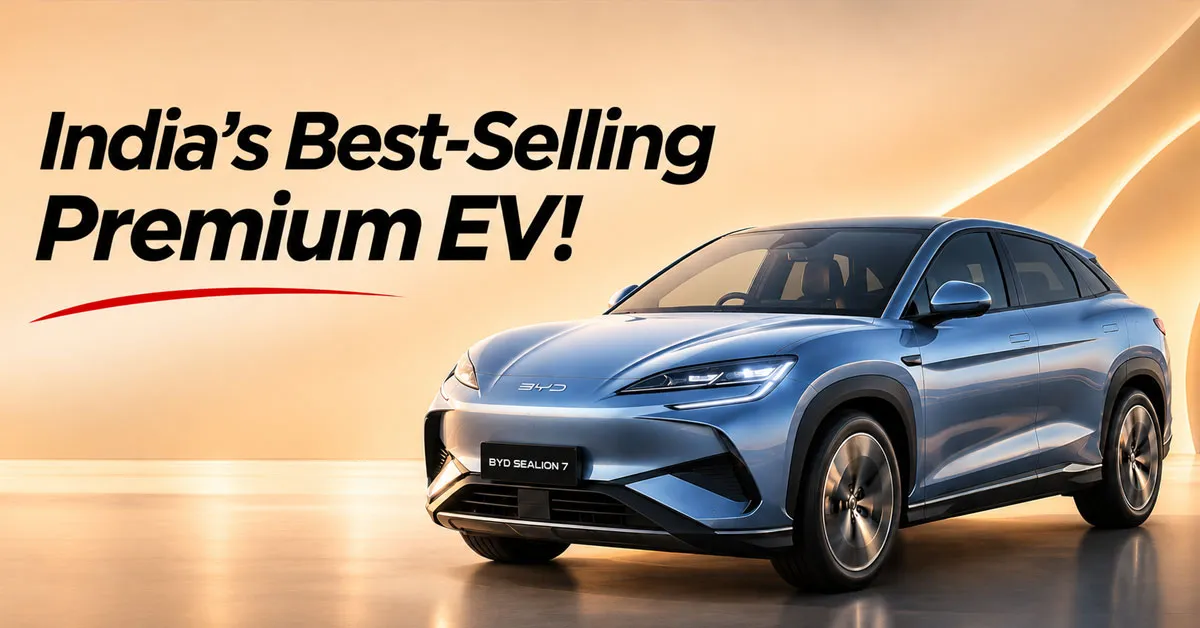
The BYD Sealion 7 has taken the top spot in India’s premium electric car sales ranking for October 2026, moving ahead of the BMW iX1. The Chinese electric SUV recorded 402 new registrations during the month, against 292 for the BMW. That is a lead of 110 vehicles in a segment where monthly sales are still counted in hundreds rather than thousands. The figures come from an ElecTree analysis of Vahan retail registrations.
The interesting part of the October result is that the Sealion 7 did not need a huge jump to win. Its registrations were up only 1.5% from September’s 396 units. The BMW iX1, meanwhile, fell from 406 to 292 registrations, a decline of 28.1%. As a result, September’s leader slipped to second place and BYD moved ahead.
Year-on-year, the difference is clearer. Sealion 7 registrations were 56.4% higher than the 257 recorded in October 2025, while the BMW iX1 was down 10.4%. This suggests that BYD is slowly building demand. It remains to be seen if the SUV will be able to sustain the same demand in the upcoming months as well.
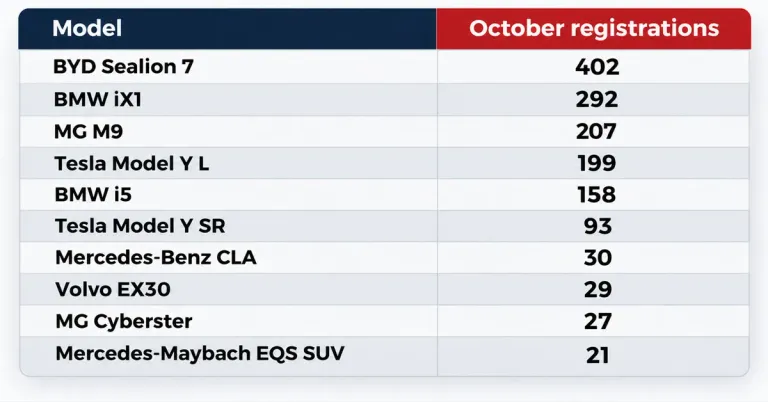
The ten models in this ranking accounted for a total of 1,458 October registrations, compared with 1,563 in September. That is a 6.7% monthly decline, even though the same group was well ahead of its October 2025 total. In other words, the Sealion 7 gained first place in a month when the selected premium EV market actually contracted.
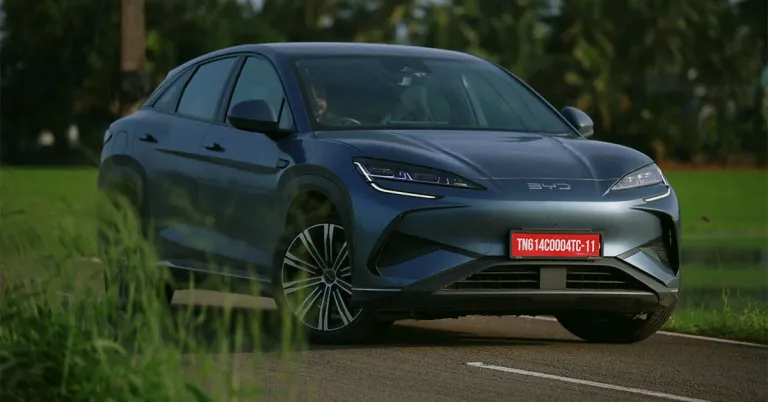
The Sealion 7’s appeal goes beyond its relatively unfamiliar badge. It is a large, well-equipped electric SUV with a spacious cabin, strong performance and a competitive price for the equipment on offer. BYD has also widened the choice during 2026 by adding a lower-priced Dynamic variant. At the other end, the Performance version offers dual-motor all-wheel drive for buyers who want significantly quicker acceleration.
The Dynamic uses a 71.8 kWh battery, while the Premium and Performance versions have an 82.56 kWh pack. The cabin offers features such as a large touchscreen, panoramic glass roof, premium upholstery and several driver-assistance systems.
There are compromises. BYD’s sales and service presence is smaller than BMW’s, and buyers should not assume the company’s claimed driving range will be available in every condition. In our road test, the all-wheel-drive Sealion 7 returned about 400 km in real-world use.
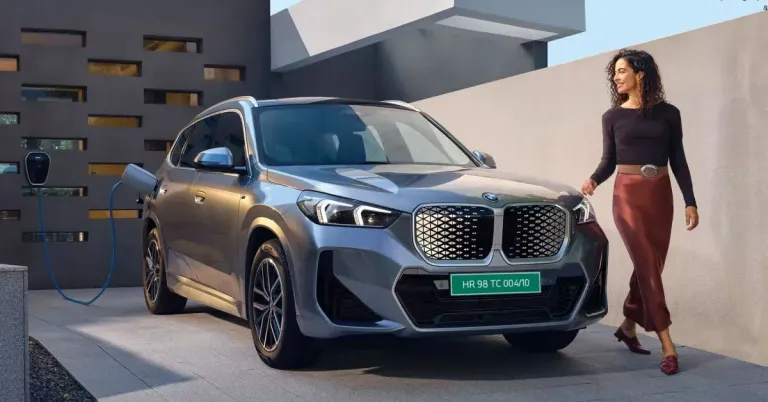
The headline victory is for one model, not the entire brand. BMW registered 477 electric cars during October, while BYD recorded 407. The iX1 and i5 together accounted for 450 BMW registrations, with its other EVs adding the rest. In fact, the Sealion 7 contributed 402 of BYD’s 407 registrations, making the company far more dependent on one product than BMW.
There is another useful qualification in the rankings. ElecTree counts the Tesla Model Y L and Model Y SR separately. Together, those versions registered 292 vehicles, matching the iX1’s total. The MG M9, which finished third with 207 registrations, is a luxury electric MPV rather than an SUV. So the list covers a broad set of premium electric passenger vehicles, not identical body styles or prices.