
California Wants to Make Protein Powder Companies Disclose Their Heavy Metal Content—Here’s What to Know

A new California bill would require protein powder manufacturers to test for lead, arsenic, cadmium and mercury, and make those results public.
Reviewed by Dietitian Madeline Peck, RDN, CDN
Key Points
- Consumer Reports found lead in most protein powders they tested in a recent investigation.
- A California bill would require companies to test for and disclose those heavy metals levels.
- Consider choosing brands that share independent testing data and varying your protein sources.
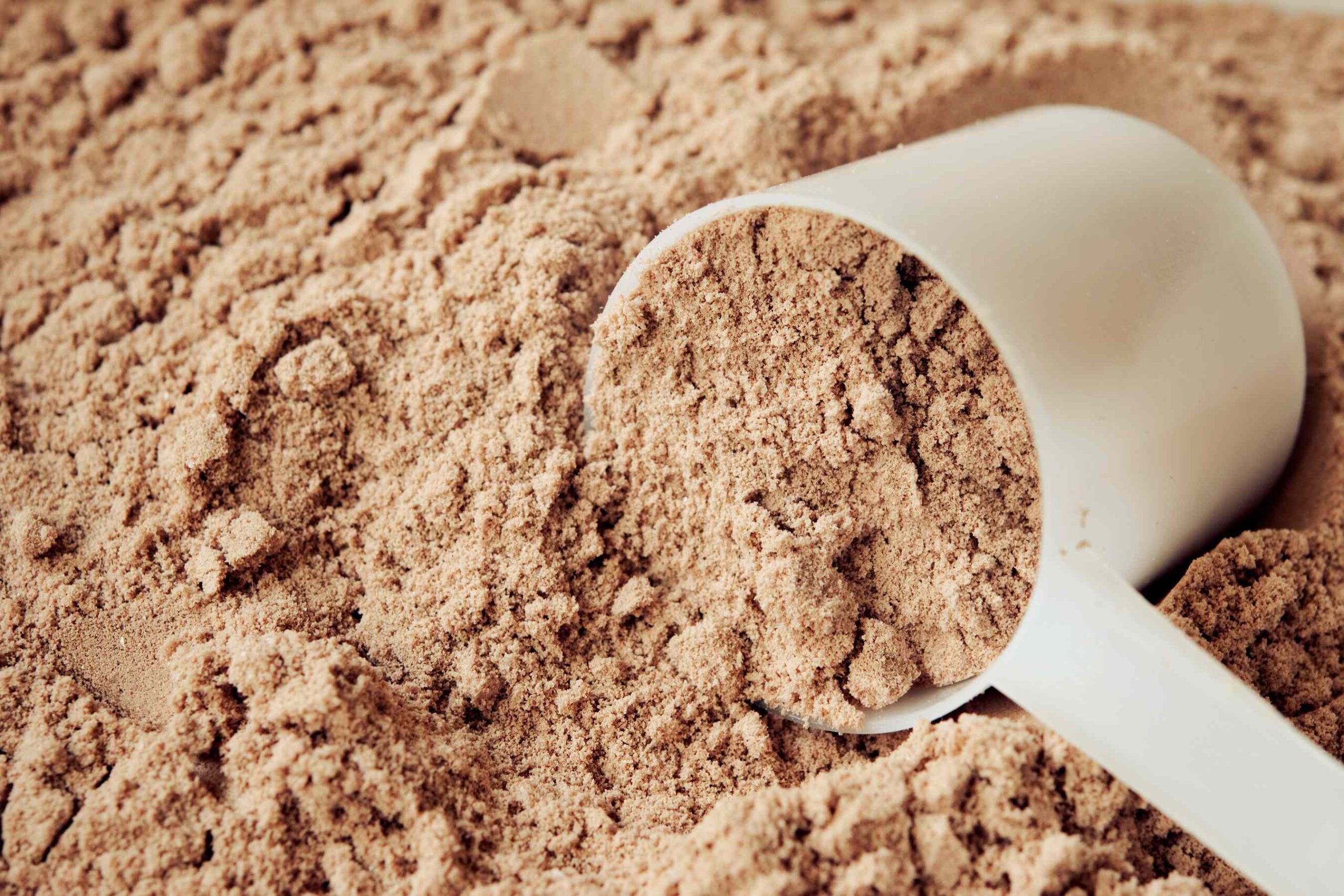
As the protein craze has grown, so has the amount of protein powder health-conscious people are swirling into their smoothies and shakes. But a new California bill wants to take a closer look at those scoops.
In April, the California Senate Environmental Quality Committee advanced SB 1033, legislation that would require protein powder manufacturers to test their products for heavy metals and publicly disclose the results. The bill, introduced by state Sen. Steve Padilla and cosponsored by Consumer Reports and the Environmental Working Group, follows recent testing that found troubling levels of lead, arsenic and cadmium in many popular protein products.
What Would SB 1033 Do?
If signed into law, the bill would take effect January 1, 2028. Manufacturers selling protein products in California would have to test each product lot at an accredited lab for four heavy metals: arsenic, cadmium, lead and mercury. They would also have to post the results on their websites, list each metal’s level alongside ingredient information and direct shoppers to that page through a statement printed on product packaging. Because most companies don’t make separate products for California alone, the requirement would likely affect protein powders sold across the country.
There’s no federal rule requiring this kind of testing or disclosure for supplements. Unlike prescription drugs, the Food & Drug Administration (FDA) doesn’t review or approve supplements before they reach store shelves, and federal law doesn’t set limits on heavy metals in these products.
“The bill requires protein product manufacturers to test for toxic elements and heavy metals and publicly disclose those test results,” says Brian Ronholm, director of food policy at Consumer Reports. “Currently, there is no federal framework for testing and disclosure for these products.”
Public sentiment appears to be squarely behind the idea. In a nationally representative Consumer Reports survey done this March, 77% of people said they were concerned about toxic elements like lead, arsenic and cadmium in protein powders and shakes, while 86% said manufacturers should be required to regularly test their products and make the results public.
What to Know About Recent Testing
In 2025, Consumer Reports analyzed 23 best-selling protein powders and ready-to-drink shakes. More than two-thirds contained more lead in a single serving than the organization’s experts say is safe to consume in a day, some by more than 10 times. About 70% of products tested topped 120% of Consumer Reports’s daily level of concern for lead, which is 0.5 micrograms. Two products also exceeded Consumer Reports’s level of concern for cadmium, and one contained 8.5 micrograms of inorganic arsenic, a known human carcinogen.
But we should clarify: Consumer Reports maximum levels are lower than levels other experts suggest. For instance, the FDA suggests a lead exposure limit of 2.2 micrograms per day for children and 8.8 micrograms per day for women, while Consumer Reports lists 0.5 micrograms as its level of concern.
And there was good news, too—the findings weren’t uniformly bleak. “Consumers should feel assured that our test results found good options are available that they can use regularly,” Ronholm says. “We also identified products with very high levels that should be avoided.”
A follow-up Consumer Reports test of five chocolate protein powders found all five were safe for daily or near-daily consumption, suggesting safer manufacturing is achievable.
Chronic lead exposure in adults has been linked to high blood pressure, kidney damage, immune suppression and reproductive problems. Because lead can build up in the body, even small amounts from daily use can add up over time.
What You Can Do Now
Until SB 1033 takes effect, comparing products is largely on you. A few practical steps Ronholm recommends:
- Choose brands that publish independent third-party testing results, ideally showing low levels of heavy metals.
- Be cautious with plant-based protein powders, which CR’s testing found were more likely to have elevated lead levels.
- Vary your protein sources rather than relying on shakes every day.
Our Expert Take
California SB 1033 still has more legislative steps to take before it can become law, and the disclosure requirement wouldn’t take effect until 2028. But its passage out of committee signals growing pressure on the supplement industry to be more transparent about what is in its products. In the meantime, choosing a brand that voluntarily shares its testing data and prioritizing whole-food protein sources over powders are reliable ways to limit your exposure.

Comments are closed.