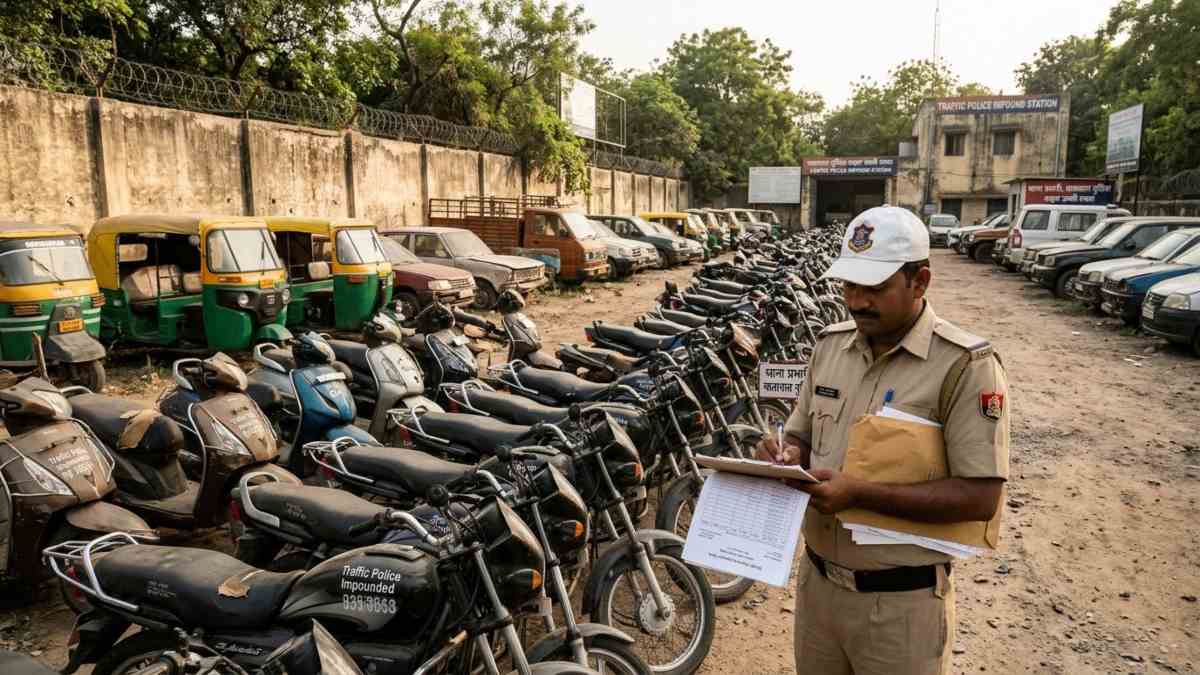
Automobile Desk: The traffic police have special powers under the Motor Vehicle Act to maintain discipline and safety on the roads. Many times, drivers have the misconception that for any minor mistake, the police can tow their car or bike and take them to the police station. The reality is that confiscating a vehicle for violation of every rule is not considered legally correct. Clear provisions have been made for seizing the vehicle, and even if the vehicle is seized in any situation, there is a prescribed legal process to get it back.
Section 207 of the Motor Vehicle Act, 1988 empowers the police or authorized transport department officials to detain the vehicle on the spot in certain serious or specified situations. If the vehicle is being driven without a valid registration certificate or required permit, action may be taken. Similarly, driving a vehicle without a driving license or having the steering or handle in the hands of a minor is also considered a serious violation. Driving under the influence of alcohol or other intoxicants is punishable under Section 185, in which the vehicle can be confiscated for safety reasons. Apart from this, the vehicle can also be seized in situations under Section 184 like tampering with the number plate, fake or unclear number plate, extremely dangerous driving or speeding, endangering the lives of others. This step is also taken in case of violation of permit conditions in commercial vehicles, operation without permit or carrying load exceeding the prescribed limit.
When an officer seizes a vehicle, he has a fixed procedure. An official memo or receipt is prepared before the vehicle is taken into possession. In this document, the vehicle's registration number, chassis and engine number, reason for seizure, time, place and details of the items kept inside the vehicle are recorded. After this the vehicle is parked safely at the nearest police station or designated police yard.
After the vehicle is seized, the first thing the owner should do is keep the seizure receipt safe. In many cases, this case goes beyond the normal challan and reaches the virtual court or magistrate court. The challan and status information related to the vehicle can be seen through the online portal of the Transport Department. To get the vehicle back, the owner has to produce copies of challan, RC, valid driving license, insurance documents, pollution certificate and identity card. If any paper is incomplete or expired, it is practical to get it updated or made first.
The owner or his advocate has to appear in the concerned court with the necessary documents. The court decides the amount of fine according to the nature and rules of the violation. After the fine is deposited, the court issues an order to release the vehicle. One has to go to the concerned police station or yard with the release order, payment receipt and original documents. There the officials collate the papers and the court order, get signatures placed on a formal register and then the vehicle is handed over.
As per the guidelines of the Ministry of Road Transport and Highways, digital documents present on DigiLocker or mParivahan are also valid, hence the vehicle cannot be seized merely because the physical paper is not with you. When taking the vehicle back, it is wise to check its external condition, tyres, battery and the contents inside. During normal inspection, removing the key from the vehicle or deflating the tire without valid seizure procedure also does not come under the purview of the rules.