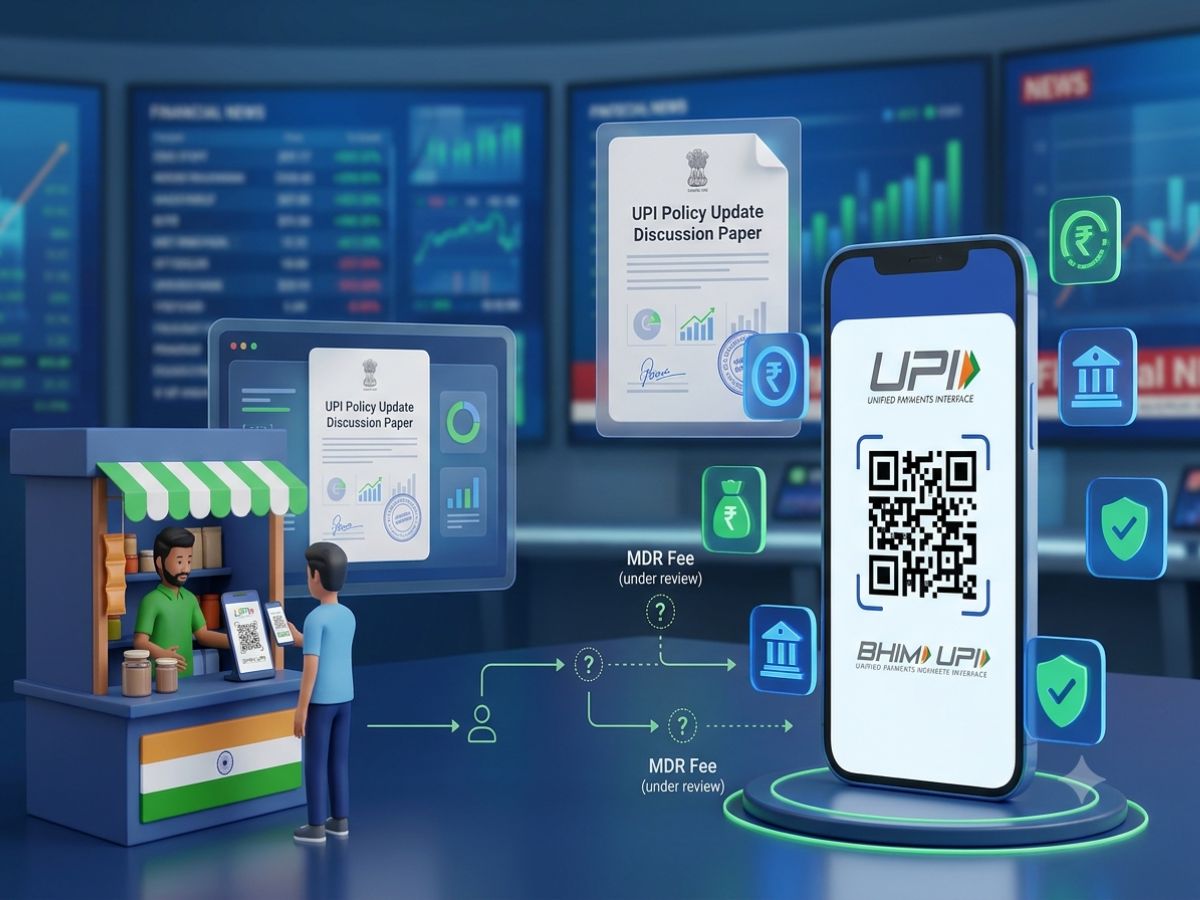
India’s digital payments ecosystem may be heading toward a policy shift, but UPI users do not need to worry about paying transaction fees for now. The government has introduced the Taxation and Other Laws (Amendment) Bill, 2026, which proposes changes to the Payment and Settlement Systems Act, 2007. The amendment gives the Centre more flexibility to decide which electronic payment modes will continue to remain exempt from charges.
The proposal does not immediately introduce Merchant Discount Rate (MDR) on UPI or RuPay debit card transactions. It also does not set any new charges for consumers.
What has changed?
Since the start of the year 2020, banks and other financial services companies have not been permitted to levy MDR on transactions made using UPI and RuPay debit cards.
This zero-MDR scheme has been devised to promote electronic payment systems among consumers and merchants.
The proposed amendment changes this approach. Instead of having a broad legal rule that keeps certain payment modes free from charges, the government would have the power to decide through future notifications which electronic payment modes remain exempt.
In simple terms, the law may allow future changes, but it does not mean charges start immediately.
Will UPI users have to pay?
No direct consumer charge has been announced.
MDR is a fee paid by merchants to banks or payment service providers for processing digital payments. It is different from a user fee paid by customers.
“If there is an introduction of MDR in future then the impact would not be on people making UPI payments but on businesses accepting digital payments.
But the businesses can decide what to do with any extra costs. Some could absorb the cost, some could alter pricing to the market conditions.
Why is the government considering this change?
Issues of financial sustainability of the digital payments environment are tied to the debate on MDR.
Banks, fintech firms and payment platforms have claimed that maintaining the UPI framework entails certain costs, associated with technological, security, fraud detection and transactional issues.
On the other hand, UPI has turned into one of the biggest digital payment frameworks in the world. Thus, any new policy should weigh both sustainability and simplicity of digital payments.
The Parliamentary Standing Committee on Finance has also raised concerns about the sustainability of the current zero-MDR model and recommended exploring ways to support the ecosystem.
Who could be affected if MDR returns?
Large merchants and high-volume businesses are the most likely groups to be discussed if MDR is introduced in the future.
Small merchants may continue receiving government support through existing incentive schemes designed to promote digital payments.
The government has previously used incentives to encourage low-value UPI transactions and digital payments among smaller businesses.
Why this matters for India’s digital economy
UPI has transformed the way people transact payments on a day-to-day basis in India. Digital payments have become an integral part of day-to-day life starting from small stores to digital payment platforms.
As per NPCI reports, UPI is still growing at a rapid pace with millions of transactions taking place every month.
Any attempt at adding merchant fees to UPI would have to be considered in light of whether it facilitates payment infrastructure without compromising on convenience.
The bigger picture
The latest proposal is not a decision to charge people for using UPI.
It is a legal change that gives the government more flexibility to decide the future structure of digital payment charges.
The next step will depend on whether the government issues any notification, what payment modes are covered, and what rules are created.
For now, UPI remains free for consumers, and no MDR has been imposed under this amendment.
(Disclaimer: This article is for informational purposes only and should not be considered investment advice. The views, opinions, and recommendations expressed herein are those of the respective experts. Readers are advised to consult a qualified financial advisor before making any investment decisions.)
Also Read: Burger King Operator Restaurant Brands Asia Share Soars 20%: What Triggered Massive Buying?
Prabhat Gupta is Senior Copy Editor of Business Segment. He has worked across broadcast and digital newsrooms, editing and producing stories on politics, business, regulation and current affairs. His work has included writing on global markets and regulatory developments, along with long-form editorial content on business and governance.
He holds a master’s degree in Political Science from the University of Delhi and qualified UGC-NET in the subject, bringing an academic grounding to public affairs and policy coverage.
The post Can MDR Be Charged On UPI Again? Here’s What Government’s New Bill Proposes appeared first on NewsX.