Nagpur: At just 15, Vaibhav Sooryavanshi has already taken the cricketing world by storm with his explosive performances in white-ball formats. However, as he begins to prepare seriously for red-ball cricket, questions remain about whether his aggressive style can translate into success in the longest format of the game.
Sooryavanshi’s rise has been nothing short of remarkable. During the latest season of the Indian Premier League, he amassed a staggering 776 runs for the Rajasthan Royals, sweeping multiple honours including the Orange Cap, Most Valuable Player, Emerging Player, Super Striker and Super Sixes awards. His dominance was further evident at the ICC Men’s Under-19 Cricket World Cup, where he scored 439 runs and was named Player of the Tournament.
These achievements fast-tracked his entry into international cricket, making him one of the youngest players to represent India at the senior level. Yet, while his white-ball credentials are unquestionable, his red-ball numbers tell a very different story.
Modest red-ball record raises concerns
In contrast to his T20 heroics, Sooryavanshi’s performances in First-Class cricket have been modest so far. Across eight matches in the Ranji Trophy last season, he managed just 207 runs at an average of 17.25, with a highest score of 83.
Such numbers have raised concerns among cricket experts, particularly about his technique against the moving ball and his temperament in longer innings. Test cricket demands a completely different skill set—patience, discipline, and the ability to handle pressure over extended periods.
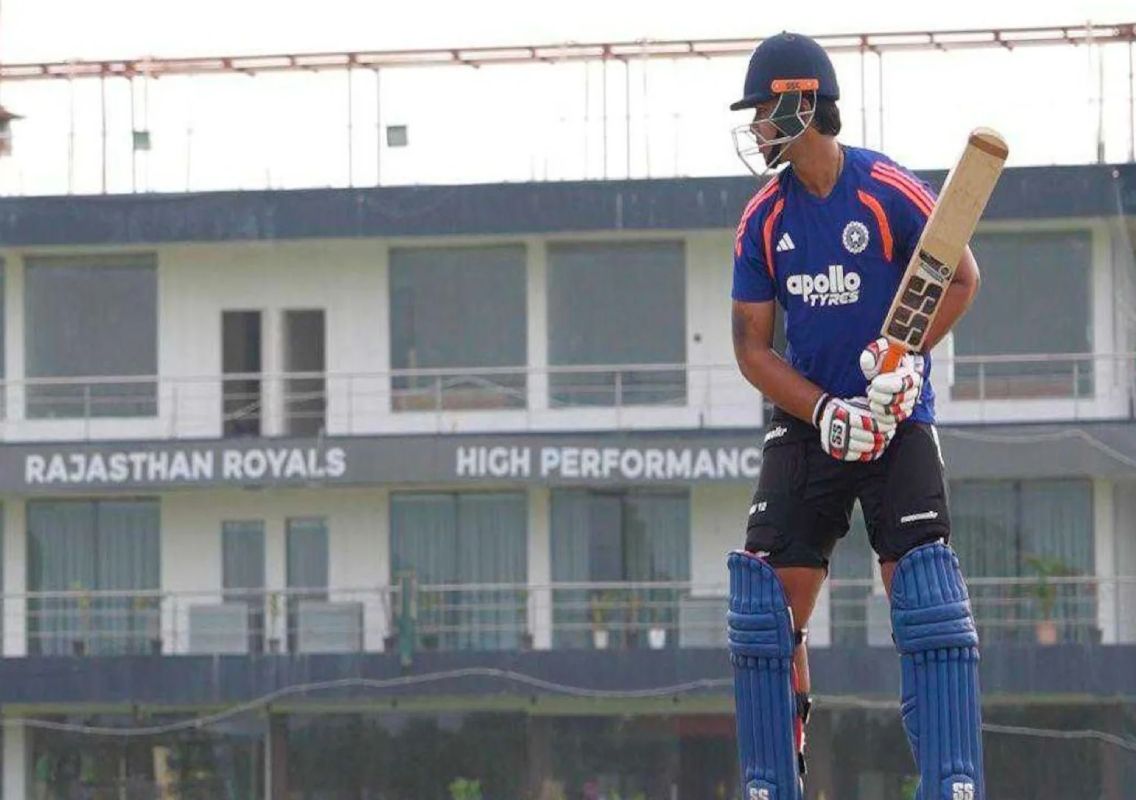
Despite these challenges, Sooryavanshi appears determined to improve. He is currently training at a 10-day camp organised by the Rajasthan Royals in Nagpur, focusing specifically on adapting his game to the demands of red-ball cricket.
Leadership opportunity in domestic cricket
Adding to his growing responsibilities, Sooryavanshi has been given a leadership role in the upcoming Duleep Trophy. He will serve as deputy to Ishan Kishan in the East Zone squad.
This opportunity is being seen as a significant step in his development, offering him a platform to showcase not only his batting skills but also his temperament and decision-making abilities in longer formats.
The shift in focus from white-ball dominance to red-ball discipline is evident. Instead of continuing to build on his T20 success, Sooryavanshi is consciously investing time in refining his technique, shot selection, and mental approach.
Signs of adaptability offer hope
While his red-ball statistics may not yet inspire confidence, Sooryavanshi has already demonstrated an ability to adapt his game when required. His recent innings against Zimbabwe is a case in point. Scoring 83 off 49 balls at a strike rate of 169.38, he showed restraint compared to his usual ultra-aggressive approach, where his strike rate often exceeds 220.
This ability to modulate his tempo suggests that he possesses the foundational qualities needed to succeed in Test cricket. The key will be whether he can extend that adaptability over longer innings and against higher-quality bowling attacks.
Experts often argue that young players with strong white-ball skills can transition successfully to Tests if they are willing to evolve. For Sooryavanshi, this means going beyond power-hitting and developing the patience required to build innings over sessions and days.
The road ahead in Test cricket
At 15, time is firmly on Sooryavanshi’s side. Few players achieve such early success, and even fewer are given the opportunity to refine their game across formats at such a young age.
However, the transition to Test cricket is rarely straightforward. Many aggressive batters have struggled to adapt to the demands of red-ball cricket, where conditions, match situations, and mental endurance play a far greater role.
Sooryavanshi’s decision to prioritise red-ball preparation, including training at the Rajasthan Royals’ performance centre, indicates a clear intent to address these challenges head-on.
Conclusion: Talent meets the test of patience
Vaibhav Sooryavanshi’s journey into Test cricket will be closely watched. His talent is undeniable, and his achievements in white-ball cricket have already placed him among the most exciting young prospects in the game.
Yet, success in Tests will depend on his ability to transform his approach—balancing aggression with patience, flair with discipline. If he can make that transition, he has the potential to become a complete cricketer across all formats.
For now, the teenage prodigy stands at a crucial juncture, where raw talent must evolve into refined skill. Whether he succeeds will depend not just on his ability, but on how effectively he embraces the demands of red-ball cricket.