By: The Obnews Editorial Team
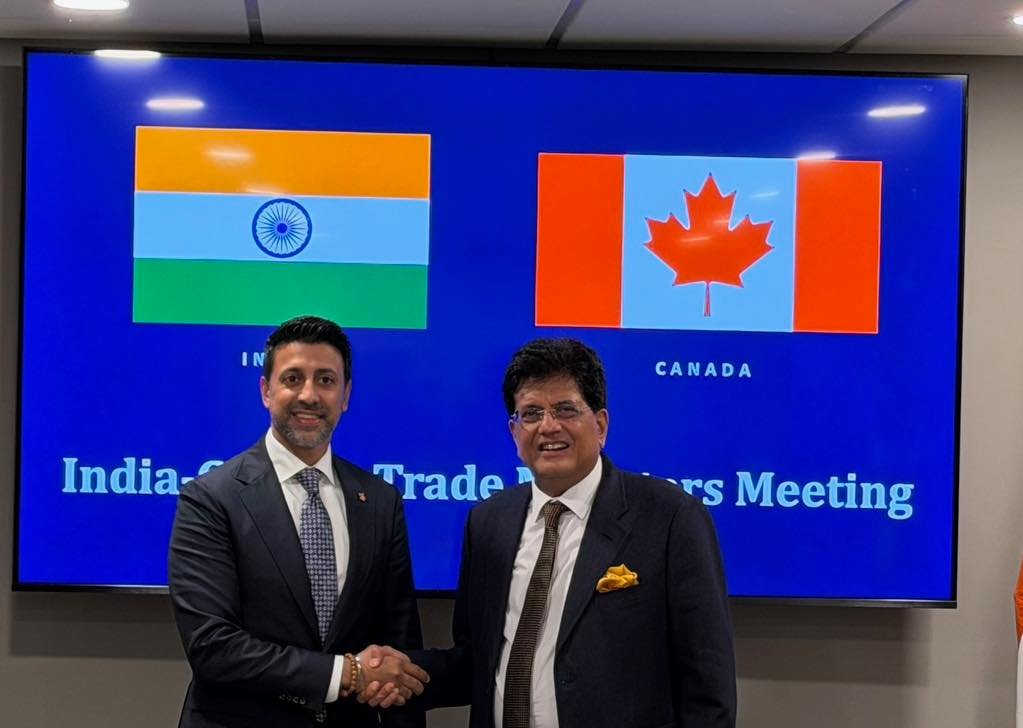
Canada’s trade mission to India has generated more than 30 commercial partnerships valued at nearly C$300 million, International Trade Minister Maninder Sidhu said Friday, October 16. Speaking to IANS, Sidhu said the partnerships covered aerospace, energy, clean technology, automobiles and other industries, providing commercial results from a visit intended to expand opportunities for Canadian businesses.
The announcement comes during Canada’s largest trade delegation to India in more than three decades. Global Affairs Canada said nearly 300 delegates were participating in the October 12–17 mission, with stops in Mumbai and Bengaluru and representation from industries including aerospace, information technology, life sciences and agri-food.


Understanding the announcement requires looking beyond its headline value. Reporting from the signing ceremony in Karnataka describes a combination of commercial agreements and memoranda of understanding. The material reviewed for this article does not provide a complete breakdown identifying every partnership, its individual value, its delivery schedule or how much represents confirmed purchases. The nearly C$300 million should therefore be understood as the minister’s reported value of the partnerships, rather than evidence that the entire amount has already been invested or earned.
One clearly documented agreement involves Vancouver International Airport and Kempegowda International Airport Bengaluru. Announced on October 16, their sister-airport memorandum covers seven areas of collaboration, including airport technology, operational improvements and potential joint innovation projects. The announcement specifically identifies work involving Vancouver’s Digital Twin technology, alongside efforts to strengthen air-cargo connections between Canada and southern India.
The airport partnership also establishes direct Vancouver–Bengaluru air service as a longer-term objective. That could eventually matter to travellers, technology companies and exporters moving goods between the two regions, but the announcement does not identify an airline, a launch date or a flight schedule. What has been signed is a framework for cooperation that includes pursuing direct connectivity; passengers do not yet have a new route to book on the strength of this announcement.
A second documented agreement concerns maritime trade. On October 15, the Montreal Port Authority and the Adani Group announced the renewal of a collaboration agreement first established in 2018. Signed in Mumbai in Sidhu’s presence, the renewed arrangement focuses on developing the Mundra–Montreal shipping corridor, exchanging commercial information, sharing port expertise and improving connections with road and rail transport. It also identifies vehicle transportation as an area for potential cooperation.


The Montreal announcement builds on an existing flow of business. According to the port authority, India was its second-largest market in 2025, with approximately one million tonnes of goods moving through the port in trade with India. Canadian exports represented about 60 per cent of that volume. The port also announced new local representation in India to strengthen relationships with shipping lines, freight forwarders, importers and exporters.
These announcements illustrate why the type of agreement matters. The airport memorandum outlines work the partners intend to pursue, while the port agreement renews an established relationship. Neither release assigns a financial value to its agreement or specifies its contribution, if any, to Sidhu’s nearly C$300 million total. Their published terms demonstrate cooperation, but do not establish a corresponding amount of completed sales.
The distinction also applies to the companies named in speeches during the mission. At a business reception in Bengaluru, Sidhu cited Kinaxis, OpenText, CGI, CAE, Magellan Aerospace, MDA Space and BCE Global Tech as Canadian businesses already established in India. Their presence demonstrates the breadth of Canada’s existing commercial footprint, but the reporting does not identify each of those firms as a signatory to a new agreement within the announced total.
For smaller Canadian exporters, another example shows how opportunities can emerge outside major infrastructure projects. CBC’s reporting from the mission identified food-safety technology company Agri-Neo pitching its treatment systems for dry products such as seeds, nuts and herbs to Indian businesses. That example points to a practical route into the market: supplying technology that helps Indian companies improve their own products and reach customers abroad. It was reported as a business-development effort, not as a confirmed new contract.
The mission’s business announcements are also separate from negotiations over a Canada–India Comprehensive Economic Partnership Agreement, or CEPA. Global Affairs Canada’s October 13 readout confirmed that Sidhu and Indian Commerce and Industry Minister Piyush Goyal discussed ongoing negotiations following the fifth round in Ottawa. Canada’s Trade Commissioner Service continues to state that Canada does not currently have a free-trade agreement with India.
Both governments are working toward concluding negotiations in 2026. Reported discussions cover market access for goods and services, investment, rules of origin, intellectual property and trade remedies. Those negotiations could shape the conditions under which future business takes place, but commercial signing ceremonies do not themselves establish new tariff preferences or put the proposed treaty into effect.
The wider ambition is substantial. Global Affairs Canada puts bilateral goods and services trade at C$30.4 billion in 2025 and identifies C$70 billion annually by 2030 as Canada’s goal. Ottawa is also seeking to double exports to markets beyond the United States over the next decade. These figures describe the scale of the diversification strategy; they are targets and historical trade totals, not additional contracts secured during this mission.
For Canadian businesses considering India, the practical opportunity is to connect a specific capability with a specific customer need. Canada’s Trade Commissioner Service identifies demand across digital industries, infrastructure, clean technology, life sciences, energy and aerospace. It also emphasizes that success requires market research, local relationships and attention to regional differences and a complex regulatory environment. Its teams can help businesses identify potential partners and service providers.
The airport and port agreements suggest potential openings for suppliers involved in transport technology, cargo handling and operational improvements, although those opportunities remain an inference from the announced cooperation rather than confirmed procurement orders. Businesses following the mission should look next for named projects, purchasing requirements, implementation dates and opportunities to become suppliers. Those details will determine how far the announced partnerships extend beyond the organizations at the signing table.
Canada’s India mission has produced identifiable agreements and a substantial reported partnership total. The next measure of progress will be implementation: technology deployed, goods shipped, services purchased and repeat business established. For Canadian exporters, those developments will show how much of the renewed diplomatic engagement translates into durable commercial opportunity.