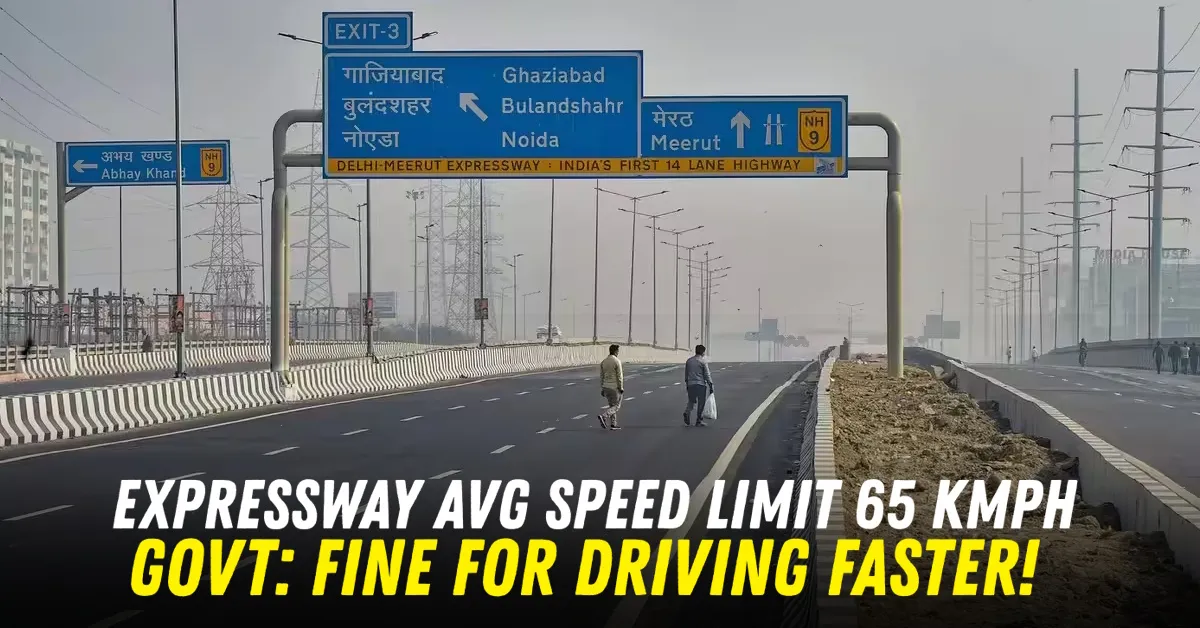
When it comes to expressways, a lot of drivers think that they can easily cruise at the speed of around 100 kmph. However, if they do this speed on the Delhi-Meerut Expressway, it could cost them a big fine. Recently, it has been reported that the government, instead of having one fixed speed limit throughout the day, is planning to implement variable speed limits that will change depending on traffic conditions and the time of day. So, most likely with this new method, the average speed on the Delhi-Meerut Expressway could be fixed at around 65 kmph (which will be the fastest that you can drive).
According to the proposal, cars may be allowed to travel at an average speed of up to 65 kmph during off-peak hours. Following which, lower speed limits will be applied during periods of heavy traffic. With this, the government aims to reduce congestion, improve traffic flow, and increase the carrying capacity of the expressway.
The proposal is currently being studied by the Central Road Research Institute (CRRI), which functions under the Council of Scientific and Industrial Research (CSIR). The study is expected to begin around August 15 and continue for nearly three months. Once completed, the findings will be submitted to the authorities, following which a decision on implementing the system will be taken.
Unlike the existing system, where speed limits are the same throughout the day, the new proposed model will introduce different speed limits for different time slots based on traffic density. During periods of low traffic, vehicles will be allowed to travel at higher speeds. Following which, the limits will be reduced during peak hours to maintain smoother traffic flow.
According to the proposed plan, cars will be permitted to travel at a maximum average speed of 65 kmph between midnight and 7 am. Meanwhile, heavy vehicles will be restricted to 50 kmph. After which, between 7 am and 5 pm, when traffic is at its highest, the proposed limit for cars will be reduced to 55 kmph, and heavy vehicles will be limited to 45 kmph.
During the evening period between 5 pm and midnight, cars will be allowed to travel at 60 kmph. Meanwhile, heavy vehicles will be restricted to 40 kmph. It has to be mentioned that the speed limits are currently part of the study and are not final. They have been proposed by CSIR to evaluate whether variable speed limits can improve traffic movement and reduce congestion on the expressway.
As per the authorities, the need for this system is there because traffic volumes change considerably throughout the day. Now, as roads remain relatively empty during the night, the vehicle density increases a lot during office hours. Under the current system, the same speed limit applies regardless of traffic conditions. This results in vehicles travelling at very different speeds. Due to this, congestion and sudden braking become major issues.
The variable speed limit model has been developed by Dr. S. Velmurugan, Principal Scientist at CSIR. It has been developed after studying similar traffic management systems, which have been operating successfully in countries such as the United States and Germany. These systems use dynamic speed limits that change according to traffic conditions. They also consider weather and road usage to improve overall traffic efficiency.
What is interesting is that the concept has already been tested once on the Delhi-Meerut Expressway. According to Dr. Velmurugan, a week-long trial was conducted in May 2024. During the trial, the average travel time on the expressway was reduced by around 11 minutes. Meanwhile, the road’s carrying capacity increased by nearly 80 percent.
So, the encouraging results have now helped authorities conduct a more detailed and longer study before considering the complete implementation. Officials have also noted that almost 20 percent of the vehicles that use the expressway are heavy commercial vehicles. Meanwhile, the remaining 80 percent are passenger vehicles.
This large variation in vehicle types and speeds also creates bottlenecks. They particularly happen during busy hours. Traffic studies have also found that between 7 am and 7 pm, the expressway experiences consistently high traffic volumes. During the morning rush hour between 7 am and 9 am, vehicles may be travelling at speeds of around 100 kmph and 70 kmph simultaneously. However, congestion still develops because of the speed differences and increasing traffic density.
Similarly, during the evening, heavy traffic builds up around the Ring Road. This then results in long queues and slower movement. The proposed time-based speed limits are expected to reduce these speed variations and improve the overall flow of traffic.
It has been reported that the preparations for the study have already begun on the Delhi-Meerut Expressway. Authorities have installed two overhead gantries fitted with three digital display boards each near Akshardham Mandir and Pandav Nagar. These electronic display boards will eventually show the applicable speed limit depending on the time of day and traffic conditions.
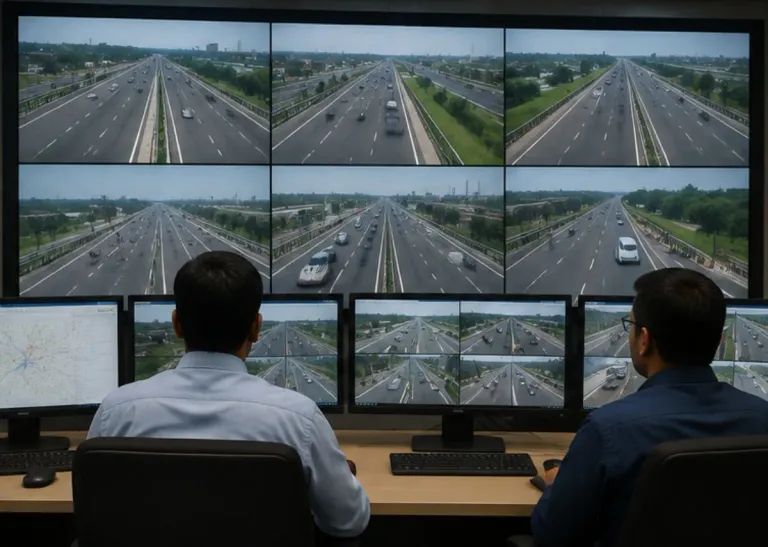
The digital boards are connected to a central control room, which will monitor traffic in real time and update the displayed speed limits whenever required. At present, the boards are still undergoing testing and are not displaying any speed limits. The study is being carried out under a programme sponsored by the National Highways Authority of India (NHAI).
Apart from CSIR’s Central Road Research Institute, Sardar Patel University and the Traffic Directorate of Delhi Police will also participate in the project. If the study provides results similar to the earlier pilot project, the variable speed limit system could become a new approach to managing traffic on busy expressways in India.
So, instead of allowing higher speeds at all times, the government believes that maintaining more uniform traffic speeds could reduce congestion and shorten travel times. It will also help in improving the overall efficiency of the road network. Now, whether the proposed limits are eventually implemented will depend on the findings of the three-month study, which is expected to conclude later this year.