Before businesses can implement complete systems, they need to understand the rules that will apply to them. Cross-border payments have long been one of the most expensive and time-consuming aspects of global trade. The international transfer system requires correspondent banks to process payments through multiple intermediaries, which results in delays from currency conversion, compliance checks, and settlement processes.
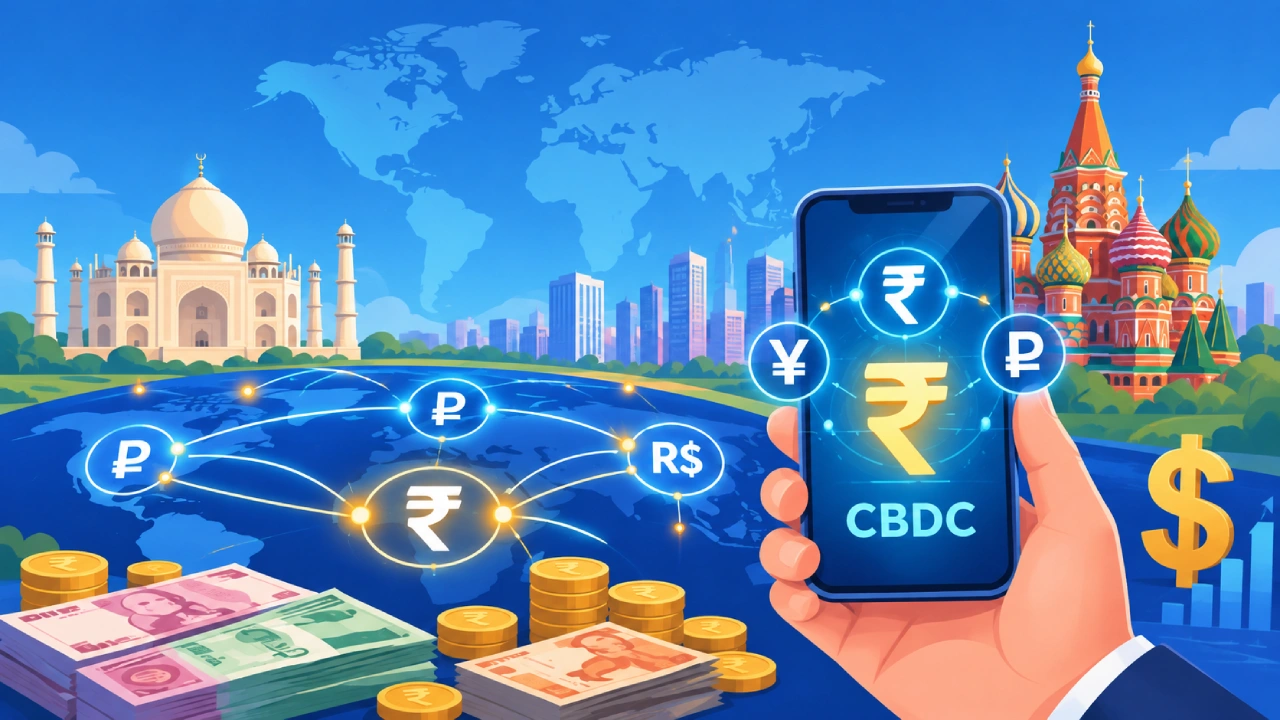
India will study cross-border Central Bank Digital Currency (CBDC) interoperability with BRICS nations starting in 2026. The Reserve Bank of India leads this project, which could transform international payment systems for business use. RBI has also stated that it is exploring bilateral and multilateral CBDC pilots for cross-border payments.
How does this particular system function in real life? What impacts will this development bring to Indian exporters, emerging companies, and freelance professionals?
What Is a CBDC?
A Central Bank Digital Currency (CBDC) is a digital version of a country’s sovereign currency, which the central bank issues and supervises.
India’s digital rupee (e₹) is one such example. Unlike cryptocurrencies, CBDCs are:
- Government-backed
- Regulated
The RBI describes the digital rupee as the digital form of India’s physical currency, issued by the Reserve Bank of India.
How Cross-Border CBDC Payments Could Work
The basic idea is to allow participating countries’ digital currency systems to communicate with each other. Instead of depending entirely on traditional correspondent banking arrangements, payment systems could potentially connect through agreed technical, regulatory, and settlement frameworks.
The broader BRICS payment initiative has already included work on payment-system interoperability, national currencies, supervision, and ISO 20022 implementation.
For businesses, this could eventually mean faster settlement and fewer intermediaries in eligible payment corridors.
What Could Change for Indian Businesses?
1. Faster Settlement
The system enables exporters to receive faster payment processing, which could reduce the need to wait several days for payment, thus enabling better management of:
- Inventory turnover
- Payroll cycles
- Vendor payments
Cross-border payment infrastructure is already evolving through other digital systems. For example, TechGenYZ’s coverage of PayPal and WeChat Pay cross-border payments shows how connected payment networks can simplify international transactions.
2. Reduced Dependency on Dollar Clearing
BRICS members will decrease their need to use US dollar settlement systems for their trade activities because of their interoperability as a BRICS organization.
This diversification could provide resilience during geopolitical tensions.
3. Lower Payment Friction
Businesses that regularly make international payments could benefit from reduced processing steps, depending on how participating countries design their systems.
The broader digital payments ecosystem is already moving toward faster and more transparent international transactions. TechGenYZ’s analysis of international payment systems discusses how digital payment networks are reducing friction in cross-border transfers.
What Freelancers & Digital Professionals Should Watch
India has a growing base of freelancers working with global clients.
For them, CBDC-based cross-border payments could mean:
- Faster client payments
- Reduced platform withdrawal fees
- Simplified remittance processes
The freelancers need to observe the following elements:
Foreign exchange conversion systems
The system will provide support for platform connections.
Tax reporting requirements
The system will provide support for digital wallet systems.
The first phase of implementation demands that organizations establish new compliance procedures.
For freelancers and businesses working across currencies, existing financial infrastructure remains important. News’s guide to multi-currency business accounts highlights how currency conversion and cross-border fees can affect international business operations.
Risks & Challenges
The implementation process becomes difficult despite the promising nature of the concept.
1. Currency Liquidity Risk
The combined digital currencies of our partners will result in currency exchange costs, which will make it possible to use their digital currencies only when special needs arise.
Liquidity will therefore remain an important consideration for any system that connects multiple national currencies.
2. Regulatory Alignment
The system must account for:
- Capital control policies
- Data protection regulations
- Anti-money laundering rules
- Know Your Customer standards that each country in BRICS has implemented
The process of establishing regulatory frameworks requires both political and technological interaction.
3. Cybersecurity Concerns
Digital currency infrastructure must be highly secure. The infrastructure for international transactions creates new entry points for attackers.
The system needs to have strong encryption, fraud detection capabilities, and monitoring systems.
Financial platforms already face growing cybersecurity and fraud risks, making security controls an important part of digital payment infrastructure. TechGenYZ’s coverage of AI-powered fraud prevention for payments also examines how digital payment systems are using automated methods to detect fraudulent activity.
4. Geopolitical Sensitivity
The technical aspects of central bank digital currency interoperability extend beyond their technical requirements to include geopolitical factors that affect international finance systems.
The success of rollout depends on whether member states establish political connections.
How Businesses Should Prepare
The Indian business sector does not require any changes to its existing payment systems at this stage.
The organization needs to complete its tasks but needs to:
- Track all announcements made by the Reserve Bank of India.
- Financial advisors need to assess how Central Bank Digital Currency will impact their asset holdings.
- All people need to learn about foreign exchange conversion methods.
- Organizations need to establish their accounting systems to monitor digital currency transactions.
- The organization needs to track current compliance requirements.
Early detection of market trends gives businesses power to develop effective defense strategies.
Businesses that work with international payment infrastructure can also monitor developments in payment gateways, transaction reliability, and fraud controls. TechGenYZ’s guide to payment gateway metrics in India provides additional context on the operational factors businesses track in digital payments.
The Broader Economic Impact
If BRICS CBDC interoperability achieves full implementation, its outcomes will lead to:
- Increased trade efficiency between regional nations
- Improved access to financial services for all citizens
- Decreased costs related to international money transfers
- Greater transparency in global payment systems
The evolution of international financial systems proceeds at a slow pace. Organizations will begin with pilot tests, which will evolve into gradual implementation before they reach full operational capacity.
Existing blockchain-based payment systems also demonstrate how digital infrastructure can be used for cross-border transactions. TechGenYZ’s explanation of blockchain and cross-border payments provides context for the broader technology behind digital financial networks.
Conclusion: A Structural Shift in Global Payments
India’s push for cross-border CBDC interoperability represents more than a technological experiment. The system aims to modernize international trade settlement while decreasing reliance on traditional correspondent banking systems.
Faster settlement times and lower transaction fees will help exporters and small- to medium-sized enterprises increase their cash flow efficiency. Freelancers will benefit from rapid payment processing, which decreases their costs for cashing out funds.
The advantages of a system will only materialize if the system achieves its full operational capabilities while all parties involved create a uniform regulatory framework, maintain their cybersecurity defenses, and keep their currency liquid.

Central Bank Digital Currencies will not replace existing banking systems within a single day. Users will adopt these systems gradually because they function as an extra payment method that requires people to build confidence in them.
Indian businesses need to monitor their environment because it represents their best chance to make strategic decisions. Businesses need to understand their existing framework. Organizations need to monitor changes in their policy system. Organizations need to determine their ability to execute their planned activities.
Although digital cross-border payment systems operate with near-instant processing times, success depends on the ability to work together with others.
(Source)