23
From bullet-resistant jackets for the Army to ammunition components and jet-powered drones, the company has built a substantial defence business.
SMPP Limited, a privately-owned Indian defence manufacturer that supplies bullet resistant jackets and ballistic helmets to the armed forces and security agencies and has expanded into ammunition components and unmanned systems, is facing scrutiny after the Central Bureau of Investigation (CBI) arrested its chief executive, Ashish Kansal, in an alleged Rs 500-crore ammunition bribery case involving state-owned Munitions India Limited (MIL).
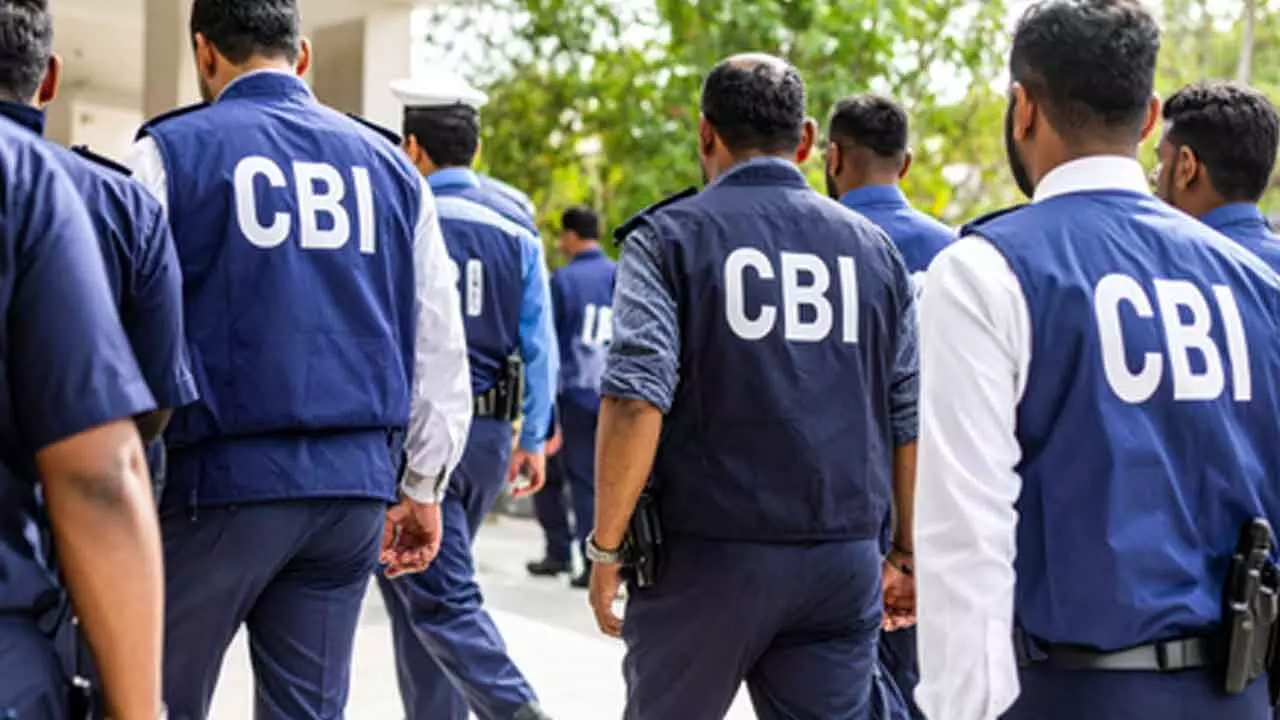
Government entities accounted for 85.19% of SMPP Limited’s operating revenue in 2023-24, underscoring the privately owned defence manufacturer’s dependence on public procurement. Now, with the Central Bureau of Investigation (CBI) investigating an alleged Rs 500-crore ammunition bribery arrangement involving the company’s CEO, Ashish Kansal, agency sources have told Read, on condition of anonymity, that investigators will examine other government tenders awarded to SMPP amid suspicions that bribes may also have been paid to officials to secure contracts.
SMPP’s draft red herring prospectus, filed in October 2024, shows that revenue from government entities rose to Rs 439.65 crore in 2023-24 from Rs 238.43 crore in 2022-23 and Rs 275.64 crore in 2021-22. Government entities accounted for 67.96% and 74.72% of operating revenue in the two preceding years, respectively. The company’s ten largest customers accounted for 92.78% of operating revenue in 2023-24, highlighting its dependence on a concentrated customer base. The prospectus defines government entities broadly, including central and state government bodies, government-controlled organisations, and military, paramilitary and police forces in India and overseas.
The CBI registered the case on 12 October against Anil Kumar, executive director at state-owned Munitions India Limited (MIL); Kansal, CEO and director-promoter of SMPP; Ravit Kumar Tewatia, an SMPP employee; B. Harshvardhan, Kumar’s brother; Chetnashri, Kumar’s wife; SMPP Limited through its representative; and unidentified others.
According to the FIR, the alleged arrangement centred on an ammunition-supply contract worth approximately Rs 500 crore over one year. Kansal is alleged to have been in regular contact with Kumar regarding the contract. The CBI also suspected that confidential information, including details concerning rival bids, was sought as part of the alleged arrangement. The agency suspected that a substantial illegal payment was to reach Kumar on 12 October.
The defence argued before the court that investigators had already seized the alleged bribe money and relevant documents, making further custody unnecessary. It also challenged Kansal’s arrest on the ground that he had not been served a notice under Section 35(3) of the Bharatiya Nagarik Suraksha Sanhita.
The allegations remain under investigation and have not been established in court. SMPP had not issued a public response at the time of writing.
The agency sources said investigators would examine other tenders awarded to SMPP by government departments and agencies amid suspicions that similar methods may have been used to secure contracts. The proposed scrutiny could extend the inquiry beyond the ammunition contract that triggered the case.
SMPP’s government business includes major orders for personal protective equipment. In April 2018, the Ministry of Defence awarded it a contract worth Rs 638.97 crore for 186,138 bullet-resistant jackets. The procurement followed a tender issued in April 2016. The government subsequently told Parliament that the jackets were being supplied under the Army’s approved General Staff Qualitative Requirements, with quality assurance and acceptance testing conducted by the Directorate General of Quality Assurance.
The contract became the subject of a public debate over raw-material sourcing. In March 2019, reports said SMPP had shifted from Western suppliers to Chinese sources for materials including ballistic fabric and boron carbide powder, which accounted for a substantial portion of the jacket material.
The government later told Parliament that it had found no decline in the quality of the jackets and that the supplies were subject to quality checks and acceptance procedures. In June 2019, former Defence Research and Development Organisation chief and NITI Aayog member V.K. Saraswat said there were no reported quality concerns at that time.
In June 2025, SMPP announced two Army contracts worth more than Rs 300 crore for 27,700 bullet-resistant jackets and 11,700 advanced ballistic helmets under Emergency Procurement Procedure 5. The announcement was reported independently in July 2025.
The company’s customer base also includes central armed police forces. The Central Reserve Police Force’s official record of contracts concluded in May 2025 lists SMPP as the supplier of bullet-resistant jackets meeting BIS Level 6 requirements under a contract worth Rs 74.67 crore, dated 13 May 2025.
In March 2026, SMPP reported that it was executing an order for 40,000 bullet-resistant jackets for paramilitary forces, including the Border Security Force, Central Industrial Security Force and Sashastra Seema Bal. It said a further order for approximately 10,000 jackets had taken the cumulative quantity to about 50,000.
The company’s business extends beyond personal protection. Its product portfolio includes ballistic helmets, hard-armour plates, shields, ceramic-based armour and protection systems for land vehicles, aircraft, helicopters and naval platforms.
SMPP has also moved into ammunition manufacturing through its subsidiary, SMPP Ammunition Private Limited. The company’s disclosures describe plans for an ammunition facility at Nalagarh in Himachal Pradesh, including production intended for large-calibre ammunition. Its product portfolio includes combustible cartridge cases and ammunition-related components for tank and artillery systems. These products differ from small-arms bullets, as combustible cartridge cases are used in particular tank and artillery ammunition designs and form part of the ammunition system.
A government procurement record establishes a separate transaction between SMPP and MIL. A tender for 110 sets of resin-base combustible cartridge-case components used in proof shots of 125 mm FSAPDS ammunition was awarded on 25 May 2026. SMPP was listed as the lowest bidder at Rs 12.1 lakh, with four bids recorded. The transaction is distinct from the alleged Rs 500-crore contract at the centre of the CBI case.
The company has also expanded into unmanned systems. In June 2026, SMPP announced that it had completed delivery of 100 operational Peacekeeper, also called Agniveg, jet-powered drones and six training drones to the Indian Army. It did not disclose the value of the order.
On 18 June 2026, SMPP announced a teaming agreement with European defence company KNDS to manufacture loitering munitions in India through its subsidiary, SMPP Ammunition. The systems named in the announcement included VELOCE, RODEUR and the ISTAR family. No Indian contract value has been established for either the drone delivery or the KNDS agreement in the documents reviewed.
SMPP’s corporate disclosures also reveal the scale of its supplier relationships. In 2023-24, the company reported purchases worth Rs 61.51 crore from Macario Technologies Private Limited and Rs 48.79 crore from Innovative Techtex Private Limited, a combined Rs 110.30 crore.
The identified government orders illustrate the scale of SMPP’s business. The 2018 Army jacket contract was worth Rs 638.97 crore, the 2025 Army contracts were worth more than Rs 300 crore, and the CRPF jacket contract was worth Rs 74.67 crore. Together, these selected orders exceed Rs 1,013 crore.
SMPP filed its draft red herring prospectus in October 2024 for a proposed initial public offering of approximately Rs 4,000 crore, but the IPO has not yet taken place. The Kansal family held about 96.6% of the company at the time of the filing. Ashish Kansal joined the company in 2003 and became CEO in August 2024.
The CBI investigation could also have implications for SMPP’s future procurement eligibility. The Department of Defence Production is expected to consider possible suspension or a ban on dealings with the company under the Defence Procurement Manual 2025. No formal suspension order had been established in the public record at the time of reporting.