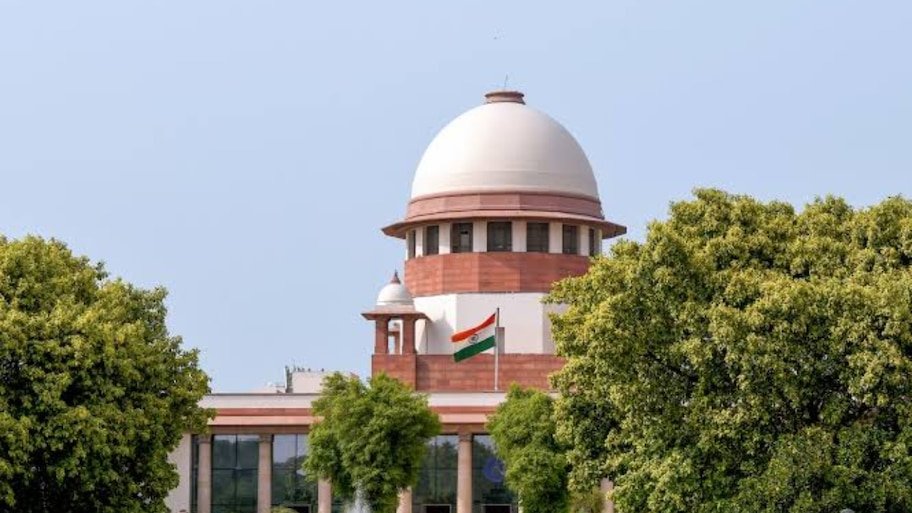
The controversy over the selection panel related to the appointment of the Chief Election Commissioner (CEC) and other Election Commissioners (ECs) has once again taken a major legal and constitutional turn. The Supreme Court has decided to send to a 5-member Constitution Bench the petitions challenging the constitutionality of the 'Chief Election Commissioner and Other Election Commissioners (Appointment, Conditions of Service and Tenure) Act, 2023' passed by the Central Government. A two-judge bench of the apex court, while considering the petitions, found that the legal opinion of the judges is divided on this important democratic issue and it involves deep constitutional questions related to the basic structure of the Constitution and fair elections. The court made it clear that until a larger constitutional bench gives a final verdict on the validity of this law, the question of the constitutionality of this selection process will remain open. Why Judges Had Divergent Views: Main grounds for division of opinion among the judges During the hearing, differences of opinion emerged among the judges of the Division Bench on the interpretation of legislative power and previous decisions of the judiciary: One view (Legislative Supremacy of Parliament): According to this view, Article 324(2) of the Constitution clearly states that the appointment of Election Commissioners shall be subject to any law made by Parliament. When Parliament has duly passed the law, it is the jurisdiction of the legislature to decide the composition of the selection panel and the judiciary should refrain from interfering in it. Second view (Autonomy of the institution and Anup Baranwal decision): The second view believes that in March 2023, the Constitution Bench of 5 judges (Anup Baranwal vs. Union of India) had included the CJI in the panel considering fair elections as the cornerstone of democracy. The removal of the CJI by the government and the inclusion of one of its own Union Cabinet ministers establishes complete dominance of the executive with a majority of 2:1, which affects the impartiality and institutional independence of the Election Commission. Due to lack of uniformity of opinion and the precedent of the previous decision of 5 judges in the Anup Baranwal case, the matter was formally referred to the Chief Justice so that he could constitute a new Constitution bench of 5 judges. How 2023 Law Replacement In 2023, both houses of Parliament passed the new law. In this new law, the composition of the selection committee was changed: The Prime Minister of India (Chairman) The Leader of the Opposition in the Lok Sabha A Union Cabinet Minister nominated by the Prime Minister In this reshuffle, the Chief Justice of India (CJI) was completely removed from the committee and replaced by a Union Minister. This provision was challenged in the Supreme Court by Association for Democratic Reforms (ADR), Dr. Jaya Thakur and other petitioners, terming it unconstitutional. Petitioners Argument vs Governments Stance: Arguments from both sides in the court This historic case has seen a heated legal debate between the two sides: Petitioners' Arguments: With the Prime Minister and his nominated cabinet minister in the committee, the government will always have an absolute majority of 2:1. The role of the leader of the opposition will remain only symbolic. Such unilateral power of the executive in the appointment of an independent constitutional body like the Election Commission attacks the principle of free and fair elections. Central Government's stand: The framers of the Constitution had handed over the entire power to make laws to the Parliament under Article 324(2). The March 2023 decision of the Supreme Court was only a 'stop-gap arrangement' (interim arrangement), which was applicable only till the law was made. The judiciary cannot compulsorily be included in the administrative selection panels of the executive, as this would be a violation of the principle of separation of powers. What Happens Next: What will be the main legal questions before the Constitution Bench? Now the Chief Justice of the country (CJI) will notify a special constitution bench of 5 senior judges to hear this case. The Constitution Bench will primarily review these three major constitutional questions: Does the 2023 law made by Parliament violate the basic structure of the Constitution and the autonomy of the Election Commission? Is excluding the Chief Justice from the selection committee and creating a panel with a majority of the executive arbitrary and a violation of Article 14? Can the directions given earlier by a 5-judge Constitution bench be changed in this way through the legislative process? Until the final decision of the Constitution Bench comes, this debate will continue with full intensity in the legal and political fraternity of the country regarding the independence of the Election Commission and its selection process.