Various factors account for President Donald Trump’s midterm election debacle. Analysts point to a rising cost of living, an ongoing oil crisis, a disruptive obsession with tariffs, and the President’s own polarizing rhetoric. Additionally, friction with what critics term the “deep state” bureaucracy heavily influenced the political landscape. Trump himself reportedly acknowledged that the war with Iran was undertaken at the direct expense of his party’s vital polling interests.
The conflict with Iran remains a pivotal turning point. Rooted in the long-standing enmity between Iran and Israel, the war escalated from joint U.S.-Israeli pledges to stonewall Iran’s nuclear capabilities. The resulting chain of events triggered severe domestic political fallout.
Internal administration turmoil further underscored the crisis. The abrupt dismissal of the Secretary of State-followed by his bizarre public revelations-alongside the subsequent ouster of four other key cabinet ministers shattered the administration’s decision-making hub. These rapid departures suggest an institutional hijacking of White House foreign policy. Ultimately, institutional actors exploited the President’s limited engagement with Iran’s ancient civilization, geostrategic importance, and historical relations with the United States, effectively weaponizing his “America First” doctrine against his own political interests.
While the President cannot be exonerated for rushing headlong into the Iranian crisis, he had every reason to hold Tehran responsible for escalating tensions with Israel. For decades, Iran’s theocratic regime has fueled a relentless anti-American campaign, making “Death to America” its official rallying cry. To project power, Tehran cultivated the world’s most formidable network of militant proxies across the Middle East. This “Axis of Resistance” includes Hezbollah in Lebanon, the Houthis in Yemen, the Popular Mobilization Forces (PMF) in Iraq, and both Hamas and Palestinian Islamic Jihad (PIJ) in Gaza. In Syria, Iran mobilized foreign Shia brigades, such as the Afghan Fatemiyoun and Pakistani Zaynabiyoun, to prop up the Assad regime.
Funding this network required massive state resources. In 2020, the U.S. State Department estimated that Iran provided Hezbollah alone with $700 million annually, alongside historically supplying $100 million per year to Palestinian militant groups. While Donald Trump aggressively targeted these networks, he was not the first U.S. president to do so; at least five of his predecessors struggled to curb their anti-American and anti-Israel operations. Ultimately, decades of Washington’s sanctions failed to alter Tehran’s trajectory. Instead, Iran consistently prioritized its national budget to fund these regional proxies and construct a covert war machine, driven by its pursuit of a nuclear weapon.
The fundamental weakness of U.S. policy toward Iran lies in a failure to grasp how the theocratic regime derives its resilience. Instead of relying on public popularity or economic stability, the Islamic Republic survives through a zero-sum ideology of sacred defiance against external powers.
Following the September 2022 Mahsa Amini agitation === which resulted in at least 551 documented deaths and 22,000 arrests across 26 provinces — Washington and the international community missed an opportunity to systematically dismantle the financial and travel networks of the regime’s coercive apparatus (the IRGC, Baseej, and judiciary). Mass anti-regime protests across multiple waves (including intense internal unrest and massive public resistance) showed that the Iranian populace fiercely opposes the clerical order. However, outside military threats or sweeping apocalyptic rhetoric consistently trigger a “rally-around-the-flag” effect that the regime exploits.
High-profile, apocalyptic warnings from Western leaders — such as US President Donald Trump’s April 2026 threats that “a whole civilization will die tonight” amidst military flare-ups with Israel-played directly into Tehran’s hands. Rather than breaking the regime, such language allowed the Ayatollahs to frame themselves as the shield of Iran’s historic civilizational pride against foreign destruction.
Exiled figures like Prince Reza Pahlavi have drawn significant attention — symbolized by events like his acceptance of the 2026 Freedom Prize on behalf of the Iranian people — yet the fragmented nature of the diaspora and internal divisions continue to complicate a unified transition plan. Sustainable change requires targeted pressure on the regime’s security and financial pillars combined with unhindered internal communication tools (such as satellite internet and anti-censorship networks) rather than broad external military ultimatums.
Trump lost the Midterm poll. Many who disliked his policy are happy. He can no longer take arbitrary decisions of national importance.
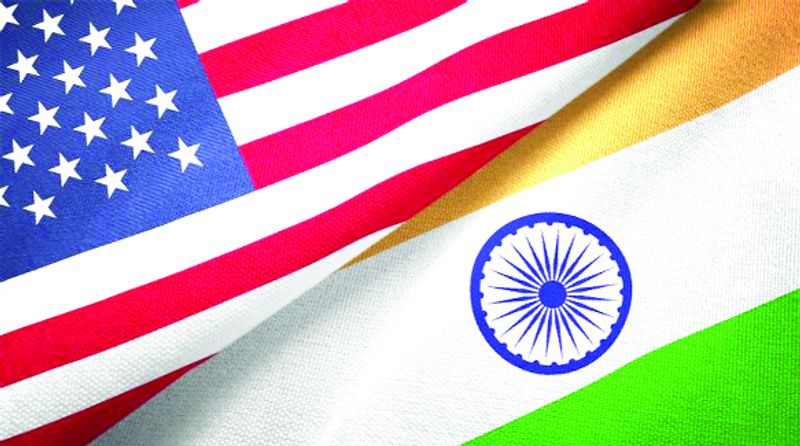
India may find itself more comfortable aligning with the United States in an era where the American “deep state” is powerless to hatch conspiracies against New Delhi. However, Prime Minister Modi’s long-standing demand for world powers to universally denounce international and regional terrorism may remain unfulfilled. While Donald Trump’s influence may fluctuate, the American deep state itself remains powerful.
Consequently, while attempting to normalize relations with Washington, India should immediately exit the Quad, reinforce its traditional ties with Russia and Iran, and find strategic avenues to maintain the status quo with China. Fortunately, Iran is reacting positively to India’s connectivity initiatives in Central Asia and the Trans-Caspian region, anchored by the 720-kilometer Chabahar rail link extending into Afghanistan and beyond. India must also value Tehran’s strategic gesture of allowing its commercial navies unhindered passage through the Strait of Hormuz.
Concurrently, New Delhi enjoys cordial relations with the UAE and several other Gulf nations, and should not panic over regional developments like the Mecca Accord or Saudi-Pakistan defense agreements. Such pacts ultimately bear little consequence for India. Today, the Saudi Kingdom resembles a newborn calf, searching for its mother among a vast herd of disenchanted mothers.
The conflict in Iran has cast a profound shadow of doubt over the global authority of traditional superpowers. As the UN Secretary-General aptly noted, the true influence of these dominant nations is increasingly being called into question. While the United States undoubtedly possesses the strategic and military capability to reassert its global standing-a reality that will likely manifest sooner rather than later-this is far from the final chapter of the Iranian conundrum. Beneath the surface, Tehran’s theocratic regime sits atop a volatile powder keg of revolution. The Iranian people are actively demanding a democratic, secular, and egalitarian society. When the dust settles, Iran is poised to emerge not as a passive bystander on the global stage, but as a pioneering, modern state ready to assume a position of leadership.