
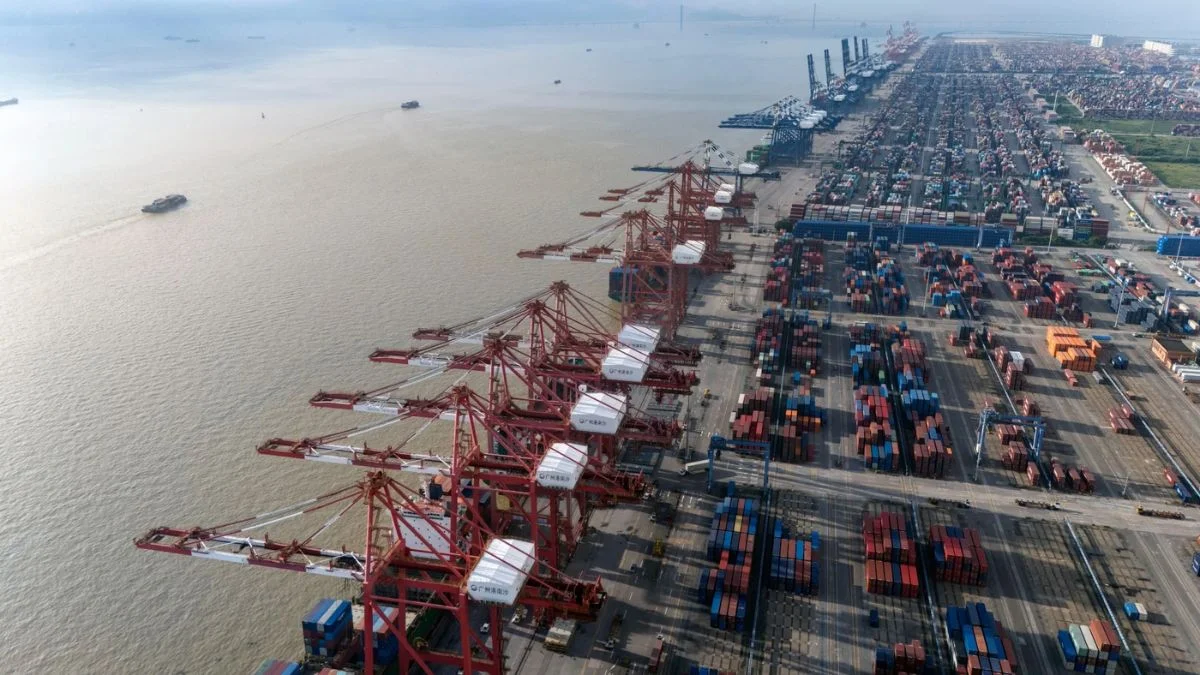
China export growth drops to 8.6% from 21.8% while Brent falls below 100 and oil slips 1%

Global trade and energy markets are facing fresh pressure. The Middle East conflict is now hitting exports and oil prices at the same time. China is seeing slower growth. Oil markets are reacting to mixed signals on peace talks.
China export growth slows to 8.6 percent as AI energy demand rises
China’s export growth is expected to slow sharply. Forecasts show growth at 8.6 percent in March. This is a big drop from 21.8 percent seen in the first 2 months of the year.
This slowdown is raising concerns. China may struggle to beat last year’s 1.2 trillion dollar trade surplus. Experts are linking this drop to the global AI sector. AI demand has been strong but energy costs are rising fast. This is hurting production and confidence.
AI systems need huge power. Data centres alone used 1.5 percent of global electricity in 2024. This is based on IEA data.
China also plays a key role here. It exports critical minerals needed for semiconductor chips. These chips are used in AI systems across the world.
China holds leverage as US needs critical minerals after Iran conflict
Despite slower exports, China still has strong control in trade talks. The US may depend more on Chinese minerals after its military actions in Iran. US weapons stockpiles need rebuilding. This requires minerals like gallium. These are used in satellites, radar systems and missile tech.
China dominates gallium processing. It has already imposed export controls in the past. In 2023, it added strict licensing rules.
Export controls are rising overall. Between 2021 and 2025, China announced 30 export restrictions. This is nearly 3 times higher than the previous 5 years. Out of these, 10 controls were focused on rare earths and critical minerals.
US officials are showing a softer tone ahead of May talks. There are signs that both sides want stability in trade relations.
Brent oil falls below 100 as prices drop 1 percent on peace talk signals
Oil prices are reacting quickly to geopolitical news. Brent crude has fallen below 100 dollars per barrel. It dropped around 1 percent to 98.40.
This came after claims that Iran may return to talks. However, earlier negotiations failed to reach a deal. There are still risks in the market. Oil supply disruption is a major concern. The Strait of Hormuz situation remains tense.
IEA has already released 400 million barrels from reserves. This is only 20 percent of its total stock.
Officials have warned that the impact may get worse. Oil shipments from last month are still reaching markets. This is delaying the real price effect.
If tensions continue, another release from reserves is possible.
The overall picture is uncertain. Trade is slowing. Energy risks remain high. And global markets are reacting to every new development.

Comments are closed.