Situ, a 34-year-old programmer in Qingdao who used a pseudonym, learned in early October that he was being laid off after spending a decade in the technology industry.
He had already witnessed how dramatically AI was changing his profession. A project that would previously have required six programmers working for three months was completed by one developer using AI in just a week, he said.
Worried that he would struggle to keep up, Situ started looking for a way out of tech. In July, he and a colleague signed up for a weekend automation course that cost 9,400 yuan ($1,410). After he lost his job, he planned to switch to full-time classes for three months in the hope of finding work at some industrial park.
|
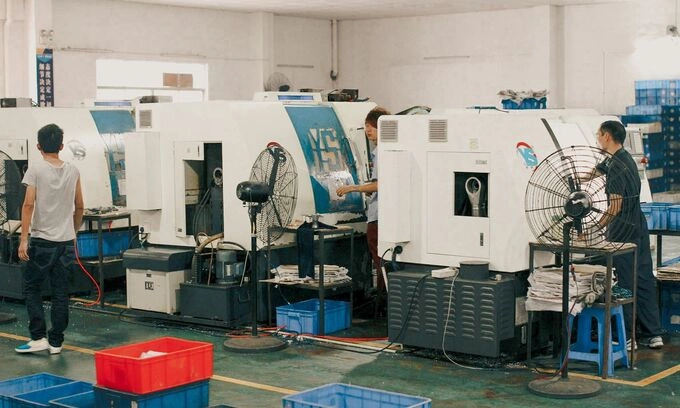
Workers operate machinery in a factory. Photo from Pexels |
The shift reflects growing concerns among Chinese workers as businesses increasingly adopt AI tools to automate tasks previously performed by humans. China has been particularly aggressive in promoting AI and robotics, with government policies encouraging their adoption across industries and everyday activities, according to Fortune.
Job postings showed demand for workers falling in the internet and real estate industries, while opportunities grew in industries such as new energy vehicle manufacturing, according to recruitment platform Liepin.
In Taizhou, Zhejiang, the number of local training providers offering automation courses grew from one to four or five in two years, an instructor there said.
Of the trainees, some 60% to 70% came from civil engineering and 20% were programmers, the instructor said.
Wang Yuxiang, 26, studied computer science at a university in Chengdu. He quit the tech industry in 2024 as his workload grew and his monthly pay stayed between 5,000 and 6,000 yuan. Becoming a PLC engineer, writing programs that control factory equipment, seemed a relatively easy way to get into manufacturing, according to QQ.
Wang started as a helper at an auto parts workshop, where he stripped and connected hundreds of wires a day, his hands covered in machine oil. The lead technician taught him wiring and repairs but offered little guidance on programming. Wang paid for an advanced automation course and later landed a job with a new energy vehicle maker that paid 12,000 yuan a month.
For Chen Haoyu, the difference was how easily he could find work.
He had sent out 2,000 applications before landing an IT job. When he switched to automation, nine factories offered him jobs in a single week. He chose a battery factory in Suzhou that paid 7,200 yuan a month.
What the factory work gave Zhang was a sense of job security. Each production line had to be tailored to a client’s needs, and engineers had to test the equipment and fix problems on site. He does not think AI could soon replace that part of the job.
For Situ, the priority is steady work close to home. Now he hopes to find a factory job in Qingdao that will cover his monthly mortgage payment of 6,000 yuan.