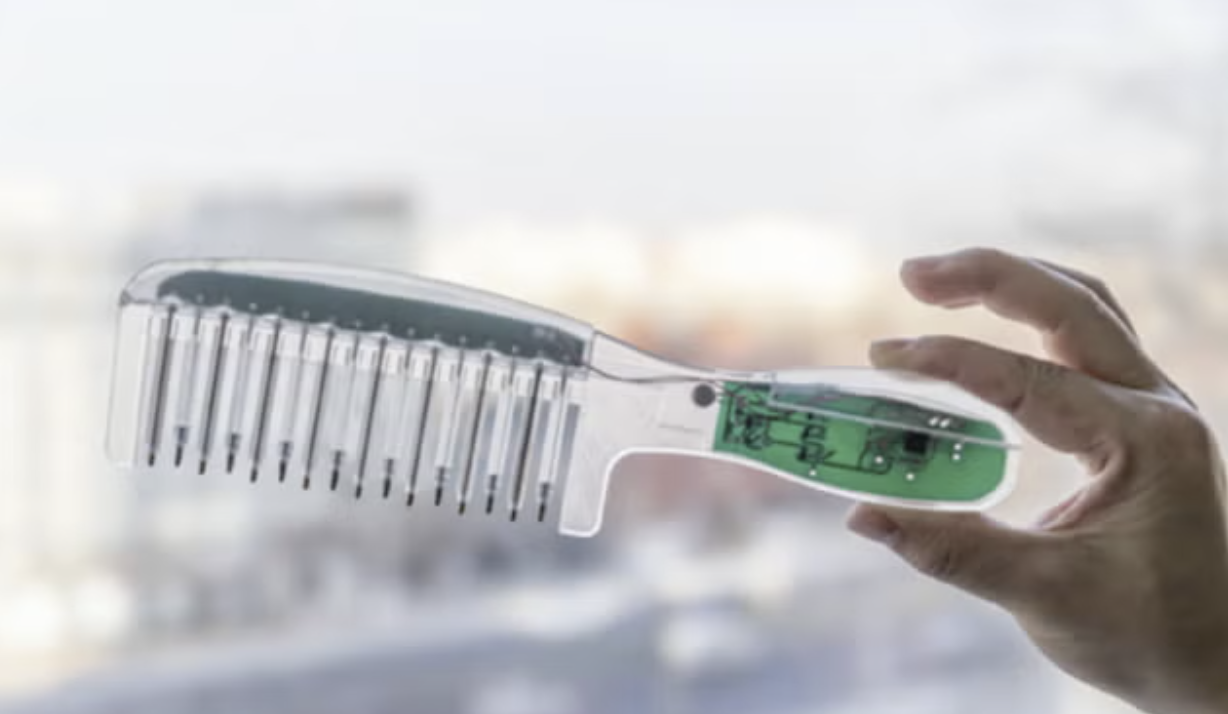
Scientists in China have developed an experimental electric comb that could open a new direction in treating pattern baldness. Named Detangle, the comb-shaped bioelectronic device combines electrical stimulation with the delivery of experimental genetic treatments to hair follicles.
In a study published in the journal Nature Communications on November 3, 2026, researchers reported that the technology achieved nearly 98% hair regrowth in mice within 28 days. The results were significantly higher than those achieved using conventional topical minoxidil treatment in the same experimental model.
However, the device has not yet been tested on humans, and researchers say further studies are required before clinical trials can begin.
How Does The Detangle Electric Comb Work?
Developed by a research team led by scientists from Beihang University in Beijing, Detangle looks similar to a conventional comb but contains specially designed electronic teeth.
These teeth feature electrodes of different heights that generate pulsed electric fields when the device is moved across the skin. According to the researchers, the arrangement creates a stronger electric field than conventional aligned electrodes, allowing therapeutic molecules to penetrate deeper into hair follicle regions.
The device also contains drug-loading modules that deliver two experimental genetic treatments directly towards follicular cells.
One treatment uses a VEGFA-encoding plasmid designed to encourage the formation of blood vessels around hair follicles. The second uses SRD5A2-targeting siRNA, which aims to suppress the production of an enzyme involved in generating dihydrotestosterone (DHT), a hormone associated with hair follicle shrinkage.
The combination is designed to address two factors linked to androgenetic alopecia, commonly known as male-pattern baldness.
Nearly 98% Hair Regrowth In 28 Days
The researchers tested the technology on mice with experimentally induced pattern hair loss. The animals received different treatments over a 28-day period.
The results showed that mice receiving conventional topical minoxidil achieved approximately 70% hair regrowth. The complete Detangle system, combining electrical stimulation with both experimental genetic treatments, achieved approximately 97.85% regrowth.
The study also examined the individual components of the system. Electrical stimulation alone produced more limited results, while combining the device with the two therapeutic molecules delivered substantially higher hair recovery.
The findings suggest that the drug-delivery mechanism, rather than electrical stimulation alone, plays an important role in the treatment’s effectiveness.
Could This Become A Treatment For Human Baldness?
Androgenetic alopecia affects more than 1.5 billion people worldwide, according to the researchers. Existing treatments include topical minoxidil, oral finasteride and hair transplantation.
However, each option has limitations. Minoxidil requires continued use, while finasteride can cause side effects in some patients. Hair transplantation is also an invasive and expensive procedure.
Detangle could eventually offer another approach by combining follicle stimulation with targeted delivery of therapeutic molecules.
But the promising mouse results should not be interpreted as proof that the device can reverse baldness in humans. The researchers have not established its safety or effectiveness in people, and additional studies will be necessary before human clinical trials.
Summary
Chinese researchers have developed Detangle, an experimental electric comb that combines electrical stimulation with genetic drug delivery. In a 28-day mouse study, it achieved approximately 97.85% hair regrowth, compared with around 70% using minoxidil. The technology remains experimental and has not yet undergone human testing.
Image Source