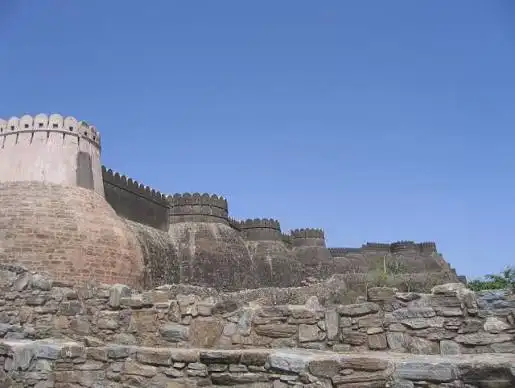
Kumbhalgarh Fort, situated amidst the high hills of Aravali in Rajsamand district of Rajasthan, is an important symbol of the glorious history of Mewar. Due to its strong ramparts, inaccessible hill position and vast complex, it is counted among the most impressive hill forts of India. The construction of the fort is related to the reign of Maharana Kumbha and later it became an important center of the security system of Mewar.
Maharana Kumbha had constructed it
The present form of Kumbhalgarh Fort developed in the 15th century during the reign of Maharana Kumbha. According to historians, it was constructed between 1443 and 1458 AD. The fort was strategically built at such a place from where the surrounding hilly areas could be monitored and it would be difficult for the enemy to reach here. Maharana Kumbha patronized many forts and construction works in Mewar. Kumbhalgarh is considered a brilliant example of his military and architectural vision.
36 kilometer long wall
The biggest feature of Kumbhalgarh is its huge ramparts. The wall of the fort is said to extend for about 36 kilometers. Its width is so great at many places that in popular accounts it is said that several horses could walk on it simultaneously. Due to this huge wall, Kumbhalgarh is also often known by epithets like “Great Wall of India”. However, it is compared to the Great Wall of China primarily in terms of its length and architectural impact.
Birthplace of Maharana Pratap
The history of Kumbhalgarh is also deeply connected with Maharana Pratap. According to traditional historical accounts, Maharana Pratap was born on 9 May 1540 in Kumbhalgarh. Therefore, this fort is an important part of the history of Mewar as well as the life story of Maharana Pratap. Maharana Pratap later became famous for the struggle for the independence of Mewar against the Mughal emperor Akbar. The importance of Kumbhalgarh increases due to the memories of the battle of Haldighati and their struggle.
The fort was considered impregnable
Kumbhalgarh was considered a very difficult fort for a long time due to its natural location and strong security system. High hills, dense forests, strong walls and many gateways strengthened its security. Water storage systems, temples, palaces and residential areas were also built within the fort. There is mention of more than 300 temples here, which include temples associated with Hindu and Jain traditions.
Badal Mahal and Temple
Badal Mahal located within the fort is one of its major buildings. Due to its location at a height, a spectacular view of the surrounding Aravalli hills is visible from here. The Neelkanth Mahadev Temple located in the fort is also important from the architectural point of view. Apart from this, many Jain temples also reflect the religious and cultural history of the fort.
Part of UNESCO World Heritage
Kumbhalgarh Fort is included in the Hill Forts of Rajasthan group. In 2013, UNESCO included six hill forts of Rajasthan in the World Heritage List, including Kumbhalgarh. These forts were given World Heritage status due to their Rajput military architecture, their harmony with natural geography and historical importance.
Why is Kumbhalgarh special?
Kumbhalgarh is not just a fort made of stones. The story of the military strategy of Mewar, the architectural vision of Maharana Kumbha and the birthplace of Maharana Pratap is linked within its walls. Standing amidst the Aravali hills, this fort still reminds of the glorious past of Rajasthan. The light and sound show of the fort in the evening is also popular among tourists.