Until now, thousands of liters of fuel were used to fly an aeroplane. But now this story has started changing. A battery-powered airplane flies for the first time in America; The special thing is that the electricity cost in its 27-minute test flight was only ₹ 480. This test is considered to bring a big change in the world of aviation.
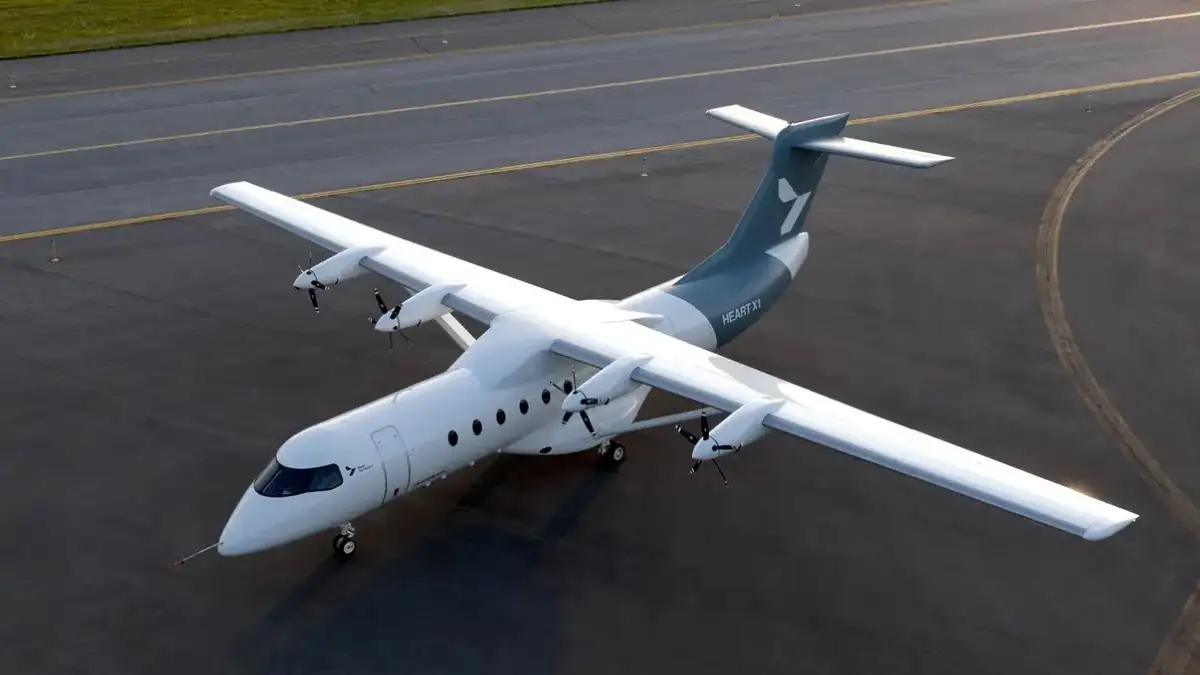
American startup Hart Aerospace recently successfully completed the first flight of its fully electric airplane 'X1'. This aircraft, said to be the world's largest electric airplane, took off for the first time on August 12 from Plattsburgh International Airport in New York. During the 27-minute test flight, the aircraft reached an altitude of 1,100 feet and landed successfully.
The Hart Aerospace X1 is not like a typical small private jet. Its wingspan is approximately 106 feet, while its length – from nose to tail – is 76 feet. At takeoff it weighed more than 25,000 pounds (11,340 kg). However, this airplane flew using an entirely battery-powered electric powertrain.
During its first flight, the X1 remained in the air for a total of 27 minutes and reached an altitude of approximately 1,100 feet. The electric powertrain delivered more than 1 megawatt of power during flight. According to the company, the electricity cost for the entire test flight was just $5 – which is equivalent to approximately ₹480. Aerospace X1 Size
Wingspan: 32.3 m
Length: 23.2 meters
Height: 7.3 meters
Take-off weight: 11,340+ kg
**Changes in the airline industry**
The main benefit of electric airplanes isn't just about reducing pollution; Their objective is also to reduce the operating costs of the airline. Operating a modern airplane is an expensive task; Even short distance flights consume thousands of liters of fuel. Countries like India are also considering alternatives to fuel mix to reduce expenses and their dependence on fossil fuels.
However, the Aerospace X1, which has an all-electric powertrain, works differently. It has a large battery pack and a powerful electric motor, which charges the battery with low-cost electricity. The company believes that this technology will help reduce major expenses in the aviation sector – and the benefits will ultimately be passed on to the general public.
Aerospace ambitions are not limited to just electric technology. Actually, the main goal of the company is to create a hybrid-electric aircraft named ES-30. The company claims that this aircraft can reduce the operating expenses of regional airlines by more than 40 percent, making this technology important for short-haul flights.
**30 passengers and 804 km range**
The ES-30 will be a hybrid-electric aircraft capable of carrying 30 passengers and their luggage. The special thing is that it will have both a conventional fuel-powered engine and a large electric motor. These two powertrains will work together and according to the company, with a full fuel tank and a fully charged battery, the aircraft will be able to travel a distance of approximately 500 miles (804 km). This hybrid aircraft can also be flown in fully electric mode; The company says it will be able to travel about 125 miles (201 km) using only electric power.
It won't take long to recharge the battery once it's empty; The company claims that it will take about 30 minutes to prepare the battery for reuse. That's why Hart Aerospace is seeing it as a potential game-changer for short-haul regional flights.
X1: a test platform, not an aircraft intended for commercial flight
The X1 is not designed to carry passengers on commercial flights; Rather, it is a platform to test technology required for the upcoming ES-30 hybrid aircraft. With the X1, the company is evaluating key aspects such as electric powertrain, aerodynamics and overall flight performance.
The special thing is that the initial testing of X1 was done under the 'Special Airworthiness Certificate' in the 'Experimental Category' (SAE-EC) of the Federal Aviation Administration (FAA). The FAA is the main US government agency that regulates civil aviation. During the test, the aircraft successfully completed takeoff, climb, various flight maneuvers and landing.
Hart Aerospace is targeting 2031 for type certification of the ES-30. This means that the aircraft will have to go through several stages of testing and necessary safety procedures before it gets to that point. X1 is an important part of this long journey, helping the company fully understand and refine the technology ahead of actual commercial flights.
According to Anders Forslund, founder and CEO of Hart Aerospace, the first flight of the X1 shows that electric aviation can reach the level of commercial aircraft. The company believes that electric aircraft can transform airline economics in the future and help reduce the cost of air travel for passengers.
When will electric flights start?
According to the company, production of the first pre-production ES-30 hybrid aircraft has begun at its pilot manufacturing plant in Los Angeles. The flight test program is targeted to begin in 2028. If everything goes according to plan, testing of the first electric flight could begin in the next two years. The way forward will be decided based on the results of this test.