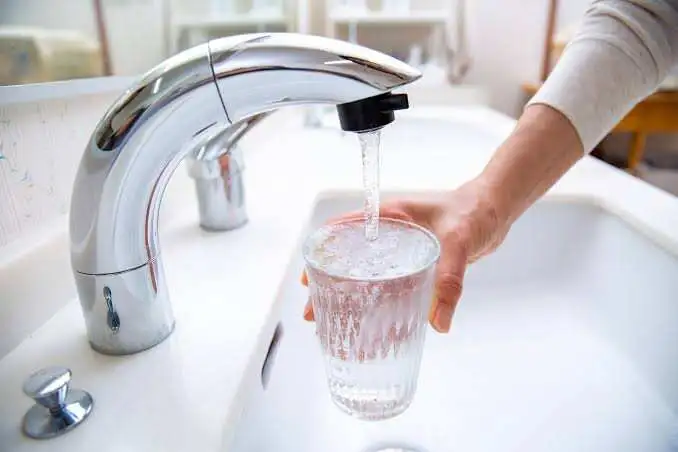
Measures to improve water supply
In many homes, tap water supply is slow. Especially when water is supplied from an overhead tank, water flow to upper floors, bathrooms and kitchens may be reduced. This takes more time for daily tasks and causes inconvenience to people.
If the water pressure from the tank in your house is low, it is necessary to pay attention to the design of the pipeline and the size of the pipes. Correctly sized pipes, fewer bends and proper fittings can be helpful in improving water flow. However, simply installing thicker pipes does not increase pressure in every situation. The height of the tank and the length of the pipeline are also important.
Use of large pipe at the outlet of the tank
The size of the main pipe coming out of the overhead tank should be adequate. As per requirement in domestic plumbing 1 to 1.5 inch CPVC or UPVC pipe can be used.
Subsequently, as the pipe leads to different rooms or bathrooms, the size of the pipe can be reduced by installing reducers as per the requirement. For example, if the main line is 1.5 inches and a branch requires 1 inch or 3/4 inch pipe, the appropriate reducer can be used.
Pipe sizes for bathroom and kitchen
For separate supply lines of bathroom and kitchen, generally 3/4 inch pipe is used. However, the correct size should be decided according to the plumbing of the house, number of taps and water requirement.
Installing a pipe that is too small in the main line may obstruct the flow of water. Therefore, it may be better to reduce the size as per requirement rather than installing very small pipes in the entire pipeline from the beginning.
Use of CPVC or UPVC instead of iron pipes
Old iron pipes can become clogged with water over time due to rust and dirt accumulating inside. This may affect the flow of water.
For this reason, high quality domestic water lines CPVC or UPVC pipe is used. However, pipe selection should be based on water temperature, usage, and local plumbing standards.
reduce pipe bends
Too many bends in a water pipeline can cause additional obstructions to flow. especially many 90 degree elbow It may be beneficial to avoid continuous use.
Where design permits, 45 degree fittings or long-radius bends may be used. This can help keep the flow of water in the pipeline relatively smooth.
Check Air Lock Problem
Sometimes air trapped in the pipeline can also affect the flow of water. This is called air lock. If water is coming intermittently from the tap or the flow suddenly becomes very low, the possibility of air lock in the pipeline can be checked.
In such a situation, air vents or a proper venting system may be required. It is better to decide by observing the condition of the pipeline rather than installing it yourself without consulting a plumbing expert.
tank outlet position
Soil, silt or other dirt may accumulate at the bottom inside the tank. Therefore, it may be useful to place the outlet slightly above the bottom of the tank instead of exactly at the bottom.
Some domestic plumbing designs have the outlet close to the bottom of the tank. 2 to 2.5 inches above Placed so that the silt deposited at the bottom is less likely to enter the pipeline directly.
Don't just use thick pipe to increase pressure
It is important to understand that water pressure does not depend only on the size of the pipe. Height of the tank, pressure of the water source, length of the pipe, bends in the pipe, location of fittings and taps. Also affect the flow of water.
If the tank is at a very low height, installing only a 1.5 inch pipe will not guarantee much pressure. In such cases, it would be better to have the entire plumbing checked by a plumber.
Therefore, before replacing pipes when water flow in the house is low, it is necessary to find out what is the problem. Height of tank, blockage in pipeline, air lock, excessive turning or any other reason. It is not from.