Beginning and end of Navratri
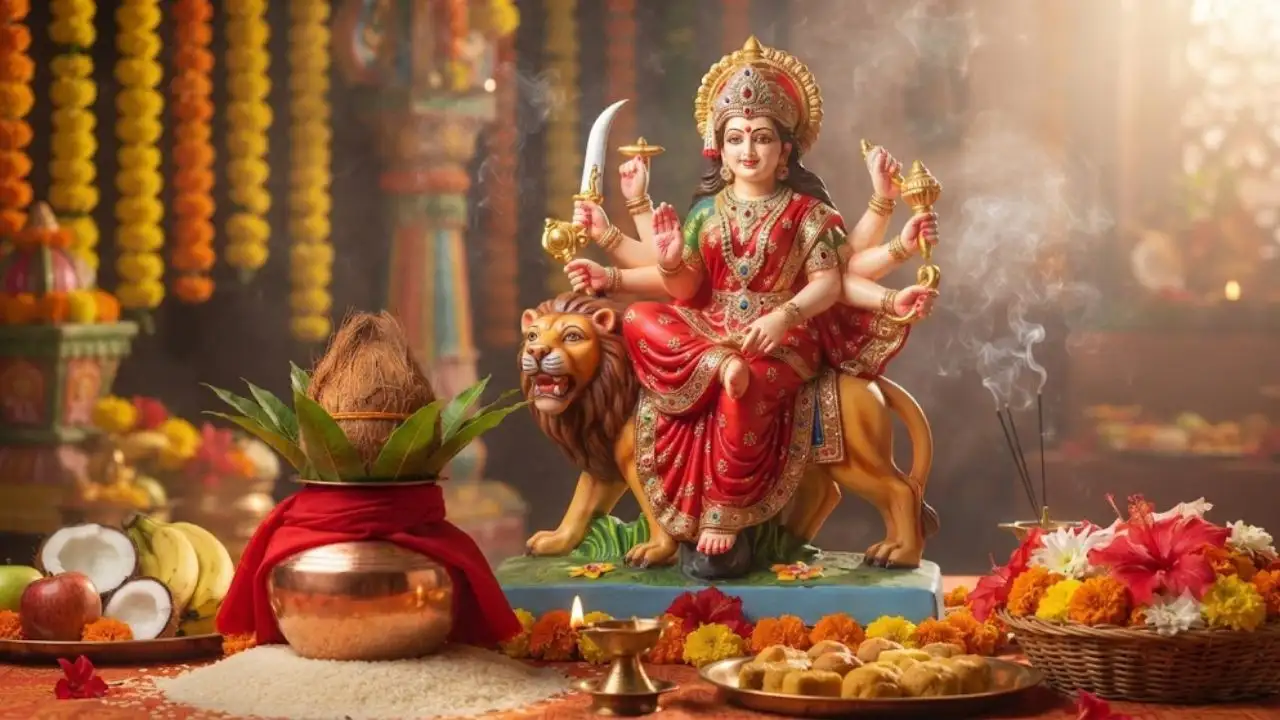
New Delhi: According to the Panchang, this year Shardiya Navratri will start on October 11 and will end with Vijayadashami on October 20. During this period, worship, fasting, recitation and religious rituals of Maa Durga will be organized across the country. Devotees worship various forms of Maa Durga in this nine-day festival. Navratri starts with the establishment of Kalash, followed by important festivals like Ashtami, Navami and Dussehra.
First day of Navratri and installation of Kalash
Navratri will start from 11th October
The first day of Shardiya Navratri will be Pratipada date of Ashwin Shukla Paksha. On this day, Kalash will be ritually installed in homes and temples. On the first day, Maa Shailputri, the form of Maa Durga, is worshipped. With the installation of the Kalash, devotees take a pledge to worship the Goddess for nine days. Many devotees observe fast for nine days and perform puja as per their devotion.
Auspicious time for establishing Kalash
What is the auspicious time for establishing Kalash?
Abhijeet Muhurta is considered auspicious for establishing the Kalash on 11th October. On this day, Abhijeet Muhurta will be from 11:36 am to 12:24 pm. Puja timings may vary depending on the city. Due to changes in sunrise and local time, time may vary by a few minutes in different cities. Therefore, before installing the Kalash, it is necessary to confirm the time from the Panchang of your city.
Recitation of Durga Saptashati in Navratri
Why is Durga Saptashati recited during Navratri?
Shardiya Navratri is not limited to just fasting and worship. In religious tradition, these days are considered important for Goddess Sadhana and spiritual discipline. Devotees recite Durga Saptashati, Devi Kavach and Siddha Kunjika Stotra during Navratri. It is believed that worshiping Goddess Durga and chanting mantras brings peace to the mind and maintains positivity in the house. Some devotees also take a pledge from the priest and get Durga Saptashati recited.
Important dates of Navratri
Now we will know about the special dates of Navratri
Belvaran Pooja
After the installation of Kalash on 11th October, Belvaran Puja will be held on 16th October. Many special traditions related to Durga Puja are performed during Navratri. Belvaran Puja will be organized on 16 October, which holds special significance in the Durga Puja tradition of Bengal and Eastern India.
Mahasaptami
Mahasaptami worship will take place on 17th October. According to the Panchang, puja related to Saptami will be performed after 8:58 am. On this day traditions like Naupatrika Pravesh, Nisha Puja and Devi Sthapana will be performed.
Durga Ashtami
Durga Ashtami will be celebrated on 18th October. On this day, Maa Mahagauri, the eighth form of Maa Durga, is worshipped. On the day of Ashtami, fasting, special puja and Kanya Puja have special significance.
Sandhi Puja and Mahanavami
There will be a festival of Sandhi Puja and Mahanavami on 19th October. There is a tradition of performing Sandhi Puja during the Sandhi period of Ashtami and Navami Tithi.
Vijayadashami and immersion
Vijayadashami will be celebrated on 20th October. On this day Navami Tithi will remain till 9:35 am and Navratri fast will be broken. On this day, the tradition of immersion of idols of Maa Durga will also be followed.
Arrival of Maa Durga
This time Maa Durga will arrive on elephant
According to religious beliefs, this year Maa Durga will arrive on an elephant. Elephant is considered a symbol of prosperity and opulence. The arrival of the goddess on an elephant is considered a sign of good rains and progress in agriculture.
worship with reverence and restraint
Worship the Goddess with devotion and patience
Shardiya Navratri is an occasion for worship of Goddess Durga as well as introspection and spiritual practice. Devotees perform religious activities like fasting, chanting mantras, recitation and service as per their devotion. Puja should be done with devotion and positive sentiments rather than ostentation.