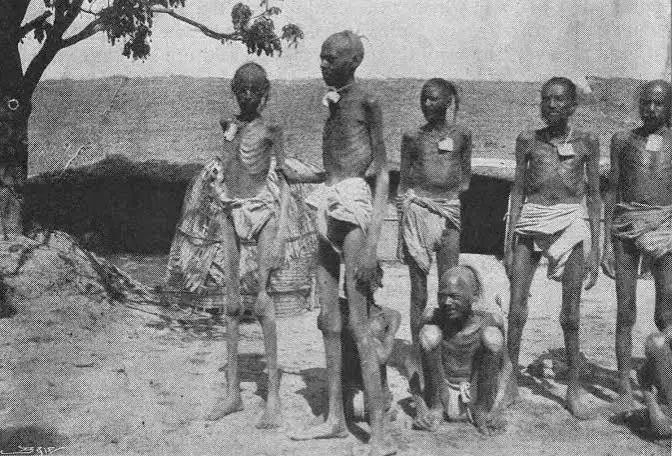
There are many such incidents recorded in the history of Rajasthan, which had a deep impact on the life and society here. One of these was the Chhappaniya famine, which is linked to the severe famine of 1899-1900. This famine proved devastating for the old Rajputana region of Rajasthan. Lack of rain, failure of crops, shortage of fodder for animals and rising prices of grains had made life difficult for millions of people.
Why did Chhappaniya famine occur?
In the year 1899, the monsoon was weak and there was almost no rainfall in many areas. Due to this, Kharif crops were badly affected. Ponds and reservoirs started drying up, water in wells reduced and sowing in the fields became difficult. In previous years too, the agricultural system of many areas had weakened due to irregular rainfall. In such a situation, the drought of 1899 became a big problem for the people.
The situation was particularly serious in the western and central parts of Rajputana. There was no fodder left for the animals and the income of families dependent on farming almost ended. Due to drought in the surrounding areas too, it has not been easy for people to go to other areas and find work or food.
Why was it named Chhappaniya famine?
In Rajasthan this famine is usually called Chhappaniya famine. Its name is associated with Vikram Samvat 1956, which roughly corresponds to the period 1899–1900 AD. In the folk memory of Rajasthan, this name still reminds of the severe hunger and crisis of that period.
However, there was variation in the duration of the famine and its impact on different regions. Therefore, it would not be correct to assume the same time frame or similar loss figures for the entire Rajputana.
Hunger, migration and destruction of livestock
During the famine, large numbers of people had to leave their villages in search of food and employment. Due to grain shortage, prices rose rapidly and it became extremely difficult for poor families to get food. The economic condition of farmers deteriorated due to lack of crops in the fields. Large numbers of animals also died due to lack of fodder and water, causing long-term damage to agriculture and the rural economy.
Along with starvation, diseases also increased the problems of the people. According to historical reports, after 1900, outbreaks of diseases like malaria and cholera also took the lives of a large number of people. Due to malnutrition, people's ability to fight diseases had reduced.
What efforts were made to deal with the famine?
During that period, as part of relief works, works like repairing ponds, construction of new reservoirs and construction of roads were started, so that the needy people could get wages. Steps like relief camps, food distribution, financial assistance to farmers and tax exemption were also taken in some areas. However, the availability of aid was not uniform across different princely states and regions.
Why is Chhappaniya famine remembered in the history of Rajasthan?
The Chhappaniya famine was not just an event of drought and crop failure, but it had a deep impact on the rural economy, animal husbandry and social life of Rajasthan. The tragedy also highlighted the importance of water and the need for drought preparedness.
Even today, the mention of Chhappaniya famine in Rajasthan is found in the memories of old people, folklore and historical discussions. This history is a reminder of how important timely rainfall, water conservation, food security and effective relief arrangements are for any drought-affected area.