Affordable Home Remedies for Gardening
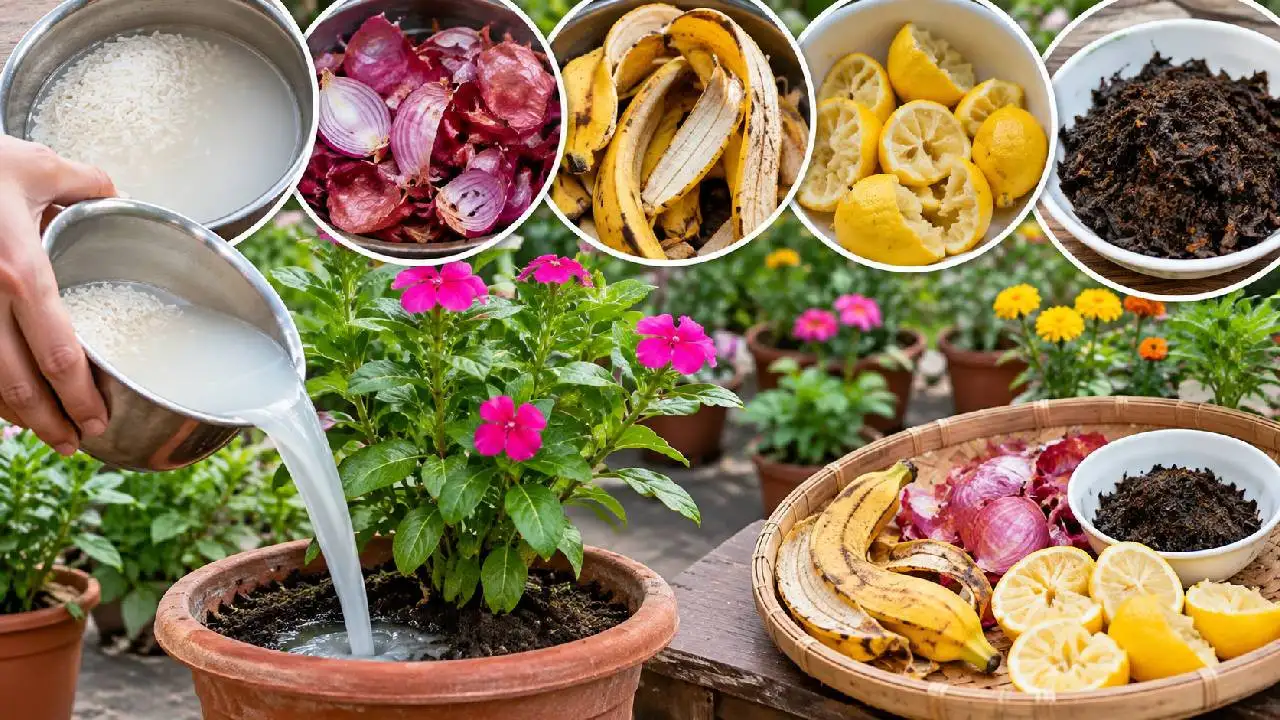
Many people buy expensive fertilizers to increase the growth and flowering of their plants, but gardening expenses can be reduced by reusing some kitchen ingredients. The water left after washing rice, onion and banana peels, leftover lemon juice, and used tea leaves can be put to good use. They contain organic elements and minerals, which can improve soil health.
However, these home remedies should not be considered a complete fertilizer for all plants. Adequate sunlight, right amount of water, suitable soil and balanced nutrition are also essential for the health of plants. While adopting these measures, the quantity should be kept in mind, so that foul smell, fungus or other problems do not arise in the soil.
1. Use of rice washing water
The water left after washing rice before cooking can sometimes be put in pots instead of throwing it away. The starch and trace elements present in it can be beneficial for the microorganisms living in the soil.
Pour this water into the soil after it cools down. Keep in mind that it should not contain anything like salt, oil, spices or soap. Using it in excess may cause foul smell or fungus problems in the soil.
2. Making nutritious water from onion peels
Clean onion peels can be soaked in water for a few hours. After this, filter the water and pour a small amount into the soil of the plants.
Onion peels contain some minerals, but it is not a substitute for water balanced fertilizer. Therefore, use it in limited quantity and if any unusual change is seen in the soil, stop using it.
3. Dry powder of banana peels
Cut banana peels into small pieces and dry them in the sun. After drying, they can be ground and made into powder. A small amount of this powder can be mixed in the soil.
Banana peels contain some minerals, including potassium, but these alone do not meet all the plant's nutritional needs. Therefore, make arrangements for other essential nutrients also.
4. Proper use of lemon peels
Avoid pressing large amounts of remaining lemon peel directly near the roots of the pot. Their acidic nature can affect the properties of the soil. It would be better to mix them with organic fertilizer.
It is not wise to rely solely on lemon peels to ward off ants or balance the pH of the soil.
5. Use of used tea leaves
After making tea, wash the remaining leaves with clean water and remove the traces of milk and sugar. After this, they can be dried and mixed in compost in small quantities.
Tea leaves contain organic matter, which can help in preparing compost. Do not put wet tea leaves in a thick layer on the soil of the pot, as this can increase the risk of fungus.
Precautions while using home compost
These measures are aimed at utilizing kitchen waste and reducing gardening expenses. Use the ingredients in limited quantities and take care of water, sunlight and balanced nutrition as per the needs of the plants. Well-prepared compost can be an effective way to improve soil quality.