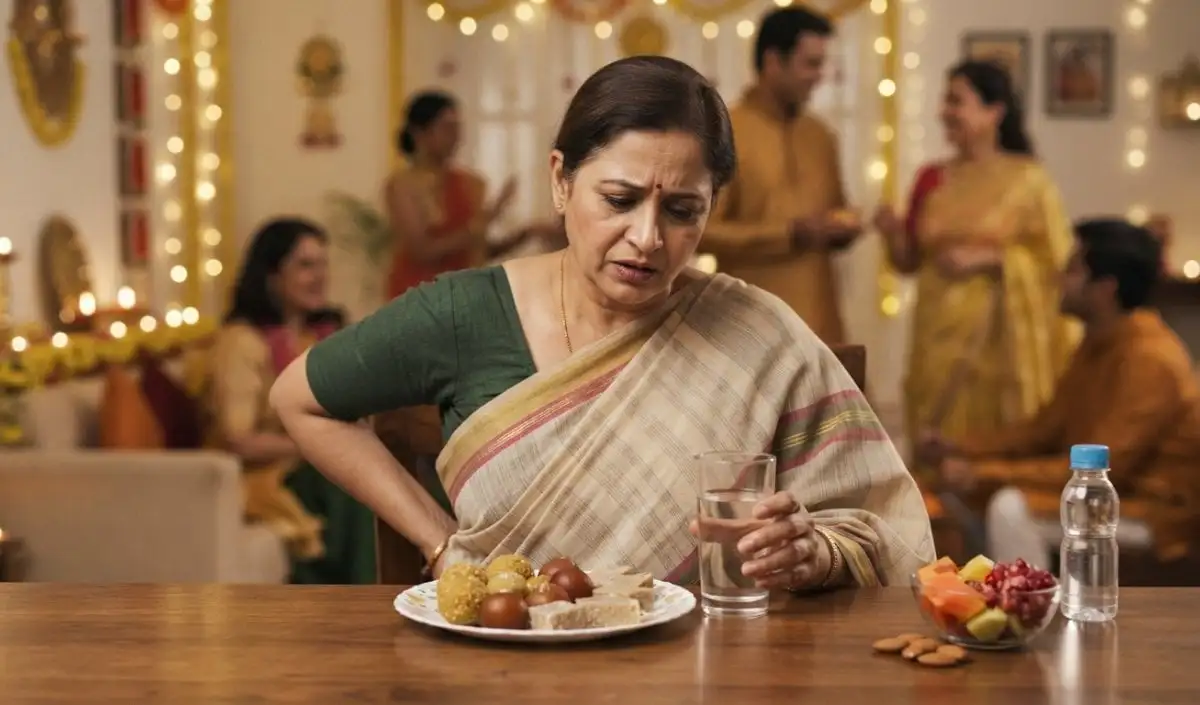
Kidney protection during festivals
Every festival and festival in India has its own special charm. The house smells of delicious dishes like Kaju-Katli, Laddu and Gulab Jamun. In this atmosphere of togetherness, we often enjoy fried foods and sweets. But amidst all this, one important thing is ignored, which is to keep the body hydrated and drink enough water. In this article we will know how stones are formed and which signs should not be ignored.
How are stones formed?
There is no harm in eating a little sweets during festivals, but the problem starts when you drink less water and increase your intake of salt, sugar or sweetened beverages. This increases the risk of kidney stones, especially in those who already have this problem.
When there is a lack of water in the body, the minerals and salts present in the urine condense and form hard crystals, which form stones. Apart from poor diet and lack of water, diseases like diabetes, genetics or gout are also responsible for this.
Don't ignore these signs
Strong smelling urine or blood in it.
Feeling severe pain or burning while urinating.
Feeling nervous or nauseous along with pain.
High fever along with urinary problems.
If pain is accompanied by fever and vomiting, contact a doctor immediately.
Ways to keep kidneys safe during festivals
Drink at least 8 to 10 glasses of water daily. A good sign is that your urine should be light yellow in color.
Instead of sweets, eat one or two small pieces throughout the day.
Include about 400 grams of fresh fruits and vegetables in your diet. This will provide fiber to your body and keep your stomach light.
Walk or do light exercise for at least 30 minutes daily. Walking is a great option after a heavy meal at night.
Do not resort to painkillers in case of any kind of pain, as it can save you from major problems at the time of checkup.
When and how to treat
If the pain becomes unbearable or lasts for more than a day, you should seek medical attention. Doctors usually test urine and blood to rule out kidney conditions or infection. If necessary, ultrasound or CT scan is also done, which reveals the size, location and blockage of the stone.
Treatment depends on how big the stone is. If the stone is small, it may pass out on its own by drinking more water and taking common medicines. But if the stone is large, blocks the urinary tract or causes a lot of pain, it is removed through endoscopic surgery or 'shock-wave lithotripsy'.
Festivals mean celebrating with loved ones, not going to the hospital. Just by taking a little care, drinking enough water and understanding the body's early signals, the kidneys can be kept safe. But do not forget to consult a doctor in case of persistent pain.