Change in diet in winter
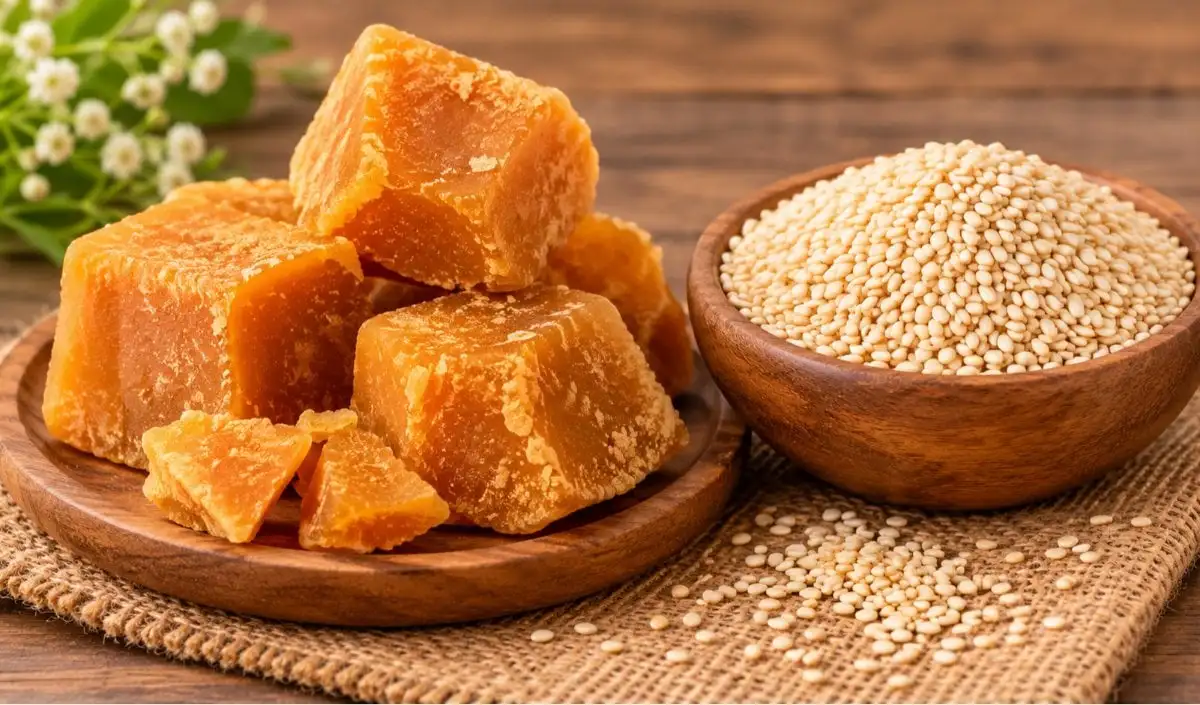
During winter, many changes are seen in the diet. In this season, superfoods are consumed to keep the body warm. When winter is at its peak, sesame laddus, gajak, chikki and things made with jaggery are especially eaten. The taste of both jaggery and sesame is very good in this season.
Health benefits of jaggery and sesame
Consumption of jaggery and sesame is considered extremely beneficial for health in winter. Body temperature falls in winter, due to which immunity becomes weak. As a result, problems like joint pain and cold may arise. To avoid these problems, jaggery and sesame are consumed.
Scientific basis of consumption of jaggery and sesame
Scientific reason for eating jaggery and sesame in winter
– Both jaggery and sesame have hot nature. When these two are eaten together, the process of 'thermogenesis' in the body is accelerated, due to which metabolism is activated and the body gets heat from inside.
– Consumption of jaggery is beneficial to keep the body warm in cold weather. Jaggery contains natural glucose and sesame contains healthy fats, which provide instant energy to the body.
– Problems like cold, headache, viral infection and cough are common in this season. Jaggery and sesame are very helpful in getting relief from these. The antioxidants and minerals present in them protect the lungs and respiratory tract.
Other benefits of jaggery and sesame
Benefits of eating jaggery and sesame seeds
– Sesame seeds are rich in calcium, copper and magnesium, which helps in reducing joint pain and strengthening bones in winter.
– Jaggery is rich in iron, which improves hemoglobin level in the body and removes weakness in winter.
– Skin becomes dry in cold winds. The healthy oils and Vitamin E present in sesame nourish the skin and make it soft.
Apart from this, jaggery activates digestive enzymes, which improves digestion.