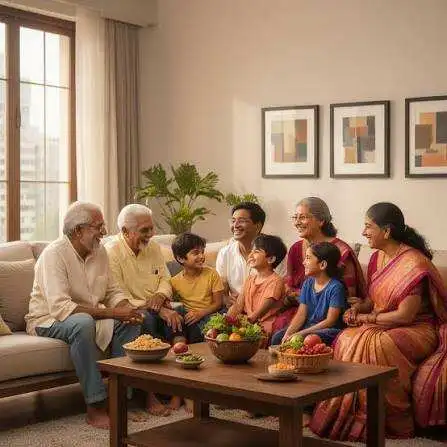
Changing definition of joint family
Traditionally, joint family meant grandparents, parents and children living together. All members lived under one roof, shared food and took collective decisions in family matters. But in today's urban life, the structure of joint family is changing. Now in many families, sons, daughters-in-law and children live in one flat, while parents live in a separate flat in the same society.
Features of the new family model
This new family structure maintains closeness of relationships, while each member also gets the freedom to live his or her individual life. When needed, parents and children can reach each other quickly. Furthermore, they take independent decisions about their spending, food and daily activities. This does not mean that the joint family is ending, but its form is changing.
Desire for expensive houses and personal freedom
Factors like expensive housing in urban areas, both spouses working, child care and protection of elders are influencing family structure. The young couple wishes to live their personal life and routine as per their own. At the same time, parents also want their children to stay close to them so that they can help each other when needed.
Therefore, owning separate flats in the same housing society or building has become an attractive option for families. Due to this, the elderly do not feel lonely and the young couple is able to maintain the balance of personal life along with their responsibilities.
support in child care
A major benefit of this system is seen in the care of children. Working parents have less to worry about leaving their children alone. Children can spend time with grandparents after returning from school, and elders help care for them if needed.
Children receive the love and support of grandparents, thereby passing on family traditions and values to the next generation. This system also provides relief to parents, because they do not have to worry about the safety and care of their children.
An example in Bengaluru
Amit and Neha, who live in Whitefield, Bengaluru, are an example of this new family model. Both work and live in the same housing society, where Amit's parents also have a flat. Their daughter Anvi spends time with her grandparents after returning from school. In the evening, Amit and Neha bring her to their flat.
With this arrangement, Anvi gets the support of her grandparents and the parents have less to worry about taking care of her. Family members celebrate festivals together and eat together on weekends, while in everyday life everyone remains independent in their own flats.
close relationship with freedom
Many couples like Amit and Neha are now adopting similar arrangements. They live with their parents in the same society or building, but have separate houses. This maintains emotional bond between family members and reduces unnecessary interference in personal life.
In changing times, this new form of joint family is an attempt to strike a balance between family relationships and personal freedom. In this, neither the elders are separated from the children nor the young couples lose their independence. The family lives close to each other, now everyone has their own key and separate kitchen.