Summary of Research
Recently, researchers at the Indian Institute of Technology (IIT) Mandi have made an important discovery. According to their study, the body's immune cells are inadvertently damaging healthy stomach cells while fighting a dangerous stomach bacterial infection called Helicobacter pylori (H. pylori). This information tells us that our immune system protects us from external infections.
micro packets released by cells
This study conducted by IIT Mandi Professor Dr. Amit Prasad and his team has been published in the international research journal Journal of Extracellular Vesicles. Anand Kumar Keshari, Suraj Singh Rawat, Durganand Thakur, Swati Sharma, Parul Mehra, Anubha Chaudhary and Ananya Kapoor were involved in this research.
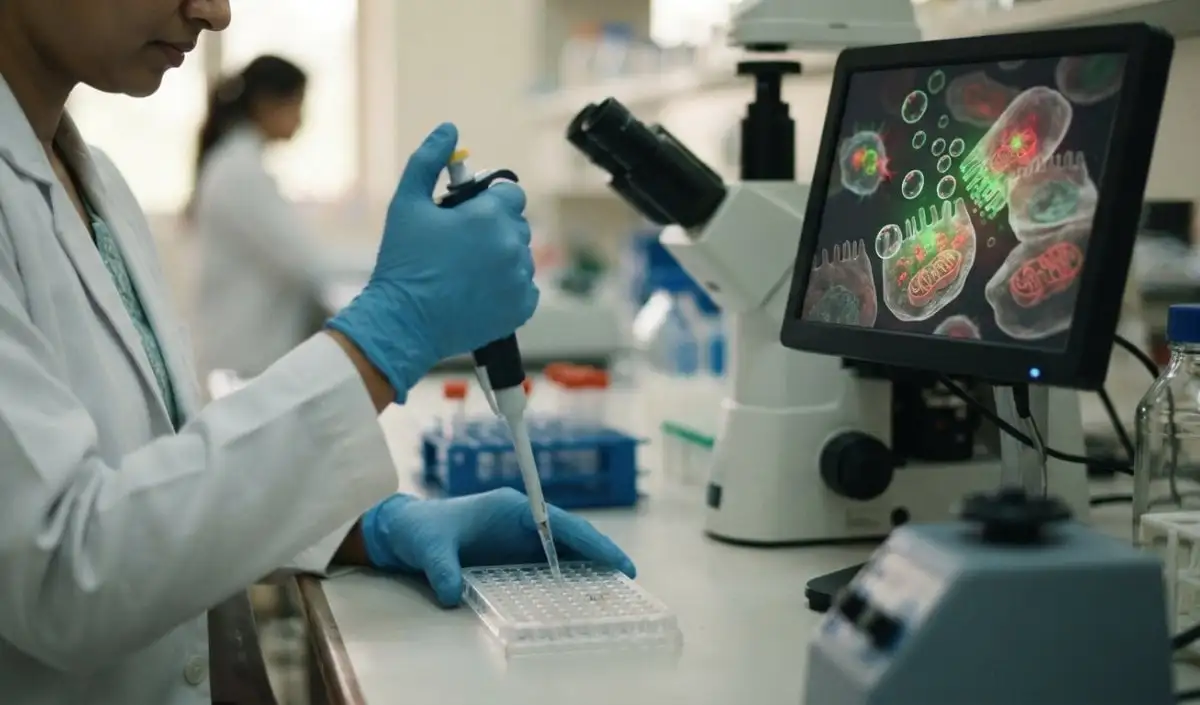
Research has found that when there is an infection with H. pylori bacteria in the stomach, white blood cells that fight the infection become activated. These cells release bubble-like microscopic packets called extracellular vesicles (EVs). These packets carry messages and essential elements between cells.
Effect of LL-37
Research has also revealed that when LL-37 is made to destroy harmful microbes, these packets reach the stomach cells, causing stress. Due to this, the functioning of the energy centers of the cells gets affected and the cells get destroyed. The LL-37 inside these packets is protected from other enzymes and directly affects the stomach lining. The level of this element has also been found to be increased in the blood of patients infected with H. pylori.
importance of research
This study has made it clear that to understand the disease, it is not enough to know the bacteria, but it is also necessary to know how our body is fighting them. This research will be helpful in the development of new medicines and early detection of the disease to prevent the damage caused by stomach ulcers and infections in the future.