1
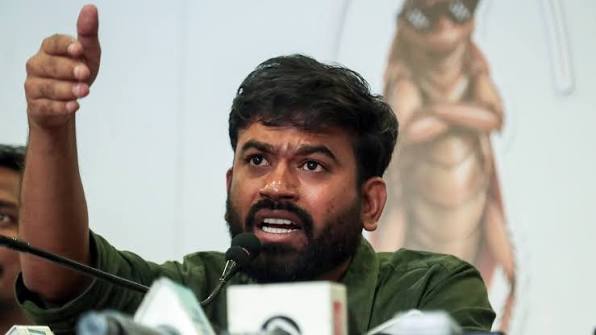
New Delhi: The Opposition and the Cockroach Janta Party (CJP), which has emerged as a chief nuisance-value bloc, believe that the controversy over alleged electoral malpractice represents the biggest political opening they have had in the last 12 years to severely dent the BJP-led government at the Centre, according to sources tracking the developments.
The campaign has received a further fillip after sitting Supreme Court Justice Ujjal Bhuyan and retired Supreme Court judge Justice Rohinton Fali Nariman raised concerns over aspects of the Special Intensive Revision (SIR) process.
Sources following the developments said sections of the Congress leadership believe that allegations of electoral malpractice have made a sufficiently significant impact on the ground and could develop into a larger political issue.
However, officials tracking the situation have disputed this assessment and believe that the allegations have not made the kind of impact on the ground that the Opposition expects.
Officials tracking the developments also point to the absence of any significant, organic protests by citizens in other parts of the country over the issue. According to them, the fact that the agitation has remained largely concentrated in the national capital, where protests naturally receive greater media and political attention, suggests that the allegations being raised by the Opposition and the CJP have not found wider public resonance. There have been no comparable organic mobilisations in other major cities that would indicate that people across the country are independently taking up the issue. The assessment within sections of the government is therefore that, so far, the allegations remain largely political and have not translated into a broader public movement on the ground.
According to the sources, the CJP, while operating independently of the Opposition, has succeeded in creating noise on the streets and generating a degree of political nuisance that the Opposition has been unable to create on its own so far.
The government, which had initially misjudged the impact and resourcefulness of the CJP when it began protesting for the resignation of then Education Minister Dharmendra Pradhan over the NEET examination issue, is now expected to be far more aware of the manner in which the CJP operates and the kind of political pressure it can generate.
It is understood that disruptions and protests are likely to intensify over the coming week. The CJP, which had earlier spearheaded the agitation seeking the resignation of then Education Minister Dharmendra Pradhan, is now seeking the resignation of Chief Election Commissioner Gyanesh Kumar and has made clear that it will not relent until he steps down.
However, the nature of the demand is significantly different this time. In the Dharmendra Pradhan case, the demand was for the resignation of a Union Cabinet minister, whose continuance in office was ultimately a matter for the Prime Minister and the government. In the present case, the demand is for the removal of the Chief Election Commissioner, a constitutional office-holder whose removal is governed by a specific constitutional procedure and cannot be effected merely on the government’s instructions.
Under Article 324 of the Constitution, the Chief Election Commissioner can be removed from office only in the same manner and on the same grounds as a judge of the Supreme Court. The process requires an address by both Houses of Parliament, supported by the requisite special majority. The Opposition does not currently have the numbers in Parliament to independently initiate and carry through such a removal process.
The opposition and CJP knows that, legally they cannot force Kumar to resign, unless he himself resigns under pressure from the protestors.
The demand for Kumar’s resignation is therefore emerging as the next major political challenge for the BJP-led government at the Centre. The question now is how the government chooses to respond to the pressure.
If the agitation intensifies from 10 October and continues for an extended period, the government could find itself in a difficult political position. A prolonged agitation would mean that the government would be increasingly engaged in what officials describe as “firefighting” the political impact of the protests, at a time when it is also required to manage the pending Cabinet reshuffle and build political consensus around key legislation, including the proposed Women’s Reservation Bill and delimitation.
The political significance of the coming weeks, therefore, could lie not merely in the allegations surrounding the electoral-roll revision, but in whether the issue develops into a sustained confrontation that forces the government to divert political attention and resources towards managing the fallout from the agitation.