
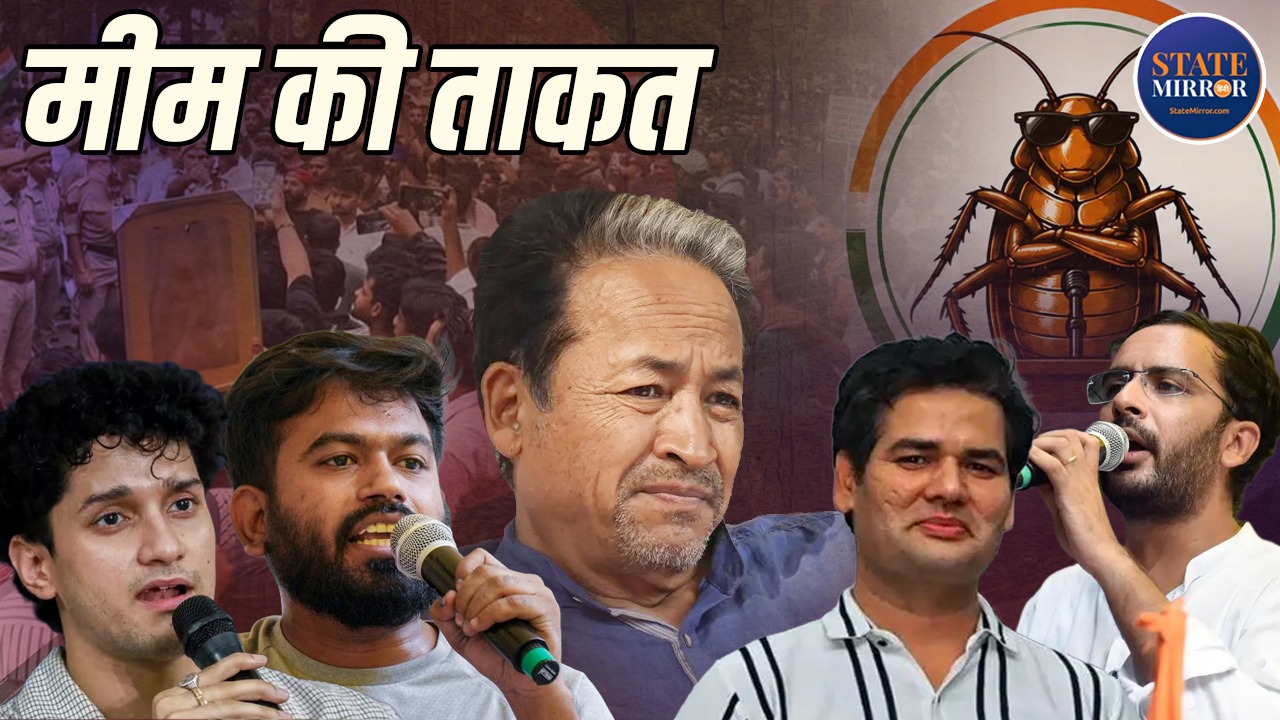
From social media to Parliament march: 5 famous faces of CJP – Who made the strategy, who took command and how did the meme become a national movement?

The Supreme Court’s cockroach comment during the hearing of a petition on NEET paper leak spread dissatisfaction in the country and the world. After that, in June and July 2026, a wave of dissatisfaction erupted across the country regarding the education system, paper leaks, alleged irregularities in recruitment examinations and the future of the youth, which brought down the Modi government for the first time in 12 years. Also, Dharmendra Pradhan was forced to resign from the post of minister. Meanwhile, the Cockroach Janta Party (CJP) campaign that started on social media turned into a big youth movement within a few weeks.
The movement started with a sarcastic meme, but within no time the movement reached Jantar Mantar, Parliament March and many cities across the country. In this entire campaign, some such faces emerged who played an important role in organization, strategy, communication and gathering public support.
1. Abhijeet Dipke: Started a movement with a meme
Abhijeet Dipke Is considered the founder and key strategic face of the CJP campaign. He launched a satirical digital campaign named ‘Cockroach Janta Party (CJP)’ on social media on 16 May 2026. This campaign reportedly went viral at a time when there was growing resentment among the youth regarding unemployment, examination system and government recruitment. He used the cockroach as a symbol, the message of which was that even in difficult circumstances, the youth will struggle and move ahead.
Through AI based posters, memes, videos and digital campaigns, he connected millions of youth on social media. Later this campaign reached the protest demonstration and Parliament march. Abhijeet was also included among the prominent representatives in the talks with the government during the movement.
2. Saurav Das: Voice of the movement
After the expansion of the organization, Saurav Das was made the chief spokesperson of CJP. His responsibility was to convey the side of the movement to the media and the public. He continuously put forth the demands of the organization during press conferences, TV debates and Parliament marches. He publicly supported CJP on issues like education reforms, transparency in the examination system and youth participation. His role was important in communicating with the media and sharing official information about the movement.
3. Ashutosh Ranka: Master of Strategy and Organization
Ashutosh Ranka is considered a key member of CJP’s strategic team. His main responsibilities included planning the programs of the movement, coordinating among the volunteers of different states and preparing the media strategy. He played an active role in the Parliament march, Jantar Mantar demonstration and preparing the outline of the various phases of the movement. Many times he also made public the upcoming strategy of the organization in press briefings.
4. Vijeta Dahiya: Strong in the early stages face
Vijeta Dahiya was an important part of CJP’s initial team. In the initial phase of the movement, he worked on social media campaigns, press briefings and spreading the message of the organization to the youth. In the initial phase, she was also seen as the main spokesperson of the organization. Later, his role changed due to organizational changes, but his name remained among the early faces who brought CJP into the limelight at the national level. Their role in increasing the participation of female youth was also considered important.
5. Sonam Wangchuk: The movement got moral support
Famous education reformer and environmental activist Sonam Wangchuk is not the founder or office-bearer of CJP, but was among the most influential faces giving moral support to the movement. His long fast and Gandhian style on issues related to Ladakh and democratic rights influenced the youth across the country. CJP also praised his peaceful movement and Satyagraha on many occasions. With their support the movement gained wide social acceptance and moral strength.
How a meme turned into a national movement?
The biggest feature of CJP was that it used digital language, satire, AI posters, memes and social media instead of traditional political slogans. This was the reason that within a few days lakhs of youth joined this campaign. Later this digital campaign extended to protests, marches to Parliament and talks with the government. These five faces, working in different roles, played an important role in giving direction to the organization, connecting the youth and giving national identity to the movement.
However, the success of the movement was not limited to these individuals only, but also included the participation of thousands of volunteers and lakhs of youth across the country.

Comments are closed.