
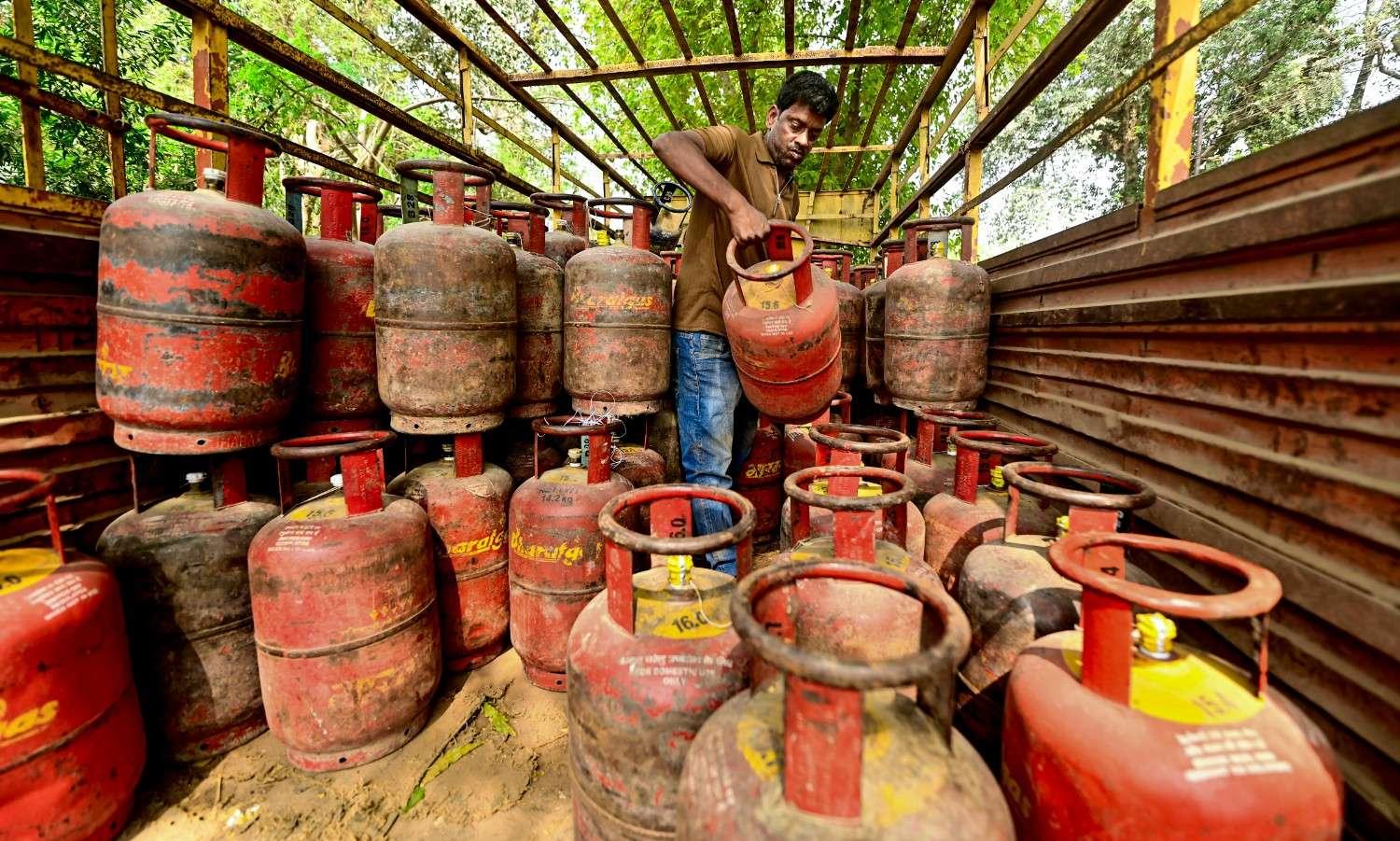

The prices of commercial LPG and 5-kg cylinders registered a record hike on Friday (May 1). While the price of commercial LPG cylinders was increased by Rs 993 to a record high of Rs 3,071.50 per 19-kg cylinder, the price of 5-kg FTL or market-priced LPG cylinders was hiked from Rs 549 to Rs 810.50 per bottle, in line with a surge in international energy costs.
The 5-kg FTL cylinder now costs just a shade lower than the Rs 913 rate for a 14.2-kg cylinder used in household kitchens (called domestic LPG).
Also, prices of bulk diesel, used by industrial users like telecom signal towers, were increased from about Rs 137 per litre to over Rs 149 a litre. These rates compare to the Rs 87.62 a litre price of diesel available at petrol pumps.
Bulk diesel rises
However, aviation fuel prices for domestic airlines were left unchanged, providing stability for local carriers and sparing flyers any immediate cost increase.
Also Read: Fraudsters dupe panic-hit gas customers in Mumbai, Karnataka of nearly Rs 3 cr
The Aviation Turbine Fuel (ATF) for domestic airlines will continue to be priced at Rs 1,04,927.18 per kl as state-owned oil companies have decided to absorb the rise in global fuel prices to protect airlines and consumers.
ATF held steady
Even on April 1, when rates for international carriers were more than doubled to USD 1,435.31 per kl, oil companies had increased jet fuel price for domestic airlines by 25 per cent, adopting a calibrated approach in passing on the increase that had become necessary because of the West Asia war-linked surge in international energy prices.
Also Read: India’s LPG consumption drops 13% in March as West Asia conflict disrupts supply
The decisions on ATF by state-owned oil companies will come as a relief to domestic carriers like Air India, IndiGo and SpiceJet, who in the run-up to the scheduled monthly revision warned of the sector being under “extreme stress”.
Airlines seek relief
Their association, Federation of Indian Airlines (FIA), had in a letter to the government stated that “unprecedented increase in ATF cost has moved the airline’s operation from 30-40 per cent to 55-60 per cent, creating completely non-operatable conditions for airlines.
Prices vary from state to state depending on local taxes like VAT.
State taxes vary
Announcing the decisions, Indian Oil Corporation (IOC) said the retail prices of petrol, diesel and household domestic LPG (14.2 kg cylinders) have not been changed, fully insulating domestic consumers from the recent increase in international fuel prices.
These fuels, along with kerosene, whose rates too have not been changed, make up for over 80 per cent of all fuels consumed in the country.
‘No retail change’
“Price revisions have been limited to select industrial segments, which constitute a relatively small share of overall consumption and are subject to routine monthly adjustments based on prevailing international prices,” IOC said in a statement.
Also Read: India ramps up 5-kg LPG cylinder supply, speeds PNG rollout amid West Asia conflict
As part of a consumer-centric approach, “there has been no change in key fuels affecting the general public – retail prices of petrol and diesel remain unchanged for the general public, which constitutes around 90 per cent of the total petrol, diesel consumption in the country. There is no change in the prices of domestic LPG (14.2 kg) for 33 crore domestic LPG consumers.
Consumer shield
“There is no change in ATF prices for domestic airlines (scheduled operations) and no change in prices of PDS Kerosene,” it said.
Overall, about 80 per cent of petroleum products have witnessed no change in prices, ensuring stability for the majority of consumers.
“Prices of bulk and commercial LPG cylinders (less than 1 per cent of total consumption) have been revised,” it said.
Selective revisions
“Prices of bulk diesel and ATF for international airline operations have been adjusted upward.” At the same time, around 4 per cent of petroleum products have seen a downward revision, reflecting the dynamic nature of global price movements.
“The measures reflect the calibrated and balanced approach adopted by oil marketing companies to align with global market trends while protecting domestic consumers and ensuring economic stability,” it added.
Global oil prices have shot up almost 50 per cent after the war in West Asia disrupted energy supply chains.
(With agency inputs)

Comments are closed.