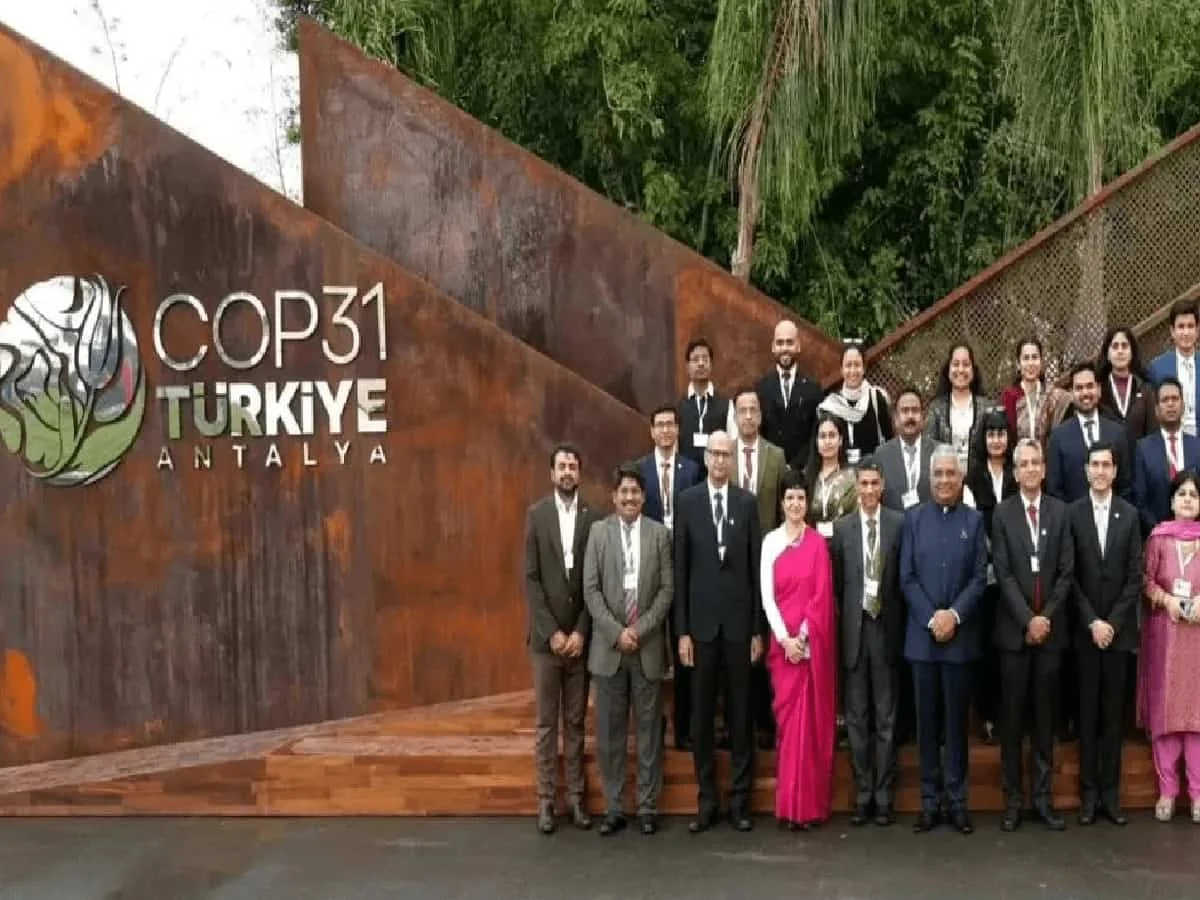
Two weeks of intense United Nations climate negotiations in Antalya, Türkiye, concluded on Sunday, November 22, 2026, without a formal consensus on a final overarching political pact—marking the most prominent multilateral impasse at a UN climate summit since the 2009 Copenhagen conference (COP15). Deep divisions between developed nations and emerging economies over explicit language on phasing out fossil fuels and scaling up quantified climate finance prevented delegates from adopting the proposed cover text, known as the Antalya Pact. Responding to the deadlock, Union Minister for Environment, Forest and Climate Change Bhupender Yadav stated that India remained constructively engaged right up to the final gavel to help forge a balanced consensus, while emphasizing that global climate ambition must be paired with climate justice, equity, and concrete financial and technological support for the Global South. For citizens, policymakers, farmers, and clean-energy industries across India—including communities across Uttar Pradesh hubs such as Unnao, Kanpur, Lucknow, Prayagraj, and Varanasi, where solar expansion and extreme weather adaptation directly affect agriculture and livelihoods—the Antalya outcome underscores both the friction in global climate diplomacy and India’s steady domestic clean-energy momentum.
Hosted at the Antalya Expo Center under the co-presidency of Australia and Türkiye, COP31 struggled to bridge long-standing fault lines between wealthy industrialized nations and developing economies. Multiple compromise drafts circulated during the final hours of the conference sought to acknowledge that global temperatures are on track to overshoot the 1.5°C warming threshold, while proposing expanded carbon-removal measures.
Ultimately, however, the cover decision collapsed when the European Union and more than 130 countries refused to endorse a final text that omitted explicit commitments to transition away from or phase out fossil fuels. Conversely, developing nations and Like-Minded Developing Countries (LMDCs) argued that binding sectoral targets could not be imposed without guaranteed grant-based finance and affordable technology transfers from historically high-emitting nations. While technical decisions on several routine agenda items remain intact, the flagship political cover agreement was dropped, prompting UN Secretary-General António Guterres to voice deep disappointment while urging governments not to slow emissions cuts.
Sharing India’s official assessment on social media platform X late Sunday night, Bhupender Yadav expressed regret that delegates could not reach consensus on the cover decision, while reiterating that India supported a constructive path forward until the closing moments. Outlining New Delhi’s core principles, the minister emphasized that developing countries cannot be expected to shoulder rigid transition timelines without commensurate financial backing:
- Means of Implementation: Yadav stressed that “climate ambition must go hand in hand with means of implementation”—meaning wealthy nations must deliver predictable climate finance, clean-technology transfer, and capacity-building rather than shifting the burden onto developing economies.
Mathrubhumi
- Nationally Determined Energy Transitions: Energy transitions, he noted, must remain nationally determined, fair, and equitable, taking into account each country’s development priorities, energy security needs, and socio-economic realities.
Mathrubhumi
- Protecting Small Farmers and Livelihoods: During sectoral negotiations—such as discussions around agricultural methane—Indian negotiators worked to ensure that food security and the livelihoods of smallholder farmers were safeguarded.
Even without a headline declaration in Antalya, Bhupender Yadav made clear that global diplomatic gridlock does not pause action on the ground. Pointing to India’s rapid domestic progress, he highlighted that India’s installed solar power capacity has crossed 170 gigawatts (GW)—driven by utility-scale solar parks, rooftop solar adoption, electric mobility, and state-level renewable programs across regions from Rajasthan and Gujarat to Uttar Pradesh.
| Key Pillar of India’s COP31 Position | Core Message Highlighted by Union Minister Bhupender Yadav |
|---|---|
| Historical Carbon Budget | Developed nations’ historical and ongoing emissions have consumed a disproportionate share of the global carbon budget. |
| Climate Justice & Equity | Common but differentiated responsibilities must remain central; developing nations cannot sacrifice poverty eradication. |
| Finance & Technology | Developing economies need reliable financial flows and accessible green technologies to accelerate clean energy. |
| Domestic Delivery | India continues meeting targets independently, having surpassed 170 GW of solar capacity. |
Speaking on behalf of Like-Minded Developing Countries, Yadav recalled that India posed a foundational question at COP31: “Why are we here, and how did we arrive at this climate crisis?” Because historical and continuing emissions from industrialized economies have consumed the bulk of the finite global carbon budget, he argued, equity and climate justice must remain at the center of multilateral cooperation.
With the Antalya summit concluding without a cover pact, diplomatic focus now shifts to COP32 in Addis Ababa, Ethiopia, next year, where governments will once again confront the unresolved questions of fossil-fuel transition pathways, adaptation funding, and climate finance mobilization. According to Bhupender Yadav, India will remain firmly committed to consensus-based multilateralism on the road to COP32 while continuing to scale up clean energy and climate resilience at home.