D2C Brands Caught In Margin Squeeze
Rising crude prices are squeezing India’s D2C brands. Increasing freight and raw material costs have trapped these emerging brands in a sticky place: absorb losses or risk customer churn. Now, as oil prices begin cooling, can D2C brands find their way out of this Catch-22 situation?
Cost Of Uncertainty: For D2C brands, the challenge is not just higher input costs but their unpredictability too. A single delayed shipment can halt production, forcing brands to pay premiums to avoid disruptions. Imported materials make the problem worse as shipping costs can fluctuate sharply. This leaves founders to choose between paying more to avoid delays or waiting for rates to ease. Either way, working capital takes a hit.
F&Bs Face The Heat: Food and beverage makers face higher exposure than non-food D2C brands as they are more exposed to costs related to commodities and transport. Crude-linked packaging – bottles, preforms, caps and labels – is also adding to the pressure. As such, smaller brands have little room to raise prices and may have to resort to other measures.
The Discount Trap: Unlike established FMCG players, D2C brands rely heavily on ads and discounts to acquire and retain users. Raising prices risks losing customers in a market full of alternatives. Many startups are now considering grammage cuts on entry-level packs and sharper reductions in advertising and discounting. As post-festive demand moderates, brands with strong organic repeat buyers and healthy margins will be better placed to absorb inflation.
Crude Relief Awaits: Although Brent crude has recently retreated from late-October highs, immediate margin relief remains elusive. Because suppliers are still clearing high-cost inventory and freight contracts adjust slowly, lower oil prices will likely take five to six months to filter down to startup procurement bills.

With gross margins expected to stay under pressure well into next year, how will Indian D2C brands tighten their unit economics until input costs finally normalize? Let’s find out…
From The Editor’s Desk
💰 Bharat Semi Bags $24 Mn
- The semiconductor startup has raised around ₹215 Cr in its seed round to ramp up product development, expand its engineering teams in India and the US, and accelerate its GTM efforts.
- Founded in 2021, Bharat Semi is building programmable smart sensors for physical AI systems. The startup, which is yet to commercialise its technology, plans to initially target clients in the consumer electronics and surveillance markets.
- With the latest infusion, Bharat Semi is eyeing a piece of the global image sensor market, which is projected to become a $49.8 Bn opportunity by 2030. The space is being driven by growing demand for AI-enabled smart sensors.
📱 Smartphones Get Pricey
- Samsung and Xiaomi have raised the prices of their smartphones by up to ₹4,000 in India. The hikes impacted around 30 Samsung variants, including Galaxy A07 5G and A17 5G. Xiaomi also revised prices across 19 Redmi variants.
- The price revisions come amid a broader surge in memory chip prices at the behest of sharper demand from AI infrastructure companies and data centres operators. This has tightened supply chains for smartphone OEMs and pushed up procurement costs.
- What has also not helped is the subdued consumer demand. As per industry body AIMRA, offline smartphone sales volumes dipped as much as 20% YoY during the four-day festive period between November 6-9.
🚨 More Troubles For eMudhra
- CERT-In has now flagged new security flaws in eMudhra’s digital signature utility unit, emBridge. The cybersecurity watchdog has flagged that its software could potentially enable unauthorised entities on the same LAN to view files on an impacted device.
- The issue assumes significance as several government portals rely on emBridge for DSC-based signing. However, CERT-In classified the flaw as ‘low-severity’, with eMudhra claiming that keys and token PINs were not exposed.
- This comes a month after researchers flagged that the private keys behind eight of eMudhra’s intermediate certificates were weak and could be cracked within seconds. The IT ministry has set up a special team to probe the incident.
🛵 Eternal Rethinks 2030 EV Goal
- The foodtech giant is reconsidering its goal of switching to a fully electric delivery fleet by 2030. The company’s chief sustainability officer has said that the deadline “doesn’t look feasible” given the company’s rapid expansion and uneven EV availability.
- Eternal is now working on a revised date that factors in vehicle availability, government policies and the transport needs of its businesses. The revised target will also cover trucks and smaller commercial vehicles used by Hyperpure, not just two-wheelers.
- The EV transition of online aggregators faces many headwinds, including expensive financing and high upfront costs of EVs, limited charging infrastructure and unclear residual values. Limited control over fleets also makes large-scale electrification harder.
🤖 Fractal’s AI Acquisition Play
- The listed AI analytics company is in discussions with 20-25 startups for potential acquisitions. Fractal said that its preferred deal sizes will range between $50 Mn and $100 Mn across categories like healthcare, agentic AI and AI engineering.
- With these acquisitions, Fractal aims to gain specialised engineering talent and strengthen its relationships with large cloud computing firms and frontier AI labs. It claims to have sufficient cash to pursue these deals.
- The acquisition strategy comes as the company recently said that it expects enterprise AI to scale significantly over the next year as foundation models become more capable and cheaper to run.
📡 Jio’s Desi Satcom Pitch
- Jio Platforms has begun talks with ISRO, spacetech unicorn Skyroot Aerospace and other Indian launch providers to deploy satellites for the telecom giant’s proposed 1,600-satellite low Earth orbit constellation.
- The company wants to explore domestic launch options first and is also considering SpaceX for deploying the satellites. Jio is evaluating whether local players can carry out the entire programme from satellite design and testing to launch and deployment.
- This comes as Jio is preparing to launch a handful of satellites during its upcoming test launch in September 2027. Thereafter, it plans to put 400-450 satellites into orbit by 2030 and complete the constellation by 2035.
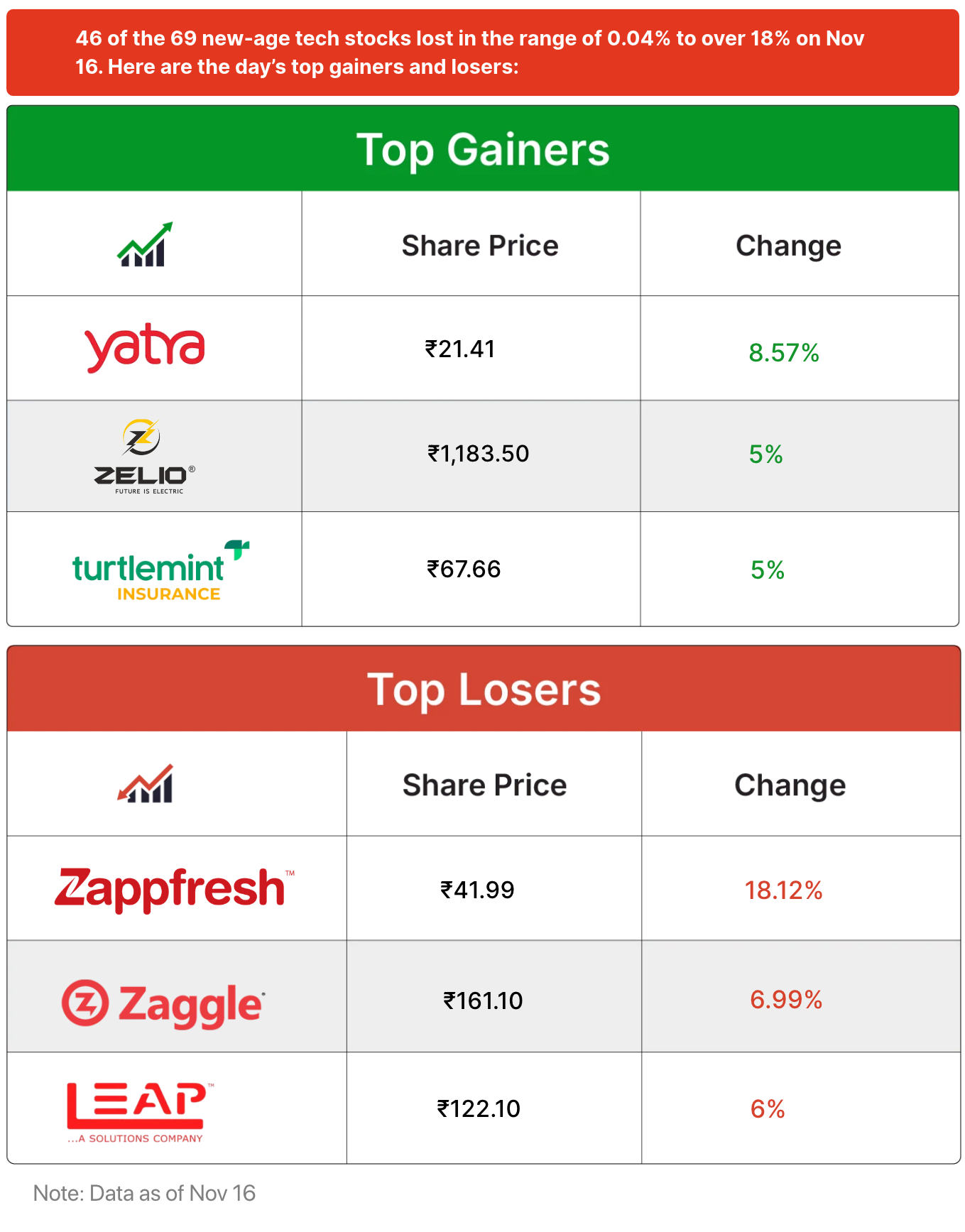
Inc42 Markets
Inc42 Startup Spotlight
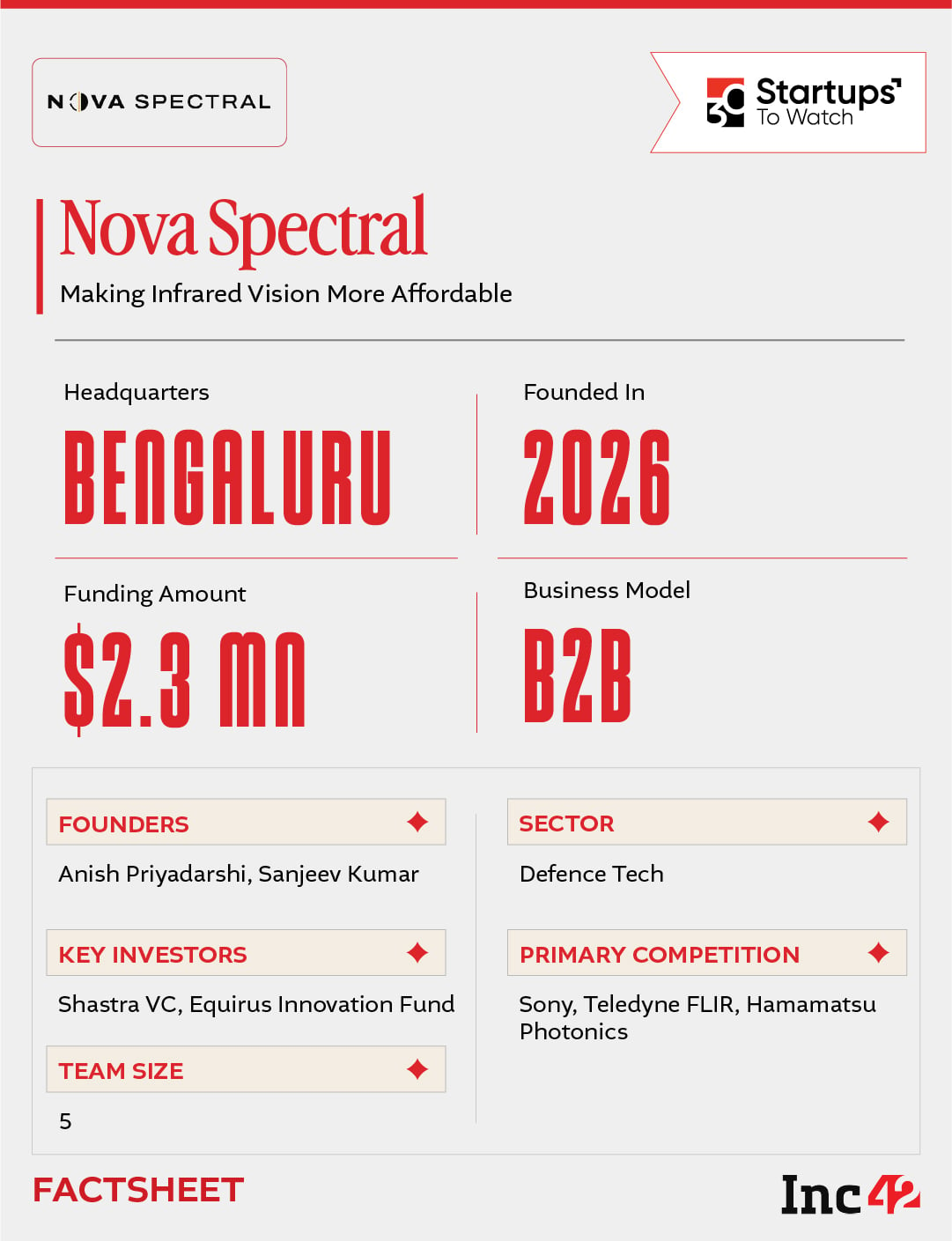
Can Nova Spectral Make Infrared Vision Affordable?
Conventional cameras fail when darkness, smoke or dust obscure the view. Short-wave infrared (SWIR) imaging can overcome these limits, but its high cost keeps it confined to defence and industrial uses. Enter Nova Spectral AI, a startup that wants to make this capability affordable.
An Affordable Sensor Chip: Founded in 2026, Nova Spectral AI is developing low-cost SWIR image sensor chips. The startup makes its chips using lead-free indium arsenide colloidal quantum dots, which are integrated with silicon CMOS technology. Nova Spectral claims that this approach could make sensors up to 100X cheaper than traditional indium gallium arsenide alternatives.
The In-House Edge: The startup is building the full technology stack in-house, from quantum-dot ink chemistry and film deposition to charge-transport layers and CMOS readout-wafer integration. Its plans to initially focus on defence, drones and intelligence, surveillance and reconnaissance (ISR) use cases.
A Long Way To Go: Nova Spectral remains at the R&D stage, and its cost-reduction claim is yet to be demonstrated commercially. However, it recently raised funds to expand its team and build a field-ready prototype within 18 months. It is now looking to roll out a sensor-chip prototype by 2028, and is eyeing field pilots in 2029.
With the global SWIR cameras and sensors market projected to cross $620 Mn by 2030, can Nova Spectral make expensive infrared vision a mainstream feature for machines?
Infographic Of The Day
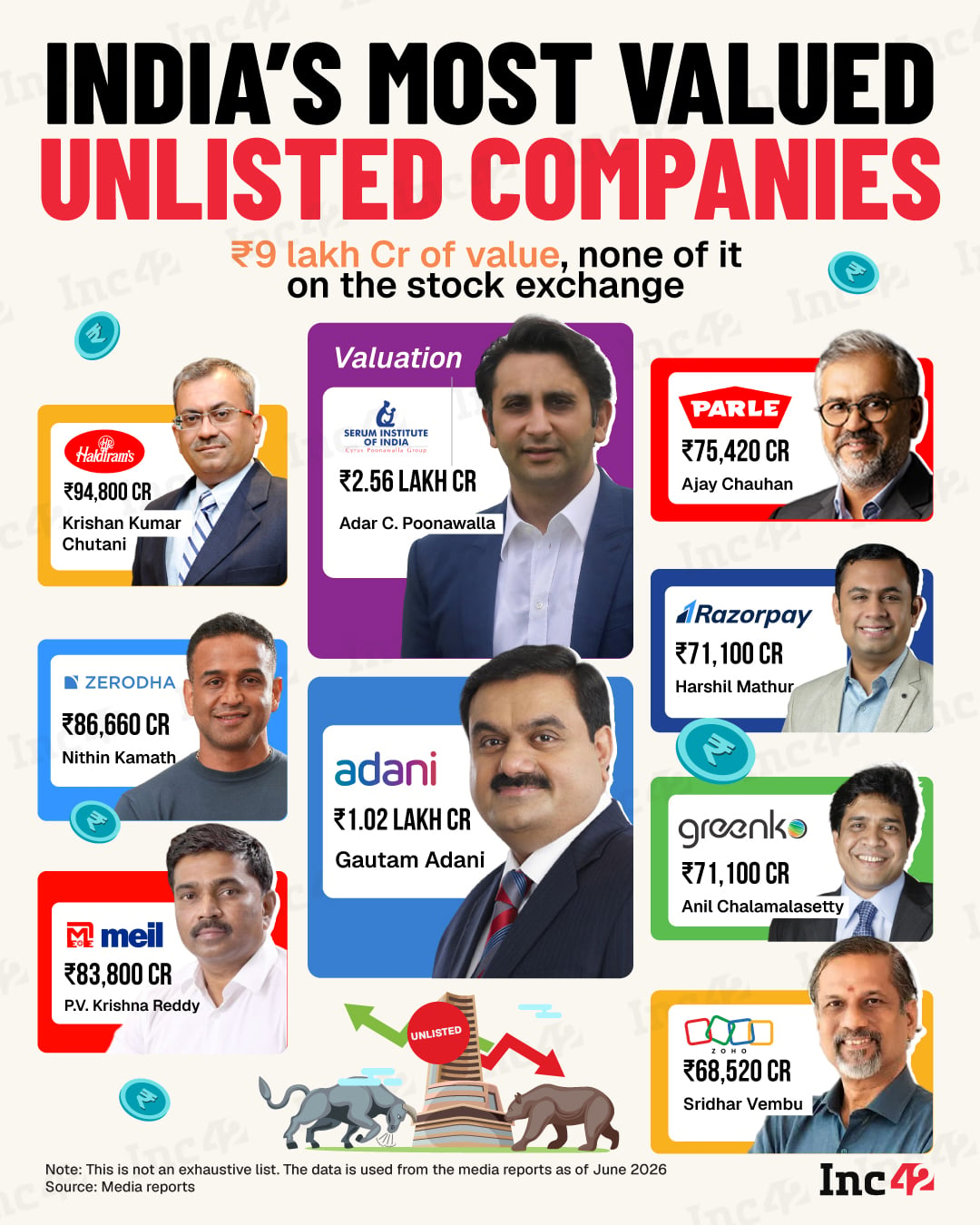
From Zerodha to Zoho, here are India’s top nine unlisted companies that have a combined valuation of over ₹9 Lakh Cr…