A thick, choking layer of grey smog continues to hang heavily over the National Capital Region as atmospheric conditions and episodic emissions combine to trap dangerous concentrations of respirable particulate matter close to the ground. According to advanced meteorological and air quality modeling released by the Indian Institute of Tropical Meteorology (IITM), firecracker emissions emerged as the overwhelming primary contributor to the capital’s atmospheric crisis on Monday, accounting for more than 80 percent of the total fine particulate pollution load in the immediate aftermath of Diwali. Although Delhi was already struggling against baseline winter emissions originating from vehicular exhaust, industrial corridors, and regional dust, the concentrated burst of pyrotechnic detonations on Sunday night pushed air quality into extreme territory. Weather forecasters and pollution monitoring agencies indicate that the city’s air quality index will remain locked in the “very poor” bracket through at least November 13, leaving millions of residents to navigate toxic air amid falling seasonal temperatures and persistent atmospheric stagnation.
IITM Source Apportionment: How Firecrackers Drove Post-Diwali Toxicity
The post-festive atmospheric surge represents one of the clearest demonstrations of episodic emission spikes recorded in the capital over recent years. Advanced source apportionment assessments conducted by the Indian Institute of Tropical Meteorology through its Decision Support System (DSS) revealed that while the city maintained a baseline of mixed urban pollution ahead of the festival, fireworks dramatically shifted the chemical composition of Delhi’s ambient air. On Monday, November 9, 2026—the morning following Diwali celebrations—emissions directly traceable to firecrackers accounted for upwards of 80 percent of the airborne PM2.5 concentrations, eclipsing all conventional municipal emission sectors combined.
The scientific data gathered from monitoring arrays across Delhi demonstrates a distinct chemical fingerprint:
Episodic Overload: Unlike year-round baseline emissions such as transport or power generation, pyrotechnic emissions release intense, short-duration plumes rich in heavy metals, barium, strontium, and sulfur dioxide alongside ultrafine particles.
Diurnal Shift: The proportionate share of firecrackers began tapering as wind patterns evolved; by early Tuesday morning (measuring between 1:00 AM and 9:00 AM), fireworks still constituted roughly 29.9 percent of measured PM2.5.
Secondary Aerosol Formation: Secondary organic compounds and chemical aerosols formed through atmospheric reactions emerged as the second-largest pollution source, contributing 17.5 percent to early-morning readings.
Vehicular Contribution: Tailpipe emissions from passenger cars, commercial transport, and two-wheelers ranked as the third most prominent sector during this window, regaining their regular share as morning office commutes resumed across the urban corridor.
Five-Year Peak: Analyzing Delhi’s Worst Festive AQI Since 2021
The recorded air quality figures illustrate a stark degradation compared to festive periods over the last five years. On Diwali day, Sunday, November 8, 2026, Delhi’s 24-hour average Air Quality Index stood at 376, categorizing the atmosphere as “very poor” and approaching the borderline of “severe”. This reading marked the highest festive-day pollution average recorded in the national capital since 2021, illustrating the limited efficacy of ground-level enforcement against unauthorized fireworks.
The air quality trajectory over subsequent 48 hours underwent noticeable oscillations:
The Monday Smog Blanket: On the morning of November 9, a visible blanket of toxic haze enveloped key historical landmarks, road corridors, and residential neighborhoods, keeping AQI readings consistently in the upper bands of “very poor,” with multiple suburban monitoring stations crossing into the hazardous 400-plus “severe” bracket.
Temporary Tuesday Respite: Conditions witnessed brief, marginal relief on Tuesday afternoon as surface wind speeds picked up intermittently. At 4:00 PM on Tuesday, the 24-hour average AQI dropped to 299, momentarily touching the upper limit of the “poor” category.
Evening Rebound: The improvement proved short-lived. By 6:00 PM Tuesday, as surface temperatures cooled and localized emissions accumulated, the AQI climbed back to 302, returning the city into the “very poor” bracket.
Current Monitoring Trends: Station-level telemetry shows key urban clusters—including monitoring stations at Commonwealth Sports Complex, Pusa, and Chandni Chowk—registering index values between 380 and 400, highlighting elevated particulate exposure for morning commuters.
Meteorology and Inversion: Why Toxic Particles Remain Trapped Near the Ground
The persistent severity of Delhi’s air pollution crisis is governed not only by the sheer volume of emitted pollutants, but also by the region’s geographical and meteorological conditions. November in northern India typically ushers in a meteorological transition marked by falling ambient temperatures, reduced mixing heights, and frequent thermal inversions.
Meteorologists point out several atmospheric mechanisms keeping the smog layer anchored over the National Capital Region:
Thermal Inversion Layers: Under normal conditions, warm air near the ground rises and disperses pollutants into the upper atmosphere. During winter nights, the ground cools rapidly, creating a dense layer of cold air trapped beneath an overhead ceiling of warmer air. This thermal inversion acts like a sealed lid, trapping smoke and exhaust within breathing range.
Low Wind Velocity and Calm Conditions: Stagnant boundary-layer winds prevent lateral atmospheric ventilation, leaving particulate matter unable to drift away from municipal borders.
Dense Radiation Fog: The arrival of early winter moisture and morning fog facilitates hygroscopic growth, wherein dry dust and combustion particles absorb ambient moisture, expanding in diameter and creating thick, persistent photochemical smog that severely degrades horizontal visibility across expressways and airport flight corridors.
Stubble Burning vs. Local Emissions: Unpacking the Contributing Factors
In previous years, agricultural crop residue burning from neighboring agrarian states often took the blame for post-festive smog emergencies across the northern plains. However, empirical meteorological analyses demonstrate a distinctly different dynamic this season.
While farm fires were actively recorded across parts of Punjab and Haryana, atmospheric data shows that stubble smoke was not the primary driver of the capital’s acute post-Diwali deterioration. Regional wind vectors during the critical Sunday-to-Monday transition period did not transport substantial transboundary smoke plumes directly into the Delhi bowl. Instead, favorable local upper-air winds and directional trajectories diverted rural agricultural plumes away from the urban center. Consequently, local combustion sources—dominated overwhelmingly by the concentrated volume of firecrackers, followed by urban vehicular activity and unpaved road dust—served as the primary architects of the prevailing public health crisis.
Health Advisory and Citywide Mitigation: Protecting Residents from Hazardous AQI
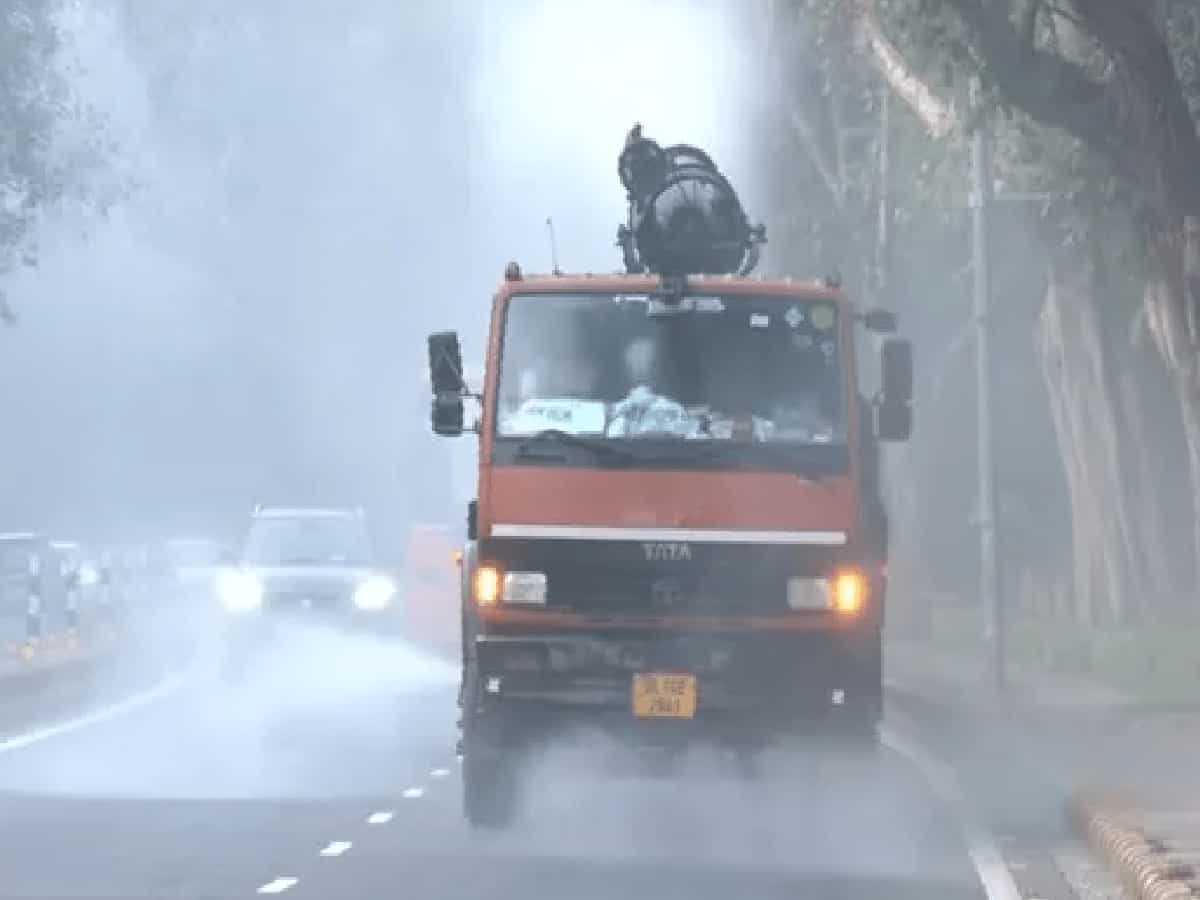
In response to sustained “very poor” air conditions, municipal bodies and administrative departments have intensified ground-level mitigation measures. The Delhi government, in coordination with the Commission for Air Quality Management (CAQM), has deployed fleets of mechanical road-sweeping vehicles, mobile water sprinklers, and anti-smog water cannons along high-traffic corridors and known pollution hotspots to suppress surface dust.
At the same time, pulmonary specialists and public health physicians are urging citizens to adopt proactive personal health safeguards:
High-Filtration Respirators: Individuals stepping outdoors, particularly during morning and late-evening hours, are advised to wear certified N95 or N99 respirators, as simple surgical and cloth masks cannot filter fine PM2.5 particles.
Sheltered Physical Activity: Senior citizens, pregnant women, and individuals diagnosed with chronic obstructive pulmonary disease (COPD), asthma, or cardiovascular ailments should avoid strenuous outdoor morning walks or park workouts until the atmospheric boundary layer lifts during the afternoon.
Indoor Air Maintenance: Households are encouraged to keep exterior doors and windows shut during peak pollution hours, use HEPA-based indoor air filtration where feasible, and avoid indoor biomass combustion, incense burning, or dry dusting.