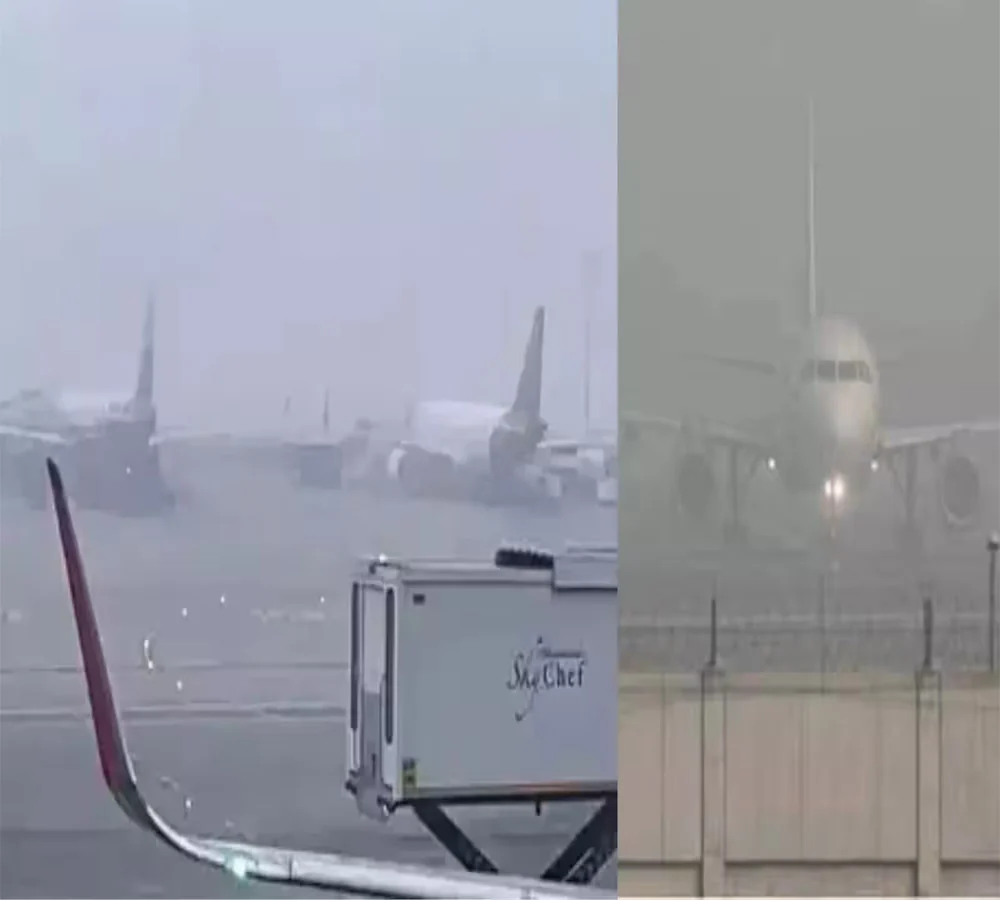
As the winter season begins, the possibility of aircraft operations being affected increases due to low visibility and dense fog at Delhi's Indira Gandhi International (IGI) Airport. Many times, landing and takeoff of planes are delayed due to low visibility, while some flights have to be diverted or even cancelled. To deal with this challenge, technology and infrastructure at the airport have been strengthened. This time, the help of SkyCast weather forecasting system is being taken to improve flight operations.
Accurate weather information will help
In winter, visibility on the runway suddenly reduces due to fog. In such a situation, aircraft operation becomes challenging for pilots and Air Traffic Control (ATC). Getting information about weather forecasts and visibility changes through the Skycast system in advance can help in better planning of flights. Modern equipment and necessary infrastructure have been strengthened to deal with low visibility conditions at the airport. Its objective is to keep aircraft operations as smooth as possible while adhering to safety standards even during fog.
Skycast system installed at IGI Airport for the first time in India
To deal with problems in aircraft operations due to dense fog in winter, the use of modern technology has been started at Delhi's Indira Gandhi International (IGI) Airport. For the first time in India, SkyCast system has been installed at Delhi Airport. This is a modern aviation weather monitoring system, which will continuously monitor the weather conditions. The specialty of this system is that it can give weather updates every 5 minutes. It also helps in indicating possible changes in the weather about three hours in advance. This will give pilots, Air Traffic Control (ATC) and airlines an opportunity to prepare for flight operations in advance.
Will keep an eye on everything from wind to fog
The Skycast system monitors wind speed and direction, humidity, temperature, fog formation and atmospheric movements. This will help in assessing sudden changes in weather in advance. Especially in winter, getting information about conditions like fog, wind shear and turbulence will facilitate in taking decisions related to aircraft operations.
Will help in planning landing and takeoff
Safe landing and takeoff of aircraft during low visibility is a major challenge for airport management. Based on weather updates received from Skycast, pilots and air traffic control will be able to remain alert in advance. Airlines will also be able to better plan for potential delays and operational challenges. However, the real test of this modern system will be in dense fog during winter. Getting the weather forecast will definitely help in preparations, but the final decision on aircraft operation will be taken only on the basis of actual visibility and prescribed safety standards.
Takeoff and landing banned in low visibility
There are different safety standards set for takeoff and landing of aircraft during fog. Aircraft operations in low visibility conditions entirely depend on the runway visual range (RVR). Normally a minimum RVR of 125 meters may be required for takeoff in low visibility. However, this limit is not the same for all aircraft and airlines. This may vary depending on the technical capability of the aircraft, airline approvals, facilities available on the runway and qualification of the pilot.
At the same time, landing of every aircraft is not possible in visibility less than 50 meters. In such situations, the technology of the aircraft, the category of the Instrument Landing System (ILS) and the prescribed qualification of the pilot play an important role. The Directorate General of Civil Aviation (DGCA) has set different safety standards for takeoff and landing of aircraft. The purpose of these rules is to prevent any risk in bad weather.
Follow the LALLURAM.COM MP channel on WhatsApp