
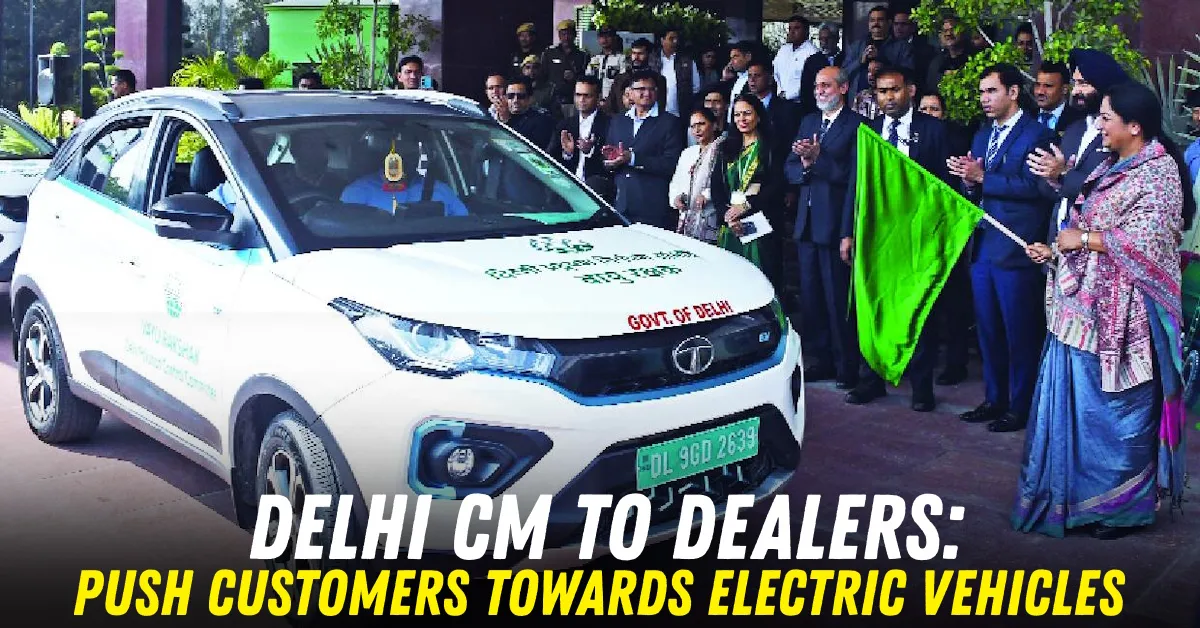

Delhi Chief Minister Rekha Gupta has asked dealers to push customers towards EVs, calling them a critical bridge between policy intent and buyer behaviour. She said the current system of incentives will gradually give way to compulsory adoption, with the state signalling tighter timelines around 2027 and 2028. That is a strong political message, but it also reveals the real shape of the next phase. The easy part was announcing benefits. The hard part is now shifting actual buying behaviour at showroom level, across price bands, vehicle types and use cases.
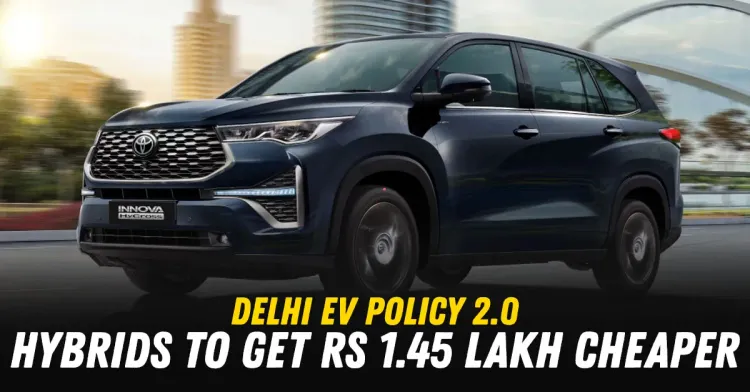
The draft policy already offers serious carrots. Electric cars priced up to Rs 30 lakh are set to get a 100 percent waiver on road tax and registration fees till March 31, 2030. Strong hybrids in the same price band are proposed to get a 50 percent waiver.
Buyers scrapping an old Delhi-registered BS-IV or older car can get a Rs 1 lakh incentive on a new electric car, subject to conditions, and the benefit is limited to the first 1,00,000 eligible applicants. On paper, that is already a meaningful pitch for many buyers.
The state is also putting real money behind that pitch. The draft policy carries a proposed outlay of Rs 3,954.25 crore. Of that, Rs 1,236.25 crore is earmarked for purchase incentives, Rs 1,718 crore for scrappage incentives and Rs 1,000 crore for charging infrastructure.
The size of that charging allocation matters because the government is effectively admitting that tax waivers alone will not carry this transition. Even the saving for a private buyer can be sizeable. For eligible electric cars under Rs 30 lakh, the waiver on road tax and registration fees can trim roughly Rs 1.5 lakh to Rs 2.5 lakh from the on-road cost, depending on the model and price band.
Dealers do matter because the final switch often happens in a showroom conversation. The city is also considering a rule that would require at least one public charging station per dealer. One March report said there are around 400 vendors or car dealers operating in Delhi, which means the government clearly sees the retail network as a ready-made charging and persuasion layer. It is a practical idea because it uses existing real estate and footfall instead of building everything from scratch.
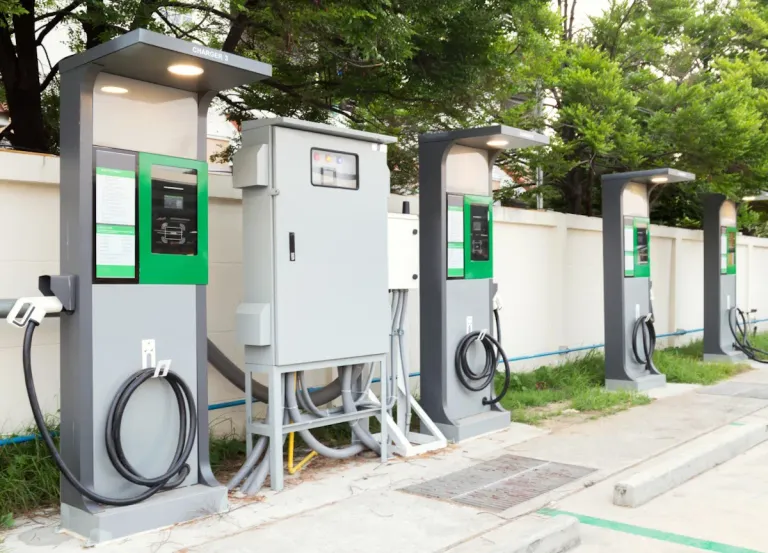
But dealer enthusiasm is not the same thing as buyer confidence. Charging access is still a live issue, especially for apartment dwellers and commercial operators. The numbers themselves show both progress and a gap. One April report put Delhi at more than 10,000 charging points after over 3,000 additions in recent months.
Another report from March said the city had 5,833 charging stations against a requirement of 30,000. Those figures are not directly identical because charging points and stations are counted differently, but both point to the same truth: infrastructure is growing fast, yet the city is still not done.
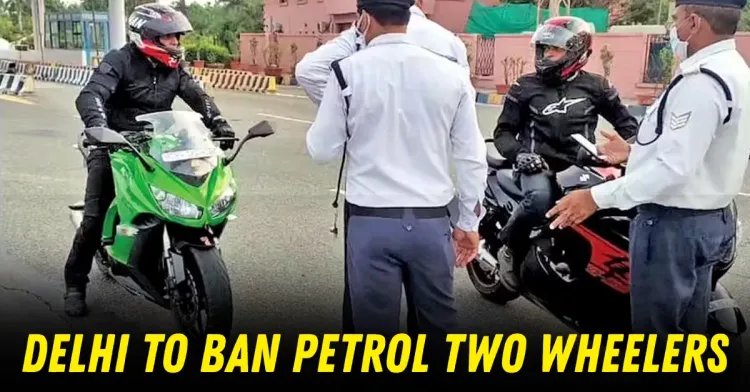
From January 1, 2027, only electric three-wheelers are proposed to be allowed for new registration. From April 1, 2028, only electric two-wheelers would be allowed for new registration. The draft also says fleet operators will not be able to add new petrol or diesel vehicles from January 1, 2026, with some category exceptions. These are not symbolic targets. They are market-shaping deadlines.
There is also a commercial side to this that goes beyond private cars. The draft framework proposes incentives for electric goods carriers as well, with N1 category vehicles eligible for Rs 1 lakh in the first year, Rs 75,000 in the second and Rs 50,000 in the third.
That matters for last-mile operators, delivery fleets and small logistics businesses because these users look first at acquisition cost and asset utilisation. If the state wants adoption to spread beyond early private buyers, those commercial-use incentives may end up being more important than the headline tax waiver on private cars.
The city registered 8,17,817 vehicles last year, and 1,21,516 of them were electric, which means EVs formed 14.9 percent of new registrations. That is stronger than the national average of about 8 percent in 2025. Even so, the earlier policy had targeted 25 percent of new registrations being electric by 2024, while the actual figure landed closer to 13 to 14 percent. Put simply, the city was roughly 10 percentage points short of its own target pace. So the direction is right, but the pace has already shown its limits once before.
That is why the dealer-first messaging needs to be read carefully. A salesperson can explain lower running costs, guide a first-time EV buyer and reduce fear. What they cannot fix are weak financing options, patchy charger access in some neighbourhoods, battery end-of-life systems, or the business risk for operators who depend on their vehicle every day.
So Gupta is right on one narrow point: dealers can help close the last-mile information gap. But if Delhi wants them to do more than just repeat the policy line, the state has to ensure charger rollout, stable incentives, workable financing and smooth implementation all arrive on time. Otherwise, the speech will sound strong, while the transition on the ground keeps moving slower than the mandate.
Comments are closed.