

2
Residents struggle for drinking water amid supply disruptions across city.
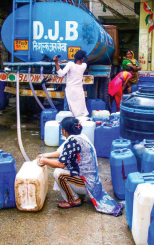
The national capital is facing a severe water crisis as several areas continue to suffer from acute shortages of drinking water. Long queues outside water tankers, dry taps and rising dependence on private suppliers have become a common sight across many colonies in Delhi.
According to officials, Delhi is currently facing a shortfall of nearly 90 million gallons per day (MGD) of treated water. Water treatment plants in Wazirabad and Chandrawal have reportedly reduced production due to low water levels in the Yamuna River. Authorities have warned that the situation may continue for several more days as supply has not yet returned to normal.
Residents in affected areas say daily life has become extremely difficult. Many families are forced to wake up early in the morning to collect water from tankers or nearby public taps. In some colonies, people are storing water in jars, buckets and plastic containers to manage household needs.
“The situation is getting worse every day. We wait for hours for a tanker, and sometimes it never arrives,” Sunita, a resident of North Delhi, told TSG. “We cannot cook, clean or even drink properly.”
Another resident, Arif Khan from Karol Bagh, said the crisis has increased household expenses. “Private water suppliers are charging double the normal rates. A 20-litre can that cost ₹100 earlier is now being sold for ₹250 or more,” he said.
The Delhi Jal Board (DJB) has blamed the crisis on low water levels at the Wazirabad barrage and delays in the release of water from Haryana. Officials said treatment plants are operating below capacity because the pond levels remain critically low. Several areas in North, West and South Delhi have reported irregular supply.
Meanwhile, political tensions over the issue continue to rise. The Aam Aadmi Party (AAP) has accused the BJP government of failing to manage water resources properly and neglecting long-term planning. BJP leaders, on the other hand, have alleged poor governance and mismanagement by previous administrations.
Delhi Chief Minister Rekha Gupta recently directed officials to strengthen emergency water supply arrangements, increase tanker services and ensure quicker responses to public complaints. The government has also activated emergency control rooms and expanded groundwater extraction in high-stress areas.
Experts warn that Delhi’s recurring summer water shortages reflect deeper structural problems such as rapid population growth, depleting groundwater levels, leakage in pipelines and dependence on neighbouring states for raw water supply. Environmentalists have also pointed to the shrinking Yamuna River and climate-related heat conditions as major concerns.
As temperatures continue to rise, residents fear the crisis may worsen in the coming weeks. For thousands of families across Delhi, access to clean drinking water has now become a daily struggle rather than a basic service.

Comments are closed.