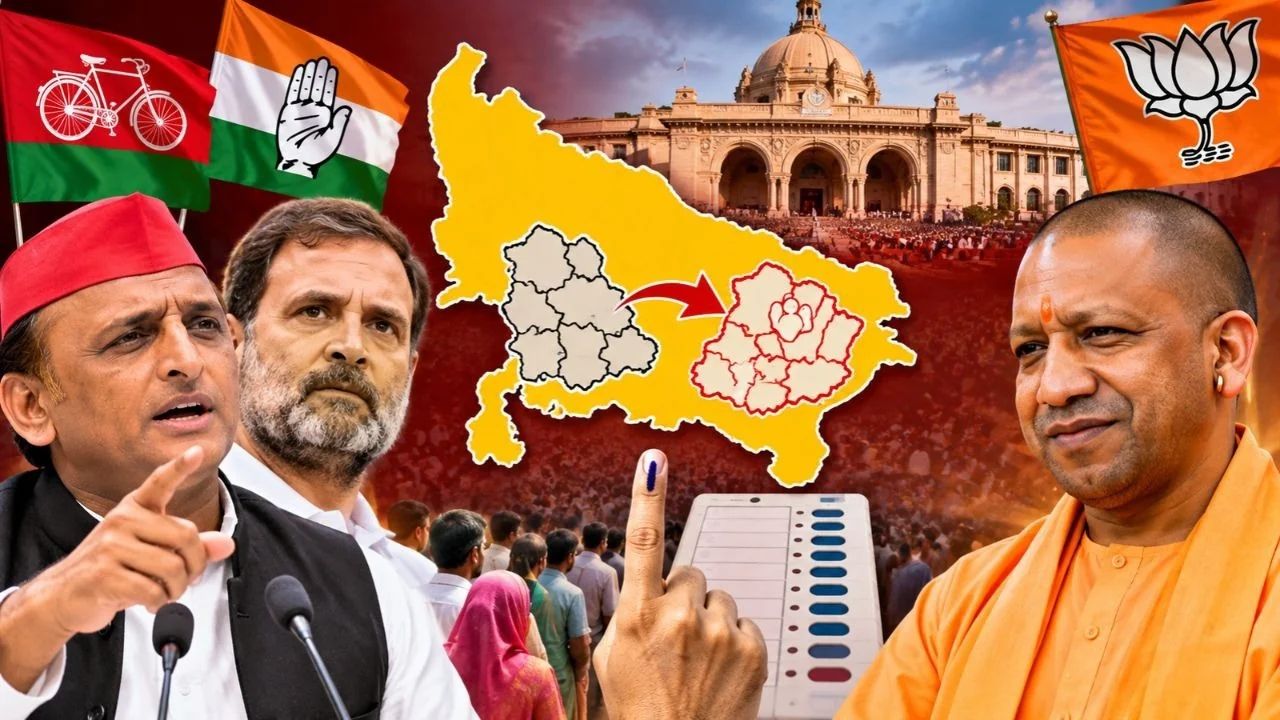
Parliament convenes for a four-day special sitting beginning Monday, November 30, 2026, with the Union government set to introduce three pivotal bills—the Constitution (132nd Amendment) Bill, 2026, the Delimitation (Second) Bill, 2026, and the Union Territories Laws (Amendment) Second Bill, 2026—in the Lok Sabha to redraw parliamentary and assembly constituencies and operationalise 33% reservation for women.
Tabled in the Lower House by Union Home Minister Amit Shah and Union Minister of State for Law and Justice Arjun Ram Meghwal, the legislative package proposes a 50% increase in Lok Sabha seats across all states and Union Territories—raising the House’s maximum strength from 543 to 850—while increasing the maximum strength of state assemblies from 500 to 650, creating Delimitation Commissions, and freezing inter-state seat distribution until 2051.
371-Vote Target vs. 360 Two-Thirds Threshold; BJP Issues Three-Line Whip
Second Bid After April Setback: The revised legislation marks the Centre’s second attempt after its earlier version—the Constitution (131st Amendment) Bill—fell short in the Lok Sabha in April, garnering 298 votes in favour and 230 against. With three vacancies in the 543-member Lok Sabha reducing effective voting strength to 540, the government requires 360 votes (a two-thirds majority of total membership, alongside subsequent Rajya Sabha passage and ratification by at least half of state legislatures) and expects support from at least 371 MPs.
Party Positions & PM Modi’s Strategy Session: Alongside the ruling NDA—including Eknath Shinde-led Shiv Sena and Shiromani Akali Dal (SAD)—the government is banking on backing from regional parties such as DMK, NCP (SP), BRS, BJD, and YSRCP, plus 20 rebel Trinamool Congress MPs, while the three-member Jharkhand Mukti Morcha (JMM) remains undecided and the Aam Aadmi Party (AAP) has issued a three-line whip to oppose the bills.
On Sunday evening, Prime Minister Narendra Modi chaired a meeting of the BJP Parliamentary Party Executive Committee at 7, Lok Kalyan Marg, as the BJP issued a three-line whip mandating full attendance from November 30 to December 3.
“With the current number of Parliamentary constituencies, not just Tamil Nadu’s political importance and strength, even the rights of southern states will be affected. For regional parties, especially parties belonging to southern states, this is a do-or-die struggle. To prevent that, we have no choice but to support the bill being brought in now.”
— MK Stalin, President, Dravida Munnetra Kazhagam (Chennai, November 29, 2026)
Opposition’s Eleventh-Hour Outreach in Chennai and Mumbai
Seeking to block the bills, top INDIA bloc leaders—including Congress Parliamentary Party chairperson Sonia Gandhi, Congress president Mallikarjun Kharge, Lok Sabha Leader of the Opposition Rahul Gandhi, and West Bengal Chief Minister Mamata Banerjee—launched an eleventh-hour diplomatic blitz across Chennai and Mumbai on Sunday.
While DMK chief M.K. Stalin rejected their appeal in Chennai and stood firm on supporting the legislation to safeguard Tamil Nadu’s representation until 2051, the delegation subsequently met NCP (SP) patriarch Sharad Pawar at Mumbai’s Breach Candy Hospital even as internal voices like NCP (SP) MLA Rohit Pawar urged working president Supriya Sule to vote against the bills.