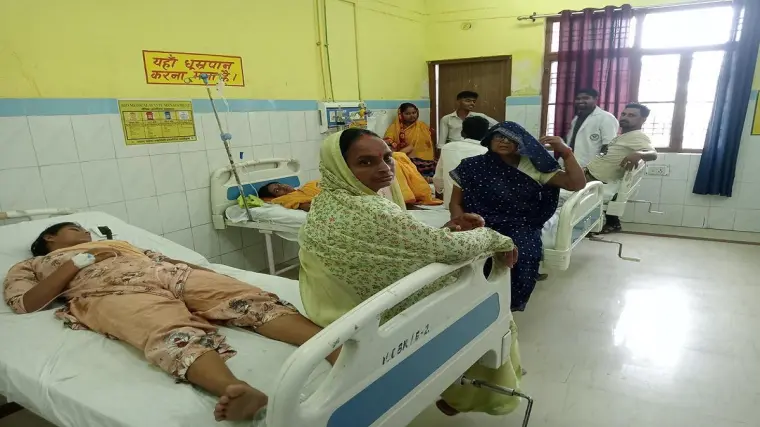
With the change in weather in Ayodhya, the risk of dengue and malaria seems to be increasing. A rise in dengue cases has also been recorded amid the increase in the number of fever patients in the district in the last few days. In view of the situation, the Health Department has increased surveillance and people are being advised to protect themselves from mosquitoes and keep their surroundings clean. The health department's concern has increased after the number of dengue patients reached 25 within ten days.
At present, continuous fluctuations are being seen in the weather in Ayodhya. Rain and subsequent humid weather can create favorable conditions for mosquitoes to breed. In such a situation, there is a need to pay special attention to the places where water accumulates from city to rural areas. The Health Department is appealing to people not to allow water to accumulate around their homes and to stop the breeding of mosquitoes.
Dengue infection is spread by the bite of Aedes mosquito. This mosquito can generally breed in clean water and is more active during the day. This is the reason why using mosquito nets only at night is not considered sufficient. It is important to wear clothes that cover the entire body even during the day, use mosquito repellents and reduce the presence of mosquitoes in and around the house.
The news that the number of patients in Ayodhya has crossed 25 in the last ten days has activated the monitoring system of the Health Department. Along with increasing cases of dengue, caution is also being taken regarding malaria. Investigation of fever patients and monitoring of suspected cases is being increased, so that the disease can be identified at an early stage and timely treatment can be provided to the patients.
After rain, in many areas, water accumulates in small and big pits, vacant plots, construction sites, roofs of houses and utensils kept nearby. Old tyres, coolers, pots, broken utensils and other such objects can also become breeding grounds for mosquitoes. Therefore, health experts constantly recommend that the water in coolers kept in homes be changed regularly and water tanks be kept covered.
The most common symptom of dengue is high fever. Along with this, symptoms like headache, pain in body and joints, pain behind the eyes, weakness, vomiting or nausea and red rashes on the skin may also appear. However, it is not necessary that the same symptoms appear in every patient. Therefore, it is important to consult a doctor in case of persistent fever.
Especially children, elderly people and people already suffering from any disease should not be careless in case of fever. If there is a suspicion of dengue, it is better to seek doctor's advice instead of taking medicine on your own. Some medicines can increase the risk of bleeding, so taking pain or fever medicine without medical advice can be harmful.
The increase in dengue cases in Ayodhya has come at a time when religious and tourism activities are also continuing in the district. Due to Ram Temple, Ayodhya continues to be visited by devotees and tourists from different parts of the country. In such a situation, it becomes important for the administration to prevent infectious diseases at the local level and keep the public health system strong.
The monitoring of the health department is not limited only to the patients reaching hospitals. To control the disease, measures like identifying sources of mosquitoes, checking for larvae, fogging and making people aware are also taken. When dengue cases increase in an area, special surveillance is needed, so that the possible chain of infection can be prevented from spreading further.
Dengue and malaria are both mosquito-borne diseases, but their mode of spread and treatment are different. Therefore, it is not right to assume that the patient has dengue only on the basis of symptoms. The disease can be confirmed only after examination. This is why it is important for the health department to lay emphasis on testing fever patients.
People level can also play a big role in disease prevention. Along with maintaining cleanliness around the house, one should check at least once a week all the places where water is likely to accumulate. It is important to empty and clean coolers, vases, pot plates, cans kept on the roof and other water storing utensils. Water tanks and other large containers should be kept covered.
If any member of a household has persistent high fever and is accompanied by severe pain, weakness or other symptoms in the body, then it should not be ignored. It is important to give the patient adequate rest and fluids, but doctor's advice regarding treatment should be given priority. If serious symptoms appear, one should immediately reach the hospital.
Weather related conditions can also be a major reason for the increase in dengue cases. The number of mosquitoes can increase due to change in temperature and humidity after rain. If rain water is not drained properly or water remains stagnant in homes and public places for several days, the risk of mosquito breeding increases.
After the latest data revealed in Ayodhya, the challenge before the health department is to control the infection at the initial level itself. For this, along with monitoring the fever patients coming to the hospitals, it will also be necessary to pay attention to those areas where the number of mosquitoes is high. If new cases are continuously being reported in an area, then eliminating mosquito breeding sites by running a special campaign there can be an effective step.
Along with the vigilance of the health department, participation of common people is also very important. Government teams alone cannot control dengue completely by conducting campaigns outside homes. It is also the responsibility of the families to clean the water containers kept inside the house, change the water in the cooler and prevent waterlogging in the surroundings. Similarly, special attention will have to be paid to cleanliness in schools, markets, hospitals and public places.
The information that the number of dengue patients in Ayodhya has crossed 25 in ten days is being seen as an early warning for the health department. At present, the most important thing is that fever should not be ignored considering it normal. With timely diagnosis and medical advice, the disease can be identified early and the chances of surviving a serious condition increase.
Along with monitoring by the health department, people also need to take extra precautions in the coming days. If the period of rain and humidity continues, the problem of mosquitoes may increase further. In such a situation, the most effective preventive measures are not allowing water to accumulate from home to nearby public places, adopting anti-mosquito measures and getting tested timely in case of fever.
At present, the surveillance of the health department regarding dengue and malaria has been increased in Ayodhya. Following the increase in the number of dengue patients, the situation of new cases will also be monitored in the coming days. If cases continue to rise, additional health and mosquito control campaigns may be needed in affected areas. There is an appeal to the people that instead of panicking about the disease, take precautions and seek medical help on time if symptoms appear.