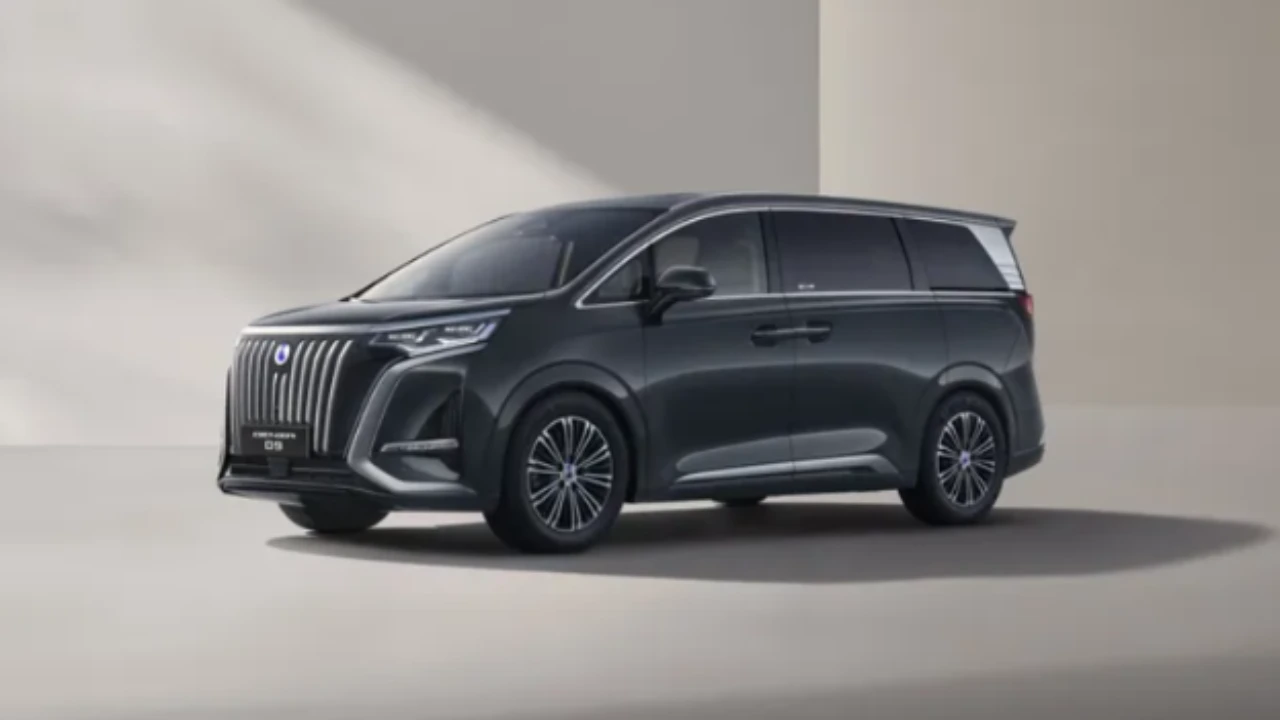
BYD’s luxury brand Denza has finally stepped into India. On 13 November 2026, it placed the D9 electric MPV on sale at ₹90 lakh (ex-showroom) for the D9 and ₹1.56 crore / ₹1.56,80,000 or ₹1.57 crore depending on source (use the most commonly reported figure and note the slight variation) with the Z9 GT.
Bookings opened the same day for a ₹10 lakh token, and the vehicle arrives as a completely built unit and will be sold only through dedicated Denza outlets in 6 cities at launch.
However, the company claims the 115.07 kWh second-generation Blade battery can climb from 10% to 97% in 9 minutes (via DC fast charging / compatible charger), which raises questions because current charging infrastructure in India does not have widespread ultra-high-power chargers capable of supporting such speeds.
What the D9 Actually Brings
The MPV stretches 5,250 mm long on a 3,110 mm wheelbase and seats seven in a 2+2+3 layout. Every seat is covered in Nappa leather, and the second-row captain chairs offer power adjustment, ventilation, massage and ottoman support. A refrigerator sits in the centre armrest.
Dual sunroofs, a 15.6-inch central screen, a 10.25-inch digital cluster and a 16-speaker Devialet system round out the cabin. 9 airbags and a full ADAS suite complete the safety list.
Power comes from a single front motor rated at 340 kW and 365 Nm. The claimed 0-100 km/h time is 8.5 seconds. The battery carries an eight-year or 1,60,000 km warranty, and the vehicle itself is covered for 6 years or 1,50,000 km.
The Blade Battery and the Nine-Minute Claim
BYD’s second-generation Blade pack uses an evolved lithium-iron-phosphate chemistry that improves energy density and charge acceptance.
In controlled conditions with a 1,500 kW Flash Charger, the company says the pack can take energy extremely quickly, and the 9-minute figure is true under those specific laboratory and Chinese-network conditions.
There was no way to verify any public 1,500 kW chargers operating in India. Mahindra Charge_IN stations deliver up to 180 kW.
ChargeZone and Tata Power offer individual connectors rated up to 240–480 kW, with some multi-gun sites providing higher combined capacity. No public 1,500 kW chargers are operating in India.
Real-World Range Expectations
Denza quotes 730 km on the NEDC cycle. Some reports also list a WLTC figure near 608 km. NEDC is known to be optimistic. Independent estimates for a fully loaded seven-seater running Indian highway speeds and air-conditioning suggest a more realistic 480–520 km, and that still places the D9 among the longest-range electric vehicles available here. Home charging at 11 kW remains practical for overnight top-ups.
How It Stacks Against Rivals
| Model | Ex-Showroom Price | Battery | Claimed Range/Fuel Efficiency |
| MG M9 | ₹79.95 lakh | 90 kWh | 548 km (ARAI/MIDC) |
| Denza D9 | ₹90 lakh | 115.07 kWh | 730 km (NEDC) / ≈608 km (WLTC) |
| Toyota Vellfire | ₹1.20–1.30 crore | Hybrid | 19.28 km/l |
Note: NEDC and ARAI/MIDC figures are not directly comparable.
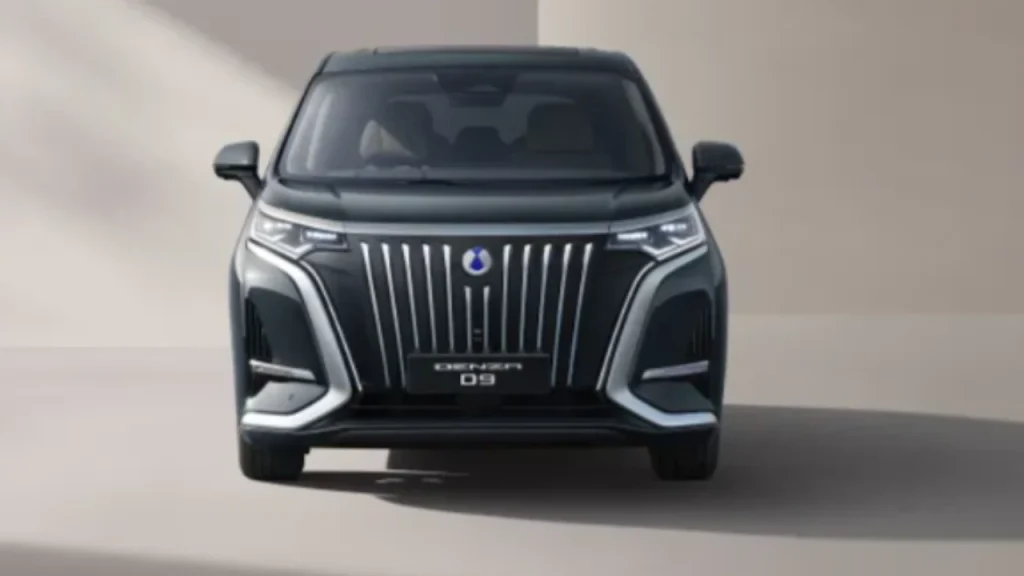
The D9 undercuts the Vellfire by a wide margin while offering more than the MG M9. Whether the extra ₹10 lakh (confirmed by Autocar India, CarWale, Maxabout, HT Auto, etc.) over the M9 feels justified depends on how much a buyer values the larger battery, faster claimed charging and premium audio.
Ownership Reality Check
The D9 arrives with genuine technical ambition. The Blade battery’s safety record and the cabin’s comfort features are hard to ignore, yet the most attention-grabbing number—the nine-minute charge—remains out of reach for now. India’s public network is expanding quickly, but it has yet to achieve the megawatt-class chargers that the claim assumes.
Buyers who mainly charge at home or use existing 150–250 kW stations will find a refined, long-range people-mover. Those expecting the full Flash Charging experience will need to wait, and the decision ultimately rests on whether the rest of the package outweighs that particular limitation.