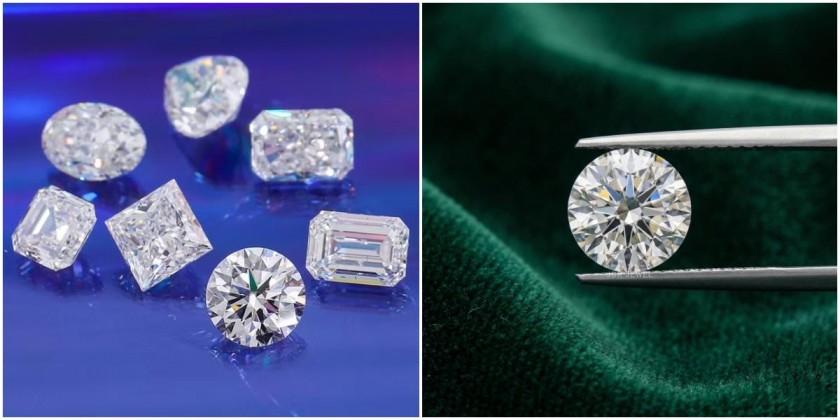
Natural diamond prices have fallen to their lowest levels in more than two decades, with weaker demand, excess supply and the rapid growth of lab-grown diamonds putting pressure on the global market.
Wholesale prices of natural diamonds are now around 30-40 per cent below their 2021 peak, according to a report cited by The Indian Express. A mainstream 1-carat natural round diamond is currently priced at around $3,530-$3,860 at the retail level.
Lab-grown diamonds change the market
The growing popularity of lab-grown diamonds has emerged as one of the major factors reshaping the industry. These diamonds are chemically identical to natural diamonds but can be produced in controlled environments at a much lower cost.
Lab-grown diamonds are typically 70-85 per cent cheaper than natural stones. Their wholesale prices have also fallen by more than 75 per cent since 2022, increasing competition for natural diamonds in several segments of the market.
Since March 2025, prices of lab-grown diamonds have declined by nearly 29.9 per cent, while natural diamonds of similar quality have fallen by around 4 per cent, according to the report.
China emerges as major supplier
China has become a major producer of lab-grown diamonds, accounting for more than 60 per cent of global synthetic diamond production.
Chinese exports of lab-grown diamonds rose 65.3 per cent year-on-year during the first half of 2026, adding to the supply available in the global market.
The increase in supply has particularly affected smaller and mid-range natural diamonds, which compete with lab-grown stones for the same group of consumers.
Not all natural diamonds are equally affected
The price decline has not been uniform across the natural diamond market. Larger, high-quality natural diamonds have remained relatively more resilient because of their rarity and limited availability.
According to the report, demand for larger and higher-quality natural diamonds remained stronger during the first half of 2026, while smaller and lower-quality stones faced greater pricing pressure from lab-grown alternatives.
The pressure on natural diamonds has also affected mining companies. De Beers reported that its average realised rough diamond price fell 32 per cent year-on-year to $105 per carat in the first half of 2026, while its average rough diamond price index declined 16 per cent.
Why cheaper diamonds may not mean cheaper jewellery
Despite the sharp decline in diamond prices, consumers may not see an equivalent fall in the price of finished diamond jewellery.
The final price of a jewellery piece also includes the cost of gold or platinum, manufacturing, design and retail expenses. High gold prices can therefore offset some of the savings from cheaper diamonds.
The changing diamond market also reflects a broader shift in how consumers view scarcity and value. The ability to produce chemically identical diamonds on a large scale has challenged the traditional perception that natural diamonds are scarce and therefore retain their value.
For miners and traditional diamond companies, the biggest challenge remains balancing supply with changing consumer demand, while lab-grown diamonds continue to become more affordable and widely available.