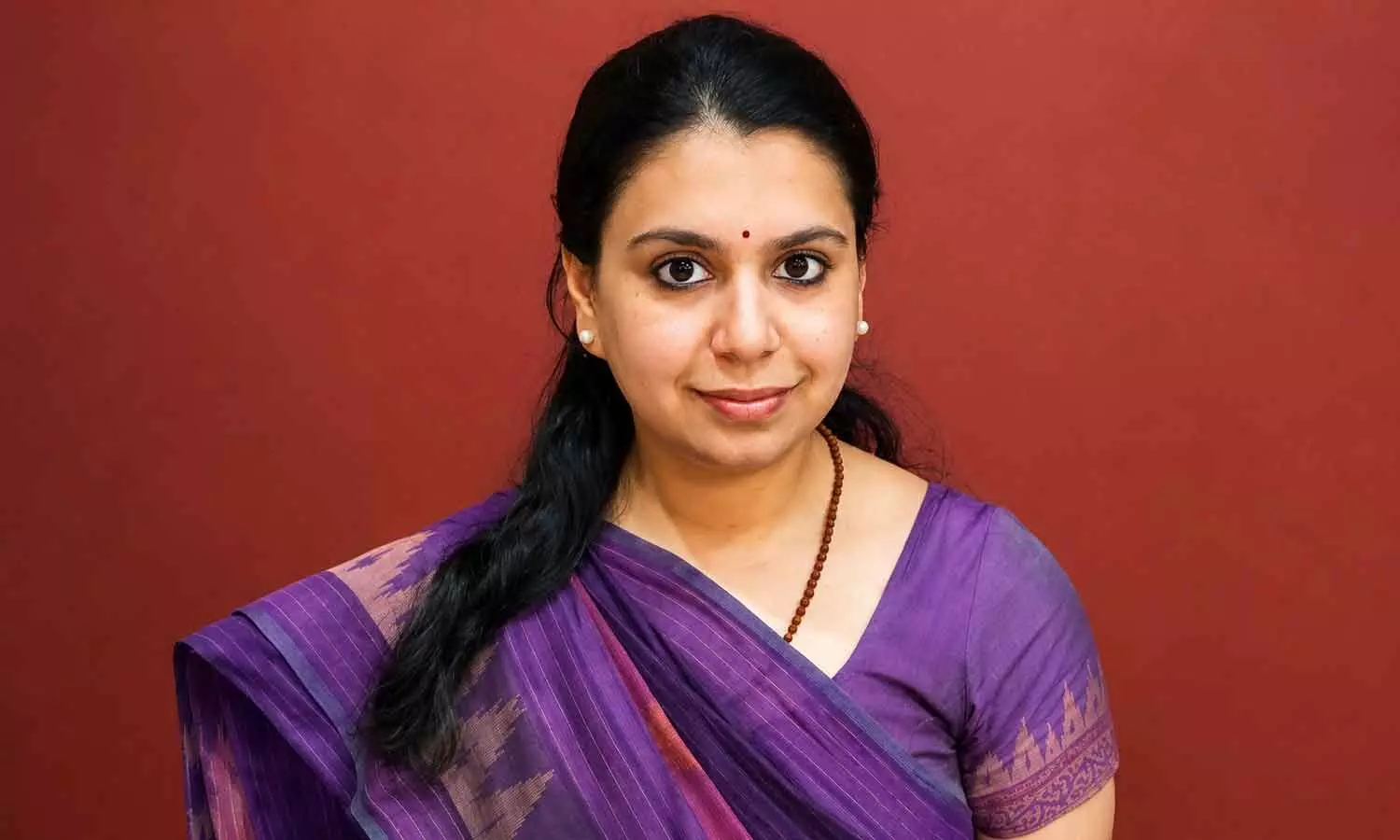
An IAS resignation
An IAS officer quitting after 13 years is unusual. An officer as publicly visible as Divya Mittal doing so, months before Uttar Pradesh’s next election cycle, was bound to trigger speculation.
Mittal says the decision followed reflection on family, priorities and other interests, including writing, teaching and social service. But the internet has its own theory.
Speculation is rife that she could eventually enter electoral politics from Mirzapur or Deoria, where she built a strong public profile as district magistrate. Her reported run-ins with local political leaders during her Mirzapur tenure have only added fuel.
Then came the political seasoning: claims of a meeting with Rahul Gandhi, suggestions of a possible 2027 election connection, and counter-allegations from the BJP. None of this establishes a political move, and Mittal has denied having any such plan, for now.
Then, her remark that she would speak “when the time comes” is intriguing. While hardly a political declaration, it is precisely the sort of line that keeps Uttar Pradesh’s rumour mills humming.
The timing has also raised questions about whether her shift from a field posting to the Revenue Department influenced her decision. Resignation: yes. Politics: speculation. But in Uttar Pradesh, an IAS officer with a public profile does not exactly disappear from public life by resigning.
The IAS loan that came due early
The repatriation of two IAS officers from the Centre is a reminder that, in India’s babudom, deputation is never quite a one-way street. Officers may serve Delhi, but their parent cadres do not necessarily forget what they have on loan.
Ashish Chatterjee, a 1999-batch Tamil Nadu officer, was brought back from the Ministry of Steel at the state government’s request. The purpose became evident almost immediately.
He has now taken charge as Principal Secretary and Managing Director of Chennai Metro Rail Limited. With Phase II involving a massive expansion of the network, this is hardly a parking assignment. Chatterjee brings experience in urban governance, infrastructure, finance and the energy sector, a fairly useful combination when the metro has to negotiate money, land, construction and politics, often in that order.
The message from Chennai is therefore fairly straightforward: when a state wants one of its senior officers back, the Centre can accommodate the request. And Tamil Nadu clearly had a use for Chatterjee beyond another round of secretariat file work.
Sanjay Kumar’s case is different. The 2008-batch AGMUT officer has been prematurely repatriated from the Election Commission on personal grounds, following an ECI proposal. His deputation was due to continue until January 2027.
There is no need to manufacture intrigue around that decision. But his departure does leave a senior position vacant in the ECI at a time when the election machinery is hardly short of work.
Together, the two moves illustrate an enduring truth about the IAS: while the Centre may control deputation, cadres retain a powerful claim on their talent. And when that talent is needed badly enough, the loan period can end rather abruptly.
*Dilip Cherian is India’s most respected bureaucracy and policy watcher. His X handle is @DilipTheCherian
The post Dilli Ka Babu appeared first on Read.